Editor’s Note
The iconic Tiffany & Co. flagship on New York’s Fifth Avenue has reopened, marking a new chapter under the ownership of LVMH. This landmark, forever associated with the glamour of “Breakfast at Tiffany’s,” is once again welcoming the public to its storied halls.
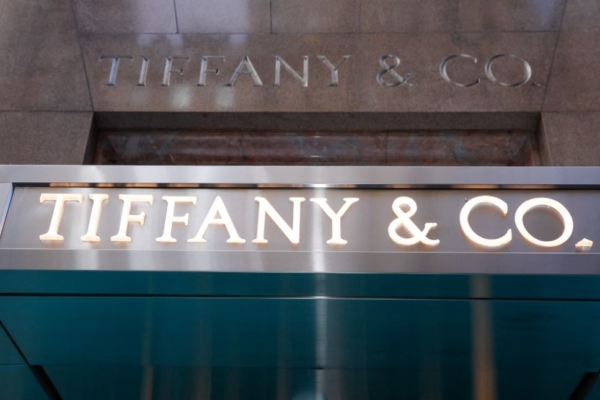
New Yorkers and tourists can once again stroll among the rings and diamonds at the Tiffany jewelry store in its mythical Fifth Avenue location, a step that reflects the momentum given by its new owner, the French luxury giant LVMH.
The store, immortalized by the envious glances of actress Audrey Hepburn in the film “Breakfast at Tiffany’s” (1961), officially reopened its doors to some personalities and the press, before welcoming the public on Friday.
The renovation, which began in 2019, took “longer than expected,” admitted Tiffany CEO Anthony Ledru on this occasion, but the result “exceeds our wildest dreams.”
On the ground floor, visitors are greeted by a succession of jewelry counters and walls decorated with large mirrors that intermittently project videos of Central Park.
Elevators lead to the upper floors, where customers can access Tiffany’s collections, private salons, or a café dominated by the turquoise blue that symbolizes the brand.
Tiffany seeks to remain faithful to its origins while staying culturally “relevant,” he said, adding that it wants to open up to “all generations.”
Founded in 1837 in New York and known mainly for its diamonds, silver jewelry, and engagement rings, the company was acquired by LVMH in early 2021 for approximately $16 billion.
It has 14,000 employees and manages about 300 points of sale.
Ledru, assisted by one of Bernard Arnault’s sons, Alexandre Arnault, carried out a brand update: he enlisted the most prominent couple in American entertainment, Jay-Z and Beyoncé, to promote its products, launched a campaign around the provocative slogan “Not Your Mother’s Tiffany,” and established a partnership with Nike sneakers.
The new management, driven by “the spirit of conquest characteristic of Bernard Arnault,” according to him, repositioned the brand’s image by giving slightly less importance to products linked to weddings and silver jewelry and raising some prices.
Its marketing and communication are “more modern,” a necessary strategy “to attract younger consumers,” the analyst commented.
The firm also launched new, more recognizable products, such as the T by Tiffany jewelry collections or, more recently, Lock, a line of bracelets.
According to the specialist, the group has also developed a new approach for its stores, betting on a “more feminine, warm, welcoming” concept.
The renovation of the New York store represents the “largest (investment) made in the luxury world” for an operation of this kind, according to Arnault’s circle.
Tiffany did about 10% of its sales there before the renovation, during which customers could go to a nearby temporary space.
Without wanting to advance specific goals, Ledru assured that the group has “set the bar very high” and expects “millions of visitors from around the world” each year.