Editor’s Note
This article outlines a significant shift in public infrastructure development in Madhya Pradesh, India. The state’s Public Works Department is partnering with the Indian Institute of Technology Madras to pioneer the use of 3D printing technology for constructing government buildings. This initiative aims to enhance construction quality, durability, and speed, marking a move toward modernizing public project delivery.
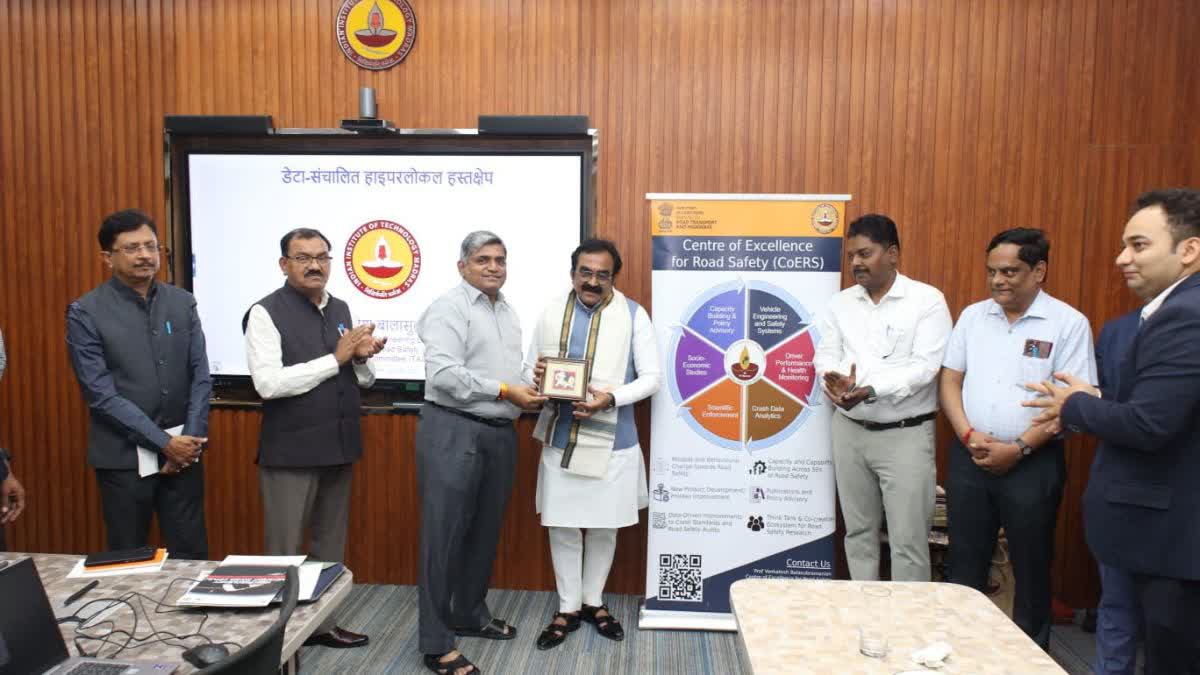
Government buildings and offices in Madhya Pradesh will now be constructed using modern, cutting-edge technology. The Public Works Department is set to take a major step towards adopting a 3D printing-based construction system. Under this new initiative, the Indian Institute of Technology Madras will provide technical cooperation to the Public Works Department. The objective is to construct strong and durable government buildings with better quality in less time.

Minister Singh said that 3D printing technology will bring significant improvement in both speed and quality in building construction. He informed that in large events like the proposed Simhastha Kumbh Mela in Ujjain in 2028, where large-scale construction is required in a limited time, this technology could prove extremely useful.
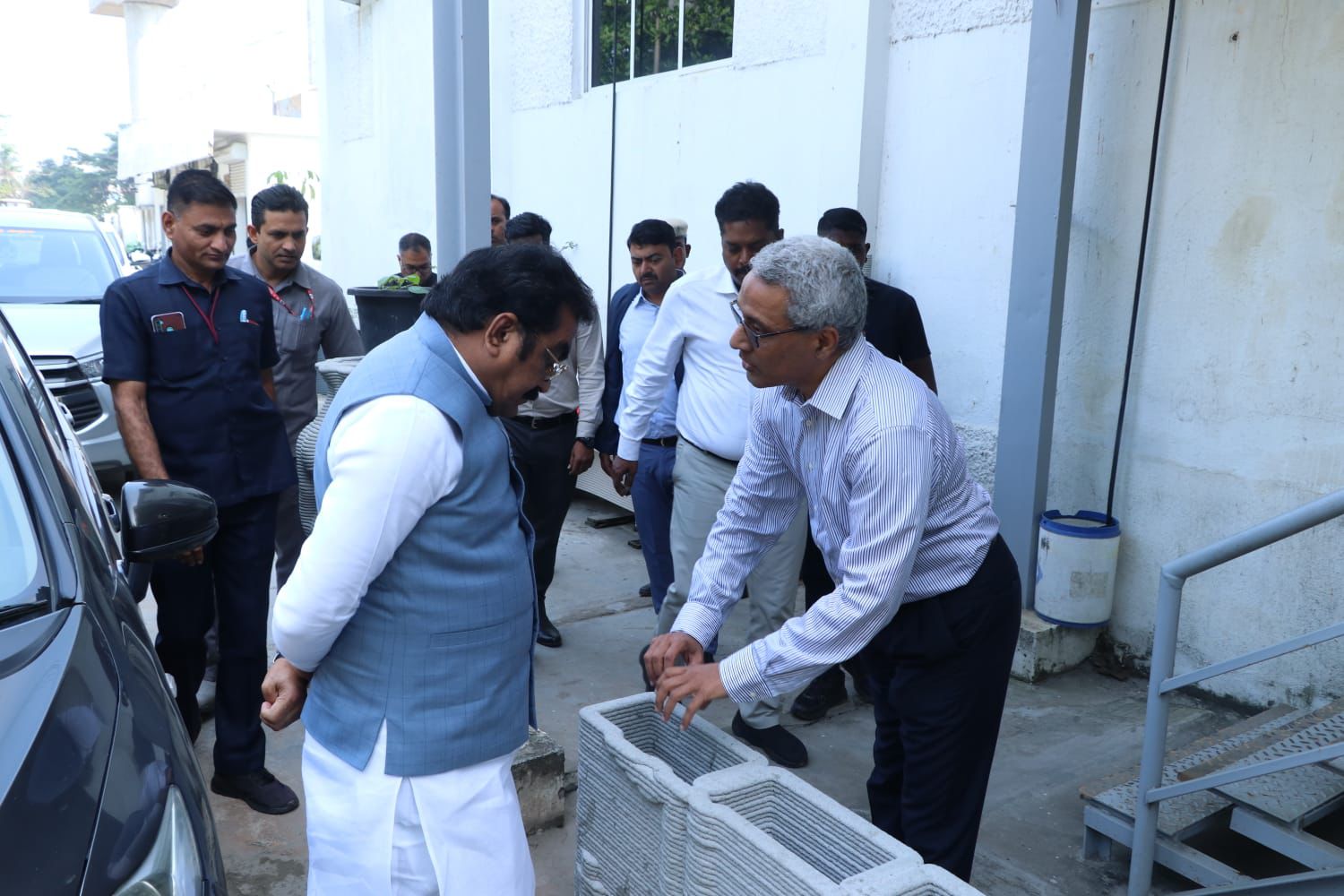
Department officials explained that 3D printing, also called additive manufacturing, is different from traditional construction methods. In this, a digital design of the building is first prepared on a computer. Then, concrete or other construction material is printed layer-by-layer through special machines to create the structure. This process greatly reduces the need for bricks, shuttering, and traditional casting.
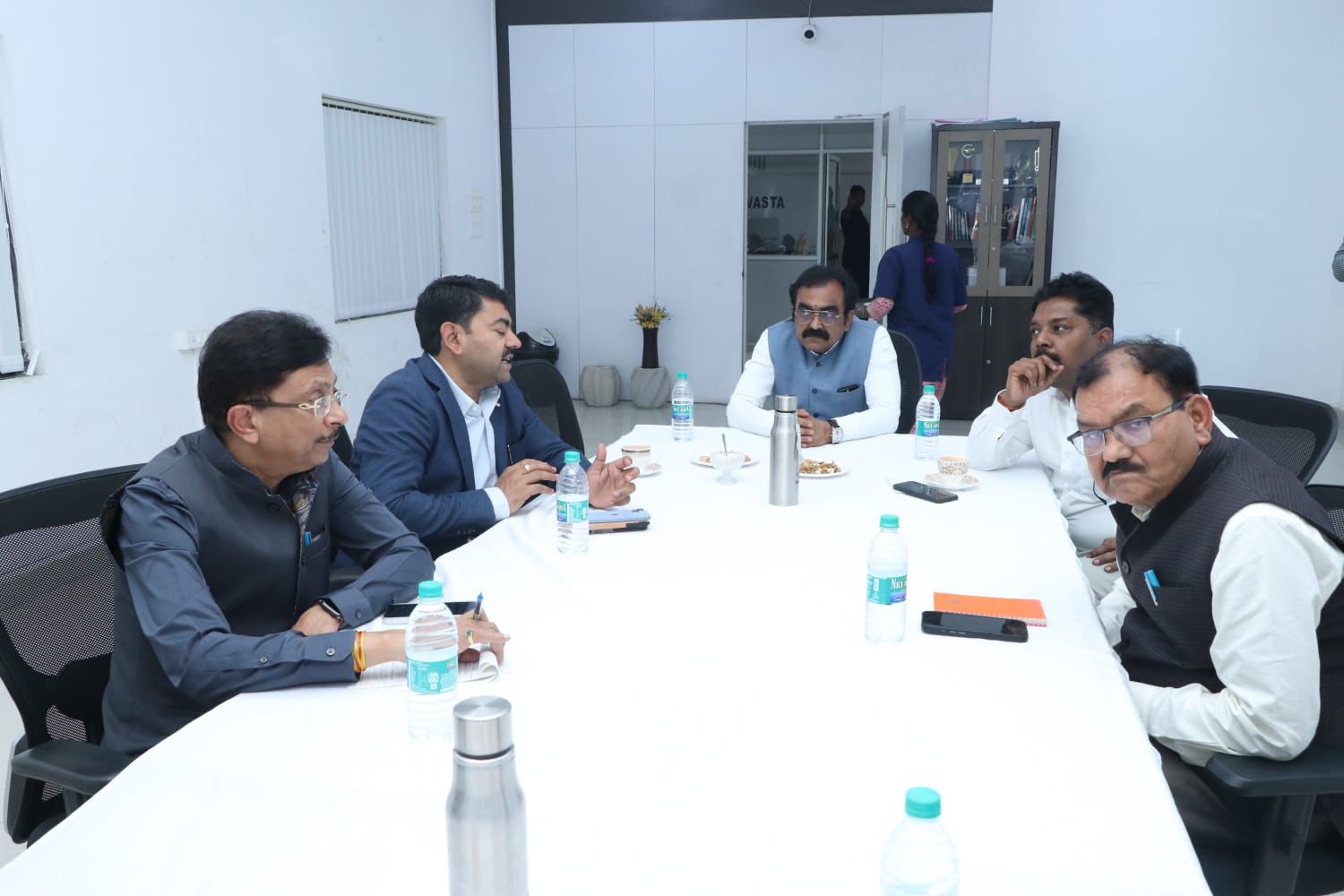
According to the Public Works Department, while traditional construction works take months, many structures can be prepared in just a few days using 3D printing technology. The impact of obstacles like weather, labor availability, and shuttering is limited on this technology. It can be effectively used in works like disaster-affected areas, emergency housing, schools, and health infrastructure.
Departmental officials informed that pilot projects will first be started to adopt this technology. Along with this, engineers and technical staff will be given special training. In coordination with IIT Madras and other technical institutions, this technology will be implemented in a phased manner according to the state’s requirements.
Minister Singh informed that during the study visit to IIT Madras, innovative technologies related to road safety and data-driven work systems were also observed. Detailed discussions were held with experts regarding the prevention of road accidents, black spot analysis, and data-based decision systems. On this occasion, meaningful dialogue took place with Professor Venkatesh Balasubramanian, Head of the Road Safety Division at IIT Madras, and Professor Jayakanthan, Head of the Engineering Design Division, on topics like emerging technologies, engineering innovation, and road safety.