Editor’s Note
This article explores how G L A S S F A C T O R Y is leveraging 3D printing technology to create its new brand, G L A F U 3D Technology, aiming to solve the common problem of eyewear fit. The development signifies a move toward personalized, on-demand manufacturing in the optical industry.
3D Printed Eyewear That Solves the Size Problem
Glass Factory Co., Ltd.
While currently working on “personalizing lenses,” there remains a question of whether “personalizing frames” is being achieved.
One major issue is frame size.
For many glasses, one shape typically comes in only one size. Isn’t it strange that while clothes and shoes come in various sizes, this isn’t the case for glasses?
For example, a man with a wider face might measure about 16cm, while a woman with a narrower face might be about 13cm—a difference of roughly 3cm. Yet, stores are filled with unisex one-size-fits-all frames.
Why is that?
Both eyewear brands and retailers now stock a wider variety of designs in stores than before. This trend is stronger the more fashion-oriented they become—to be seen as stylish glasses and stylish eyewear shops. However, companies don’t want to increase inventory costs… and size has been sacrificed for this reason.
This might make it sound like various sizes existed in the past for a single design. That’s right. In the past, one design did come in various sizes.
To break this situation, we embarked on developing glasses using 3D printers.
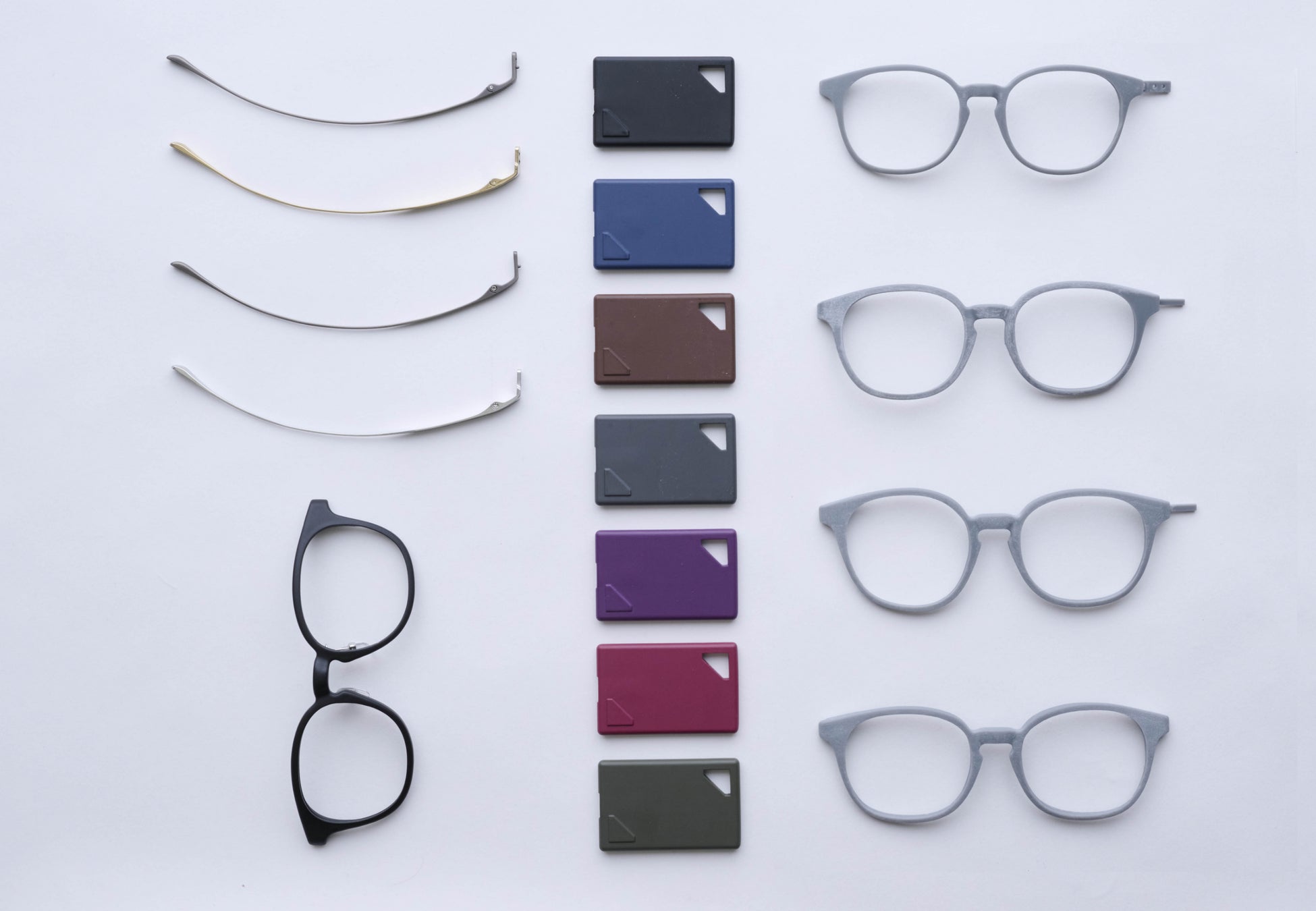
By making eyeglass frames with 3D printers, we aim to easily manufacture prototypes, repeatedly verify them, and realize various designs and size variations. This is because forming with a 3D printer allows production from a single unit, eliminating the need for minimum lots of hundreds of units previously required for traditional eyewear manufacturing.
As the first collection, we have launched products with six designs, each available in S, M, and L sizes (some also in XS).
Feature 1: Extensive Size Range to Find the Right Fit
All GLAFU 3D Technology eyeglass frames come in S, M, and L sizes (some also in XS). You can find the ideal fit according to your face shape and preference.
Feature 2: Cutting-edge 3D Printing Technology and Ultimate Handcraftsmanship
GLAFU 3D Technology eyeglass frames utilize cutting-edge Digital Light Processing (DLP) 3D printing technology to provide customers with the best fit and design. Detailed customization and complex designs, which were difficult with traditional methods and materials, have been realized through 3D printing technology.
However, not everything can be handled by cutting-edge technology. In fact, many processes like polishing and painting are done by actual handwork, making it a combination of cutting-edge 3D printing technology and ultimate handcraftsmanship.
Also, with powder-based 3D printing commonly used for glasses, the surface tends to be rough, giving a casual feel. The mainstream materials for Japanese glasses today, metal and acetate, have a slight gloss and smooth texture. We thought a texture closer to that would be more readily accepted, so we adopted DLP 3D printing for its surface texture and smoothness.
Feature 3: High Durability and Lightweight
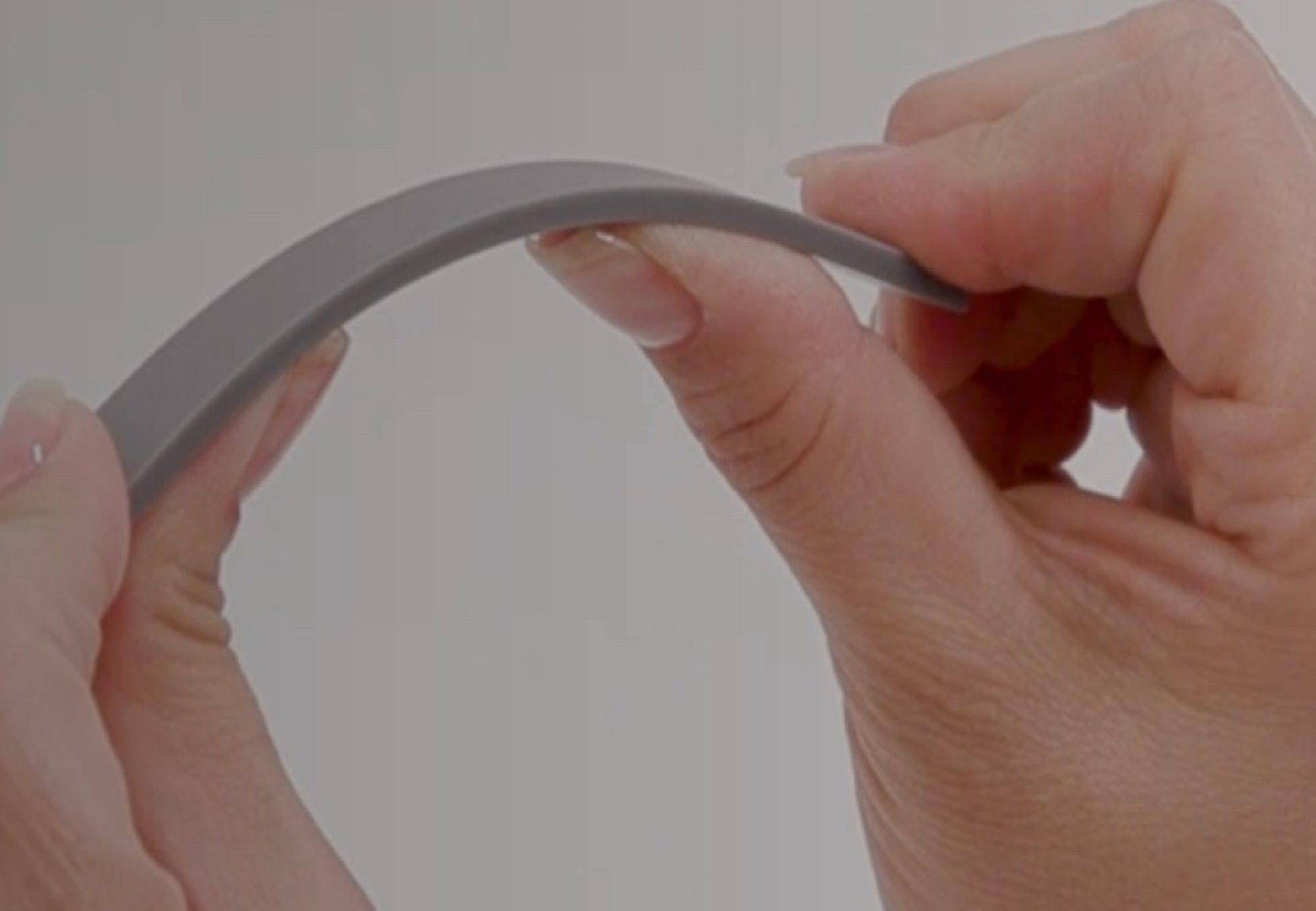
Uses a plastic material called Figure 4 Rigid Gray.
Acetate, the most common material used in glasses, tends to change shape (e.g., warp) depending on frequency and duration of use.
The material of this product has characteristics such as “lightweight, resistant to degradation, and resistant to shape change (hard to warp),” allowing for stress-free wear regardless of frequency or duration of use.

*It has actually passed tests by the Japan Spectacle Popularization Optical Instrument Inspection Association (JSOI).
Lightweight is also a key feature.
Acetate is the most common material used in glasses. One of its drawbacks is heaviness. It’s hard to say glasses worn almost all day are comfortable if they are heavy.
These 3D material glasses boast an industry-leading lightweight of 11g (without lenses).
Combination Frame Series
Brand Name | GLAFU
Series | GLAFU 3D technology
Product Name | 3D technology COMBINATION
Lineup | 6 eyeglass models
Colors | Black, Navy, Olive, Brown, Gray, Purple, Wine
Size Range | S, M, L (some XS)
Price | ¥38,500 (tax included, case included, lenses separate)
Release Date | Already on sale
Retail Stores | All Glass Factory stores (Horie Store, Hilton Umeda Store, Kobe Store)