Editor’s Note
This article examines the shifting dynamics in the global diamond industry, highlighting how traditional powerhouses like De Beers are adapting their strategies in response to significant market pressures.
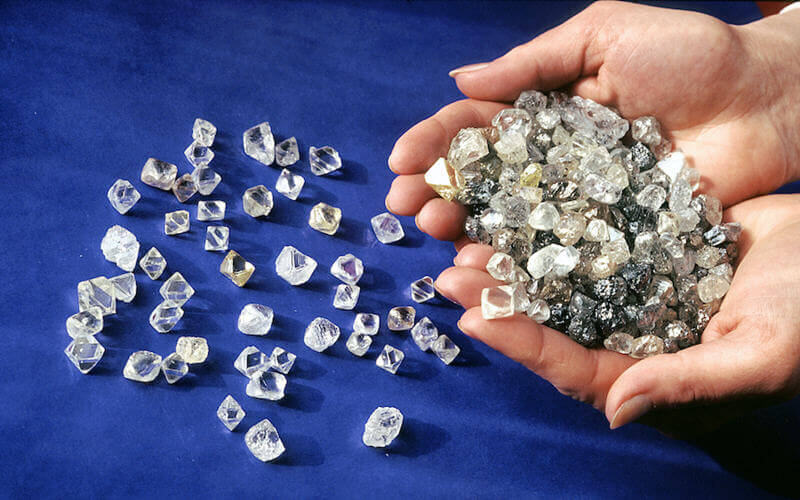
At the end of last month, when the world’s most important diamond buyers gathered at De Beers’ office in Botswana, a rare proposal emerged: the option to buy nothing. Once a monopolist in the diamond industry with strict rules for buyers, diamond grades, and prices, De Beers has been forced to lift various restrictions as diamond prices have plummeted by nearly 40% within a year.
Prior to this, in September of this year, De Beers’ main competitor, Russia’s largest diamond mining and processing company Alrosa PJSC, had already taken an unprecedented measure by halting all diamond sales for two months to support prices.
At De Beers’ recent auction, buyers primarily from India and Antwerp purchased only $80 million worth of uncut rough diamonds. Typically, De Beers would expect revenues of $400 to $500 million from such an auction.
During the COVID-19 pandemic, global diamond sales saw a significant surge, with many consumers purchasing jewelry and other luxury items online. However, after the full reopening of economies, global diamond demand plummeted. The US economy has been wavering under rising inflationary pressures, while China, a key growth market, has been hit by a real estate crisis, severely dampening consumer confidence. Simultaneously, the diamond market is facing competition from lab-grown diamonds rapidly capturing market share from natural diamonds.
For now, the supply-tightening measures by diamond giants seem to be having some effect. Due to shortages beginning to appear in some diamond categories, prices at some smaller auctions have risen by 5% to 10% over the past week. Furthermore, with Indian factories set to reopen next month after the extended Diwali holiday shutdown, the diamond market is regaining confidence that the worst may be over.
In fact, the crisis in the diamond industry coincides with weakness in the broader luxury sector. This year, due to China’s sluggish economic recovery and cooling US consumer demand, the performance of luxury giant LVMH has disappointed investors, with its market value dropping by over $100 billion since mid-April. Last Friday, Richemont, the owner of Cartier, reported an unexpected profit decline due to a surprise drop in luxury watch revenue as high-end consumers cut back.
Unlike the broader luxury industry, the diamond sector is more speculative, making it more vulnerable to slowing demand. While diamond prices have stopped falling and even recovered in some areas, this is largely supported by key holiday seasons from Western Thanksgiving to the Chinese Lunar New Year, and major miners managing to reintroduce accumulated unsold diamond inventories into the market.
For the industry as a whole, uncertainty remains regarding how much macroeconomic weakness and shifting consumer perceptions are driving the slowdown in diamond sales. Lab-grown diamonds have made rapid inroads in some key market segments, and Generation Z consumers’ views on diamonds appear to differ from previous generations, posing challenges for the industry.