Editor’s Note
This report from the 26th Shenzhen International Watch & Clock Fair highlights the event’s scale and the growing prominence of Chinese manufacturers, which accounted for 65.4 billion yuan in output value in 2014. The fair’s increasing international appeal is noted with the participation of watchmakers from France and Russia, alongside established Swiss and German exhibitors.
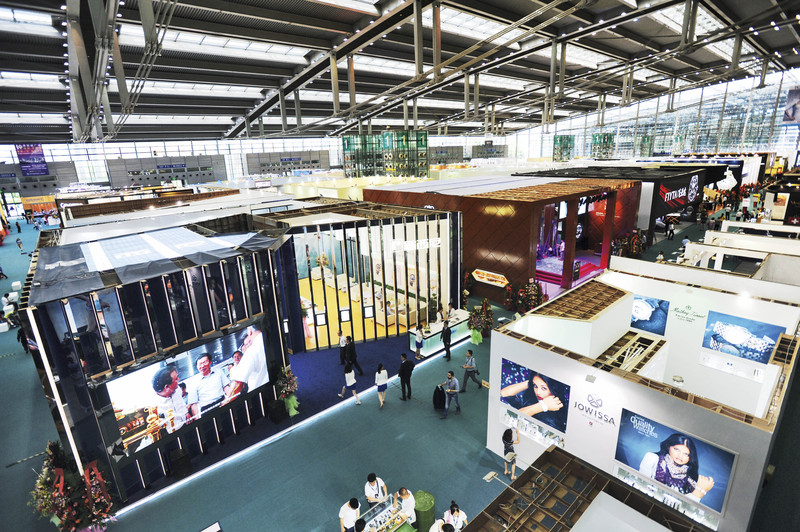
At the 26th Shenzhen International Watch & Clock Fair, spanning over 45,000 square meters, more than 600 brands from the watch and clock industry were present. Most of these were Chinese enterprises that collectively achieved an industrial output value of 65.4 billion yuan in 2014. This year, in addition to the existing Swiss independent watchmakers and German watch industry participants, the fair also attracted counterparts from France and Russia. Since the Baselworld Watch and Jewellery Show in March, various brands seem to have been adjusting their strategies, gradually shifting towards youthfulness and smart technology. Accordingly, the Shenzhen fair replaced the original Hall 9, which showcased watch movement manufacturing technology, with a Time Technology and Wearable Smart Devices zone. A relevant official from the organizing committee stated that, influenced by the “Made in China 2025” plan, which encourages intelligent manufacturing, the watch industry has been provided with a direction for transformation. This exhibition further established a financing platform for innovative “wearable device” projects.

China’s domestic watch industry is primarily concentrated in the Beijing-Tianjin region, Guangdong, the Yangtze River Delta, Shandong, Fujian, and Liaoning. Why has the country’s largest watch fair been held for 26 consecutive years under the call of the Shenzhen Watch & Clock Association—a local non-governmental organization? According to statistics, China produces 80% of the world’s watches, with Shenzhen alone accounting for 42% of global production and 53% of China’s export value. “Shenzhen brand watches” constitute 65% of domestic brands. The city boasts a complete industrial ecosystem, including specialized segments such as precision machining equipment manufacturing, R&D, design, and prototype testing. Zhu Shunhua, President of the Shenzhen Watch & Clock Association, stated that the association has integrated resources to establish three systems—”industrial promotion, technological innovation, and information research”—comprising a total of 16 public service platforms for the industry. Today, building on a comprehensive foundation of mobile communications, IT electronics, and the international market, Shenzhen has precisely become fertile ground for “wearable devices.”

Beyond design and craftsmanship, Chinese watchmaking has finally found an alternative path. After all, regarding the former, for China as a major watch-producing country to comprehensively catch up to the standards of watchmaking powerhouses seems somewhat beyond its current capacity.