Editor’s Note
This article explores the rise of lab-grown diamonds in luxury watchmaking, examining their environmental implications and their challenge to traditional notions of value and rarity.
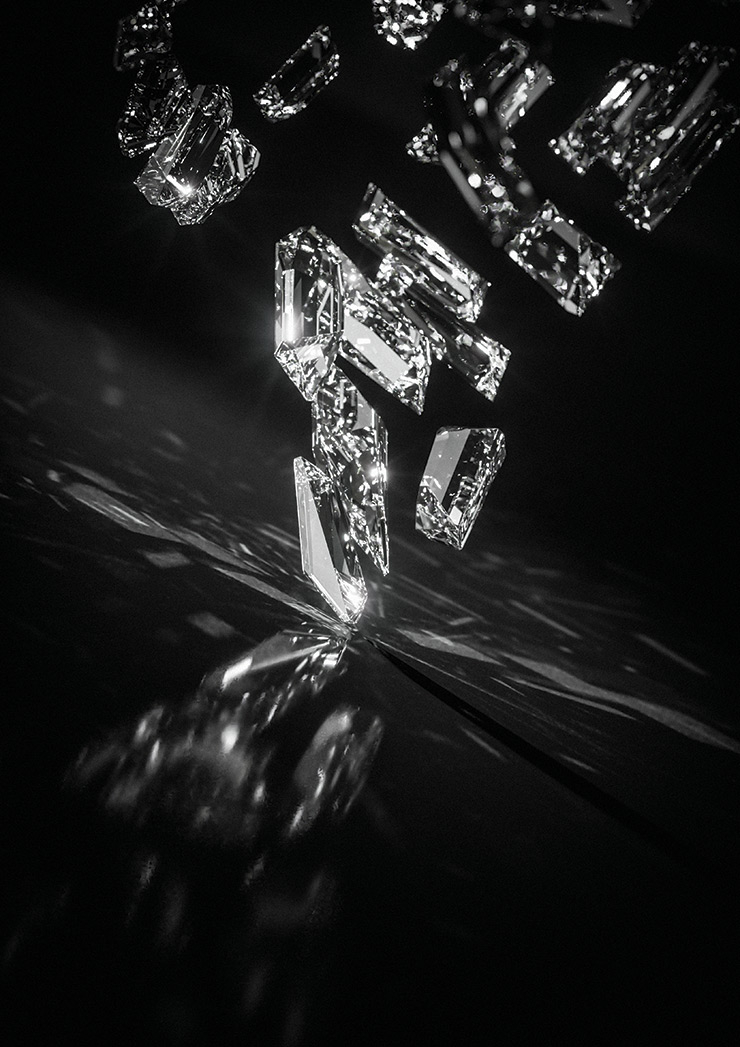
Lab-grown diamonds manufactured by Tag Heuer’s partners Lusix and Diamaze.
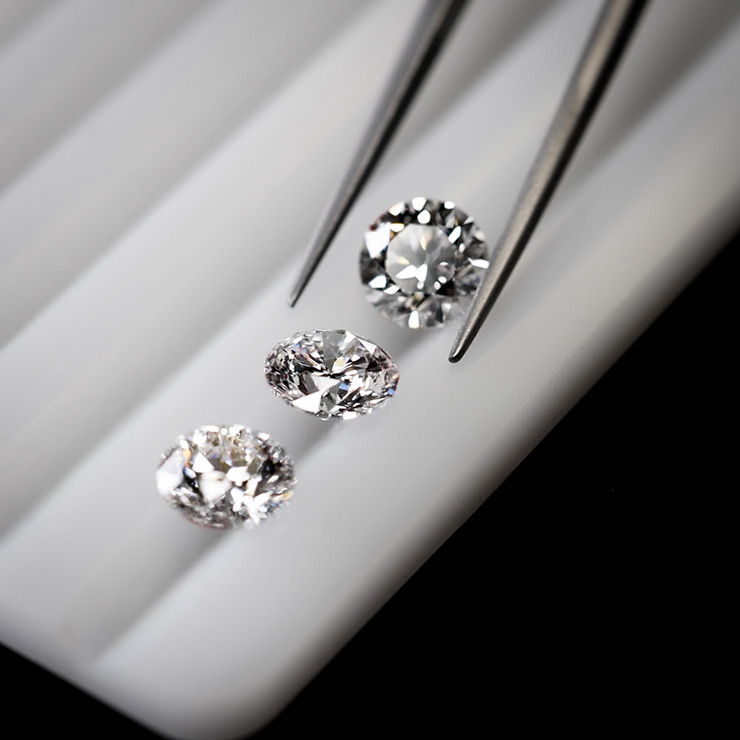
One of the most talked-about pieces at last year’s Watches and Wonders event in Geneva, Switzerland, was undoubtedly Tag Heuer’s Carrera Plasma. While diamonds are traditionally gems nurtured by the Earth over hundreds of millions of years, the diamonds shining in the Carrera Plasma were born in a laboratory. It was the first time I had seen a ‘lab-grown diamond’ in person, a term I had heard frequently in recent years. As the name suggests, lab-grown diamonds are not mined from the earth but are cultivated (grown) in a laboratory (lab). They are created by artificially growing a very small natural diamond seed, resulting in a gem with physical, chemical, and optical properties identical to those of a natural diamond. To put it simply, while a natural diamond rough typically forms over hundreds of millions of years in the Earth’s mantle about 200 km underground, a lab-grown diamond compresses this process into just a few hundred hours. In fact, the two are so similar that they are difficult to distinguish with the naked eye.
There are two main synthesis methods. The HPHT (High Pressure High Temperature) method mimics the natural diamond-forming environment by using high temperature and pressure to grow a diamond seed with carbon powder and metal catalysts like iron and nickel. The CVD (Chemical Vapor Deposition) method works on the principle of injecting hydrogen and methane gas at high temperatures to separate carbon atoms, which then deposit layer by layer like a staircase on an existing seed, growing into a crystal structure identical to natural diamond rough.
Originally, most lab-grown diamonds were used for industrial purposes, but with the rapid advancement of polishing and cutting technologies in the 2010s, they began to gain attention in the jewelry market. In particular, the positive perception grew even more in 2018 when De Beers, the world’s largest diamond mining company, suddenly launched ‘Lightbox’, a jewelry brand centered on lab-grown diamonds.
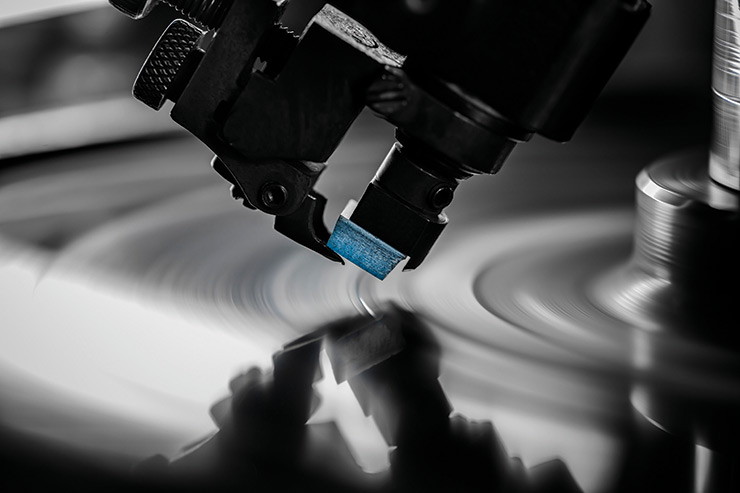
The reason for the soaring popularity of lab-grown diamonds is undoubtedly price. They cost only about 20-30% of the price of natural diamonds, and there are even predictions that prices will fall further due to overheated market competition. With less financial burden, brands can also experiment boldly with cultivated sizes and cutting designs.
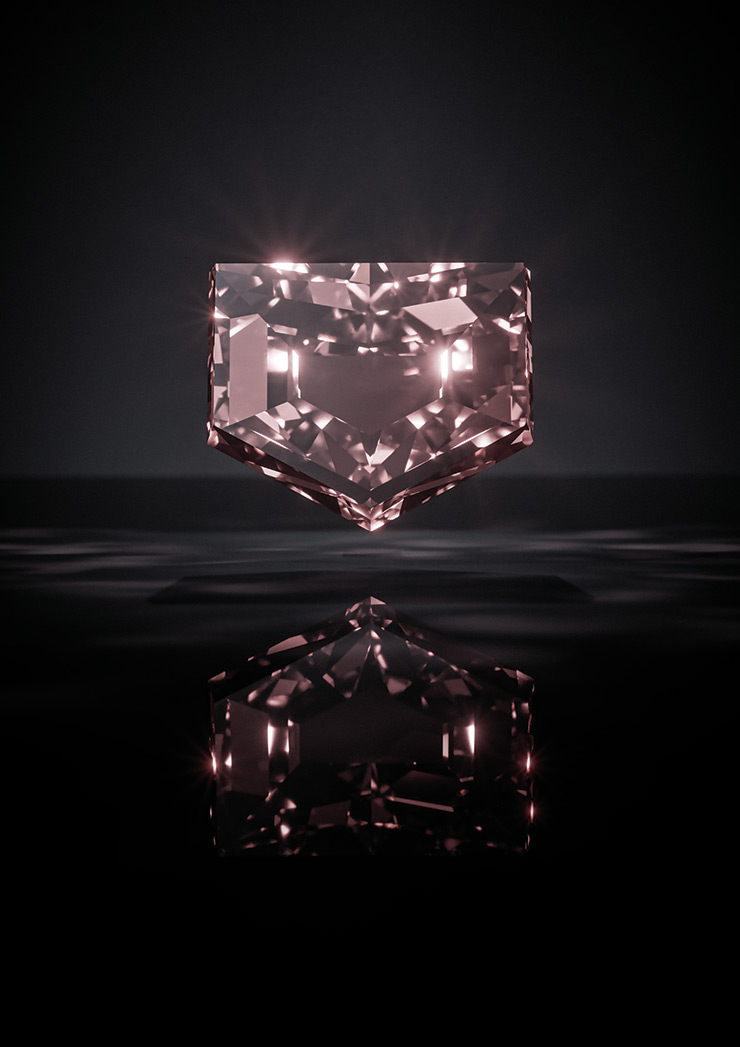
True to this, Tag Heuer, following last year, once again unveiled new products utilizing them this year, taking a bold step by setting pink diamonds, known to be extremely rare in nature. Fred announced the invention of an iconic stone called ‘Fred Audacious Blue’. While in nature, only 1 carat of vivid blue diamond can be obtained from processing 10,000 carats of rough, Fred, after years of research, cultivated a stone of about 36 carats. This was meticulously cut and finished as an 8.88-carat stone, even receiving certification from the Gemological Institute of America (GIA).
Another reason lab-grown diamonds are in the spotlight is the claim that their production process is ethical. Haven’t unethical labor exploitation issues in the mining of natural diamonds been constantly raised? Lab-grown diamonds are free from this controversy because they are not mined. It is also argued that they are environmentally friendly: while mining 1 carat of natural diamond requires 500 liters of water and excavates 6.5 tons of earth, lab-grown diamonds consume only about 18.5 liters of water per carat and have minimal carbon emissions.
However, consumers should not make hasty judgments based solely on these apparent figures. Professor Yoon Seong-won of the Department of Gemology at Hanyang University stated clearly about lab-grown diamonds:
This is because the synthesis process requires high temperatures, necessitating a massive amount of electricity, so accurate investigation on a case-by-case basis is needed. He also pointed out that the manufacturing and production lines of some companies are untraceable. This means it is not transparently known whether the entire process of growing, cutting, and polishing diamonds truly protects workers safely and does not negatively impact the environment. He also emphasized the need to be wary of exaggerated ‘greenwashing’ by many brands, arguing that ‘greenwashing’ as if they have made a great contribution to the environment confuses consumers. In fact, in 2021, the U.S. Federal Trade Commission (FTC) sent warning letters to eight companies that marketed lab-grown diamonds as eco-friendly. Some point out that there is no guarantee that the natural diamond seed itself is mined in an eco-friendly and ethical manner.
Last month, a mobile survey of 2,000 people conducted by the domestic diamond specialist company KDT Diamond found that 4 out of 10 Korean consumers intend to choose lab-grown diamonds when purchasing diamonds in the future. When asked if controversies such as environmental pollution or labor exploitation in the natural diamond mining process also influenced their willingness to buy lab-grown diamonds, 46.5% of respondents answered yes.
Experts believe that lab-grown diamonds will not replace natural diamonds but will form a new jewelry category, creating different markets and growing alongside each other. From the consumer’s perspective, it’s a choice between ‘a slightly more affordable price’ and ‘the origin of Mother Nature’. Additionally, it’s worth noting that the sustainability efforts of brands using natural diamonds are not lagging behind. Many brands like Tiffany, Cartier, Boucheron, Chaumet, and Tasaki comply with the Kimberley Process (an international certification system that blocks conflict diamonds from the supply chain) and, as members of the Responsible Jewellery Council (RJC), are leading the establishment of environmental, social, and ethical norms from mining to sales.
Having more consumer choices is a pleasant thing, but the key is transparency. Just because the lab-grown diamond industry emphasizes sustainability does not automatically guarantee its value. Companies must communicate transparently with scientifically backed evidence, and organic solidarity and cooperation among relevant countries are essential. And the key that governs all of this is ultimately the judgment of the consumer.