Editor’s Note
This article details the dramatic sell-off in precious metals triggered by the nomination of a new Federal Reserve chair. It serves as a stark reminder of how political appointments can rapidly unravel speculative market rallies, with silver leading historic single-day declines.
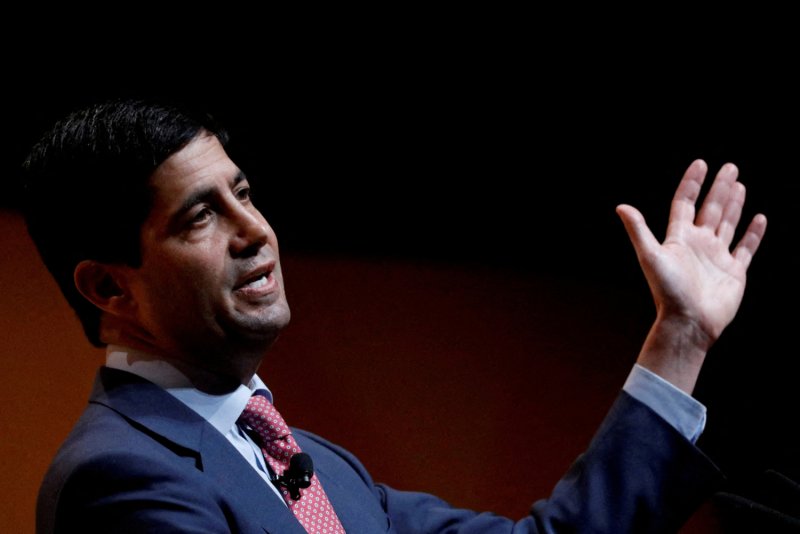
The nomination of Kevin Warsh as the new chairman of the US Federal Reserve turned into a nightmare for the precious metals complex on Jan 30. Prices plummeted at an unprecedented pace as speculators who had fuelled the relentless rally started to sell.
Silver stole the show, dropping more than 25% for its largest single-day decline ever, while platinum and palladium lost more than 15%, and gold was down almost 10%.
In our view, it is clear that neither the nomination of Mr Warsh nor the related rebound of the US dollar was in any way sufficient to explain the sell-off. That said, the same holds true for the US dollar’s previous decline, which was nowhere near sufficient to explain the rally.
These fears have very clearly faded as Mr Warsh is expected to fulfil the chairman’s role more independently than some of the other candidates, alleviating concerns about increasing political interference.
The excessive volatility in the precious metal markets is also a clear indication that flows are dominating fundamentals. Speculative traders in the futures markets are playing a much more important role than safe-haven seekers in the physical markets.
Physical demand is nonetheless sound, as reported by the World Gold Council. Global gold demand reached a record in the fourth quarter of last year, driven by strength in investment demand and central bank buying. The two pillars of gold’s record run remain in place, providing fundamental support to prices on elevated levels.
By and large, the same also applies to silver, platinum and palladium even though the impact of the speculative flows on these markets was much more pronounced. We remain constructive on gold and neutral on silver.
Subject to Senate confirmation, Kevin Warsh is set to succeed Jerome Powell as Fed chair in May. In our opinion, Mr Warsh has a good chance of defending the Fed’s image as an independent institution. While serving at the central bank between 2006 and 2011, he gained a rather hawkish reputation by paying close attention to the risk of inflation and opposing the extensive use of quantitative easing.
This reputation could be useful in the current context, given that the Fed is under constant pressure from President Donald Trump to deliver lower interest rates. Mr Warsh recently expressed support for lower policy rates, combined with proposals to reduce the size of the Fed’s balance sheet — and hence the provision of liquidity — to mitigate inflationary risks.
At the same time, Mr Warsh argues that the prospect of AI-driven productivity increases justifies lower policy rates by allowing higher growth with lower inflation.
As Fed chair, he will be in a position to influence the direction of the discussion, but he will still need to convince a majority of the Federal Open Market Committee to adopt his views on both policy rates and the Fed’s liquidity policy. As Fed chairs hold only one vote on the 12-member committee, their power to push through their own ideas is limited.
A softening labour market and easing inflation should enable the Fed to resume rate cuts at its next meeting in March, continuing in April ahead of the Fed chair changeover. We expect two additional rate cuts of 25 basis points each in the first half of 2026.
Meanwhile, the fourth-quarter 2025 earnings season is moving through its peak phase and continues to underscore a divergence in momentum between the US and Europe, albeit with encouraging signs on both sides of the Atlantic.
In the US, earnings delivery has been robust. Roughly one-third of S&P 500 companies have reported so far, with around 75% beating earnings expectations. While the ratio of beats is in line with the historical average, the magnitude of surprises has been stronger than average, pushing blended fourth-quarter earnings growth close to 12.9% year-on-year, marking a fifth consecutive quarter of double-digit growth.
Information technology, communication services and industrials are leading the expansion, supported by continued AI-related investment and healthy demand trends. Importantly, management tone remains constructive: corporate sentiment indicators point towards elevated confidence levels, and guidance remains clearly positive by seasonal standards.
Early results from hyperscalers highlight a more demanding market backdrop for AI investment. While both Meta and Microsoft delivered earnings that beat forecasts, investor reactions diverged, reflecting a shift towards tangible AI monetisation.
In Europe, the earnings season is less advanced. With approximately one-fifth of companies having reported, earnings growth so far is in the high single digits, while revenue surprises have been relatively strong, particularly among cyclicals. This suggests that demand conditions remain supportive, even as margins face some pressure from foreign-exchange and cost headwinds. Financials and parts of the cyclical sector continue to stand out.