Editor’s Note
This article discusses the recent acquisition of Japanese pearl jewelry brand TASAKI by investment firms FountainVest Partners and Unison Capital. TASAKI is a leading global luxury brand, often compared with MIKIMOTO, and is renowned for its high-end, minimalist designs.
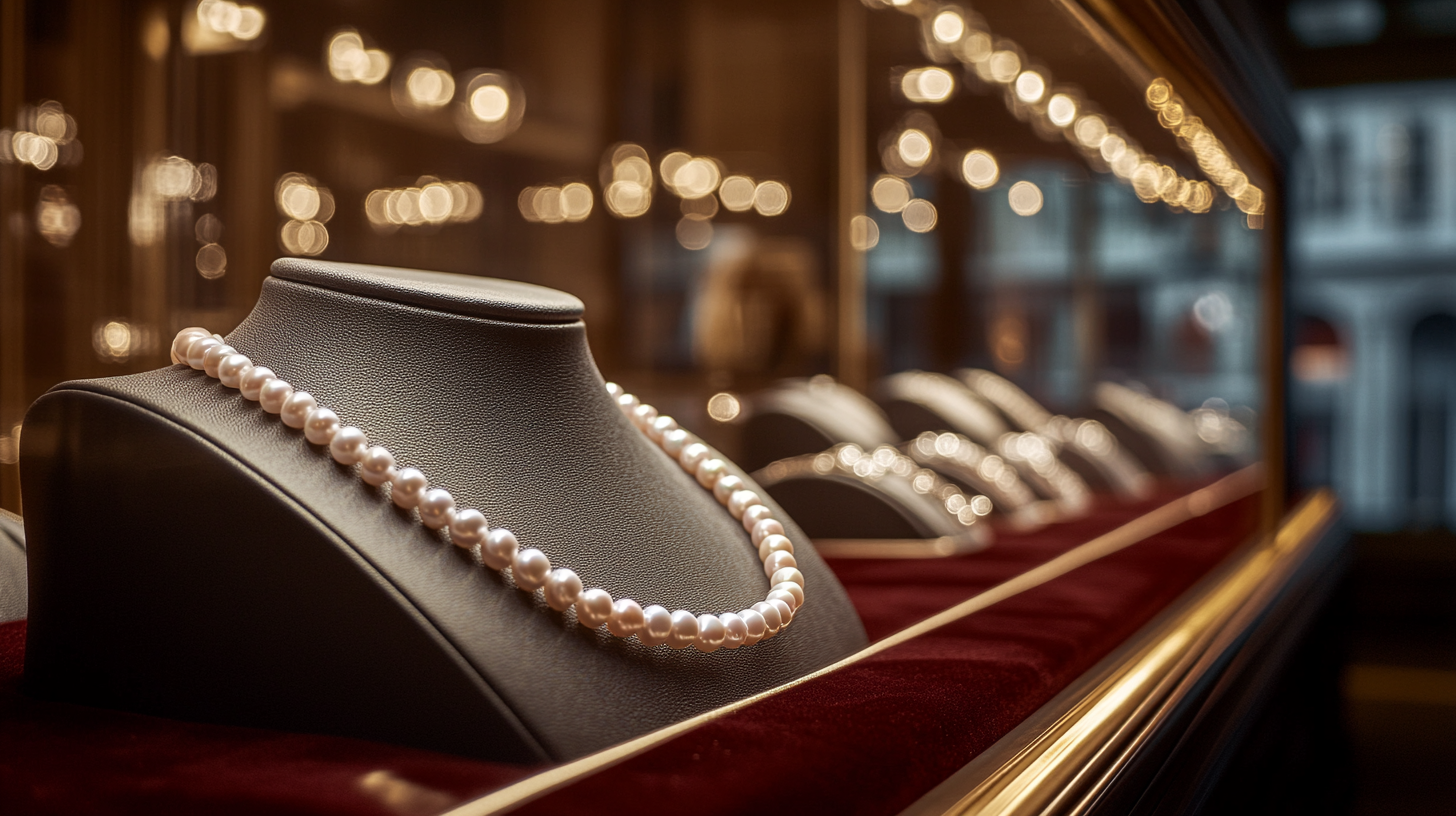
Friends who enjoy wearing pearl jewelry may be familiar with the brand TASAKI, known for its simplicity, high-end, and luxurious style. The brand is not cheap and belongs to the high-end luxury category.
How popular is TASAKI? In the “2020 Hurun Global Pearl Enterprise Innovation Brand List” released by the Hurun Research Institute, MIKIMOTO and TASAKI occupied the top two spots on the list. In the market, these two brands have always been compared by consumers.
Recently, it was revealed that the brand has been acquired by China’s FountainVest Partners and Japan’s Unison Capital for 100 billion yen (approximately 4.8 billion yuan).
According to foreign media reports, this transaction involved the sale from South Korea’s private equity fund MBK Partners. After being purchased by the aforementioned two funds, TASAKI will further expand its overseas stores to increase revenue. Subsequently, it will seek investment returns through an exit strategy such as an IPO or sale to another company.
A characteristic of this buyout is that it is a secondary buyout, indicating that private equity is using more methods to achieve exits. For the jewelry industry, being acquired is perhaps the most common capital operation.
The brand name TASAKI originates from the Japanese Tasaki family. Initially, in 1933, the family operated its own pearl farm. It wasn’t until 21 years later that they officially founded the TASAKI Tasaki Shinju brand (Tasaki Shinju Co., Ltd., where “shinju” means pearl in Japanese) in Kobe, Japan. The company later completed its listing on the Tokyo Stock Exchange in 1993.
TASAKI first considered and attracted capital attention in 2008. As is well known, the financial market suffered a heavy blow at that time, and TASAKI was no exception. In the same year, South Korean PE firm MBK Partners acquired a controlling stake in TASAKI for 7 billion yen (approximately 338 million yuan), holding an 83.8% stake. With MBK’s help, TASAKI achieved global market expansion, turning the company “from near death to survival.”
MBK also reaped超额 returns from TASAKI. In 2017, the former completed the privatization and delisting of the company for 31.5 billion yen (approximately 1.521 billion yuan).
Likely also benefiting from MBK’s expertise in capital operations, TASAKI acquired the Japanese affordable luxury jewelry brand AHKAH in 2019. Founded in 1997, AHKAH primarily targets young Japanese women and belongs to a niche segment. However, unlike TASAKI, AHKAH’s price points are more accessible, supplementing the company’s mass-market offerings.
After holding TASAKI for 16 years, MBK迎来了 its own exit.
In November 2023, MBK expressed its intention to sell TASAKI and entrusted Daiwa Securities to handle the second round of bidding. It is understood that TASAKI’s annual revenue at the time was approximately 40 billion yen; as of the end of October 2023, its EBITDA for the past 12 months was about 11 billion yen.
As mentioned at the beginning, in December 2024, MBK sold TASAKI for 4.8 billion yuan. It’s worth mentioning here that in 2015, foreign media reported that gold jewelry retailer Chow Tai Fook had expressed interest in acquiring TASAKI, with MBK’s first-round asking price being 20 billion yen at the time. However, thanks to the deal not materializing, the jump from 20 billion yen to today’s 100 billion yen represents a fivefold increase.
According to public information, TASAKI currently has over 100 stores worldwide, covering Japan, China, the UK, France, the US, and other countries and regions. In the Chinese mainland market, the brand has 33 stores, with 6 located in Shanghai.
First, let’s talk about one of the buyers in this transaction, FountainVest Partners, a Chinese private equity fund.
A well-known case for FountainVest Partners is its joint venture with the Anta consortium in 2018 to acquire the clothing brand “Arc’teryx,” beloved by middle-aged individuals. At that time, FountainVest Partners, together with Anta Sports, lululemon founder Chip Wilson, and Tencent, formed a consortium to acquire Arc’teryx’s parent company “Amer Sports” for 4.66 billion euros. FountainVest Partners held a 21.4% stake in the seller company.
This transaction also became the largest overseas acquisition in China’s sporting goods industry.
Returning to the jewelry industry, its notable characteristics are high capital intensity and high barriers to entry. Not all players can successfully secure a place in the industry, and growing and expanding is not an easy task. This has led to several well-known jewelry companies choosing the path of being acquired in recent years.
For example, several M&A events have already occurred this year, including jewelry companies being sold at bargain prices. For instance:
• In October, Israeli lab-grown diamond company LUSIX was sold to Belgian lab-grown diamond company Fenix for $4 million. It is understood that LUSIX, founded in 2016, raised a total of $152 million, with investors including LVMH Group’s venture capital arm LVMH Luxury Ventures and Ragnar Crossover Fund.
• In September, Swiss luxury group Richemont completed the acquisition of Italian contemporary high-end jewelry brand Vhernier, purchasing 100% of the brand’s equity from the Italian Traglio family. In the jewelry industry, Richemont is a名副其实 internationally renowned luxury group, owning high-end brands Cartier and Van Cleef & Arpels. The group also acquired the Italian high-end jewelry brand Buccellati for 230 million euros (approximately 1.795 billion yuan) in 2019. In the group’s 2024 fiscal year, its jewelry department’s sales reached 14.2 billion euros, accounting for 68% of total sales, with an operating profit margin as high as 33.1%.
However, in previous years, the jewelry sector still saw numerous financing transactions. Data shows that from 2010 to Q3 2022, China’s jewelry industry witnessed a total of 416 financing events, with disclosed financing amounts exceeding 23 billion yuan.
Since the beginning of this year, several gold jewelry retailers have achieved IPOs. The most recent one was in November 2024, when Mengjinyuan completed its listing on the Hong Kong Stock Exchange. The company primarily focuses on the gold jewelry market in third-tier cities. In China, the gold craze is a fashion trend that cannot be ignored, and gold is no longer just the “favorite of aunties.”
Warren Buffett loves investing in jewelry. He once stated in an interview with foreign media:
It is understood that in 2007, Buffett acquired two famous American jewelers, Bel-Oro International and Aurafin LLC, merging them into Richline Group, which is now the largest jewelry company in the United States. In 2011, Buffett acquired five Italian jewelry brands. In 2016, Buffett’s jewelry company Richline Group announced the acquisition of assets from the family jewelry brand Silpada Designs.
When it comes to jewelry, especially gemstones, the first things that come to mind are value preservation and appreciation, which are the main reasons many people love buying jewelry.
China’s jewelry market has also been appreciating.
According to the “2024-2029 China Gold, Silver, and Jewelry Market In-depth Research Report” released by China Research Puhua Industrial Research Institute, the scale of China’s jewelry market has jumped from 580 billion yuan in 2018 to 820 billion yuan in 2023, with a compound annual growth rate of 7.2%. In 2024, the industry’s market size is expected to exceed 920.1 billion yuan.
However, a pain point in China’s jewelry market is that domestic brands still struggle to withstand the pressure from overseas brands, especially in the high-end jewelry category.
When choosing jewelry, consumers prefer overseas brands. Even when mentioning jewelry, gold ornaments are still the most frequently mentioned category.
Returning to the TASAKI acquisition, the participation of Chinese capital FountainVest Partners in the acquisition reveals a reason: