Editor’s Note
This article reports a sharp, sudden decline in precious metals prices on the first day of the Lunar New Year in 2026. The significant drops in both gold and silver highlight the volatility in these markets. Investors and analysts will be closely monitoring for the underlying causes and potential implications of this move.
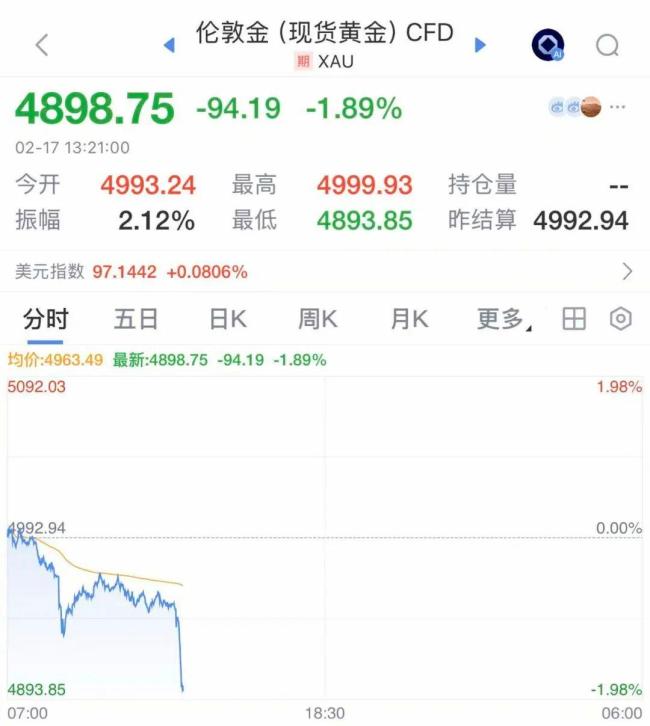
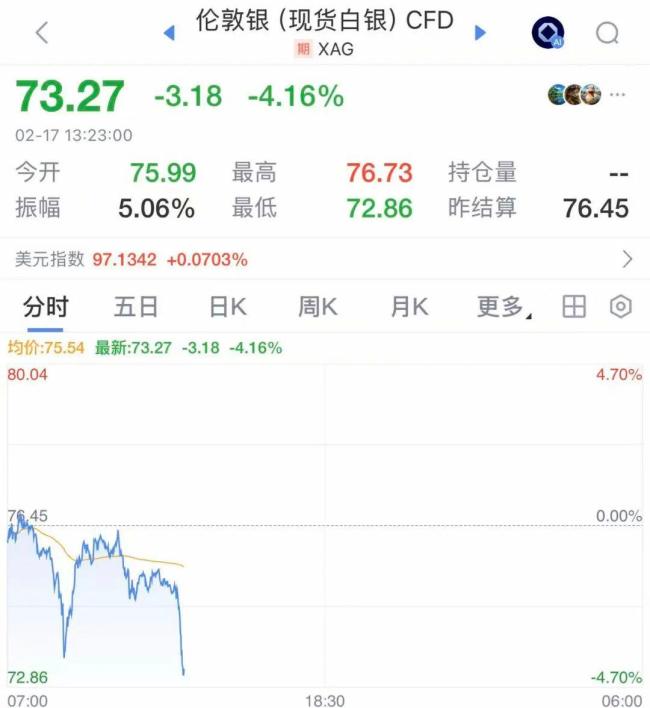
On February 17, 2026, the first day of the Lunar New Year, international precious metals prices suddenly plunged. As of the time of writing, spot gold had broken below $4,900 per ounce, with a daily decline approaching 2%; spot silver had broken below $75 per ounce, with a daily drop exceeding 4%.
Many major global markets were closed for the traditional holiday, leading to thin trading in the precious metals market. Against the backdrop of expectations for a potential cooling of the Federal Reserve’s interest rate hikes, gold encountered resistance at the key psychological level of $5,000 per ounce. Some investors took profits, further intensifying the downward pressure on precious metals prices.
On the news front, the second round of U.S.-Iran negotiations and a new round of talks between the U.S., Israel, and Palestine were scheduled to take place in Davos on the 17th local time. U.S. President Trump stated that he would “indirectly” participate in this round of indirect talks with Iran, calling the negotiations very important and describing Iran as a very tough negotiating party. When asked about the possibility of reaching an agreement, Trump believed Iran “wants to reach a deal” and felt that Iran did not wish to bear the consequences of failing to reach an agreement.
Furthermore, the U.S.-Israel-Palestine talks will discuss territorial issues, with Israeli and Palestinian representatives potentially engaging in bilateral contact. The Israeli side emphasized that the talks must yield results rather than be delayed, while Trump pressured Israeli Prime Minister Benjamin Netanyahu to “quickly” reach an agreement with the Palestinian side.