Editor’s Note
This article has been updated to reflect the official announcement of the landmark EU-India trade agreement, hailed by leaders as a historic deal expected to significantly boost bilateral trade.
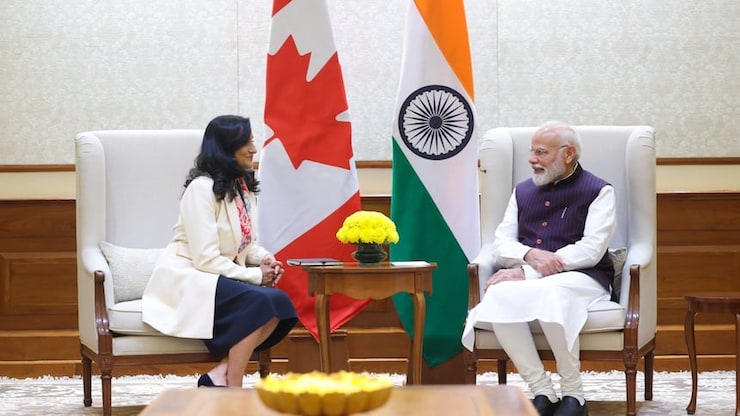
Indian Prime Minister Narendra Modi (center) announced the agreement in New Delhi with European Commission President Ursula von der Leyen (right) and European Council President António Costa.
EU and Indian leaders have announced a major trade agreement. This will be India’s largest trade deal ever, with EU exports to India expected to double by 2032.
Indian Prime Minister Narendra Modi and European Commission President Ursula von der Leyen jointly hailed the agreement as “The mother of all deals.”
Negotiations have been on and off for the past two decades. However, under the pressure of US tariffs over the past six months, the talks finally became urgent and were successfully concluded.
Modi emphasized that the agreement is the largest and most comprehensive ever signed by India, covering one-third of global trade.
Under the free trade agreement, India will cut tariffs on nearly 97% of EU goods by value; EU exports to India are expected to double by 2032.
India, with a population of 1.46 billion, will be a substantial market for the EU’s 27 member states, which have a combined population of 450 million.
The announcement coincided with India’s Republic Day celebrations and military parade, for which von der Leyen and European Council President António Costa were invited guests. The ceremony is an occasion often used by Indian leaders to signal strategic priorities.
The agreement will gradually dismantle India’s long-standing trade barriers, opening its heavily protected domestic market to European goods.
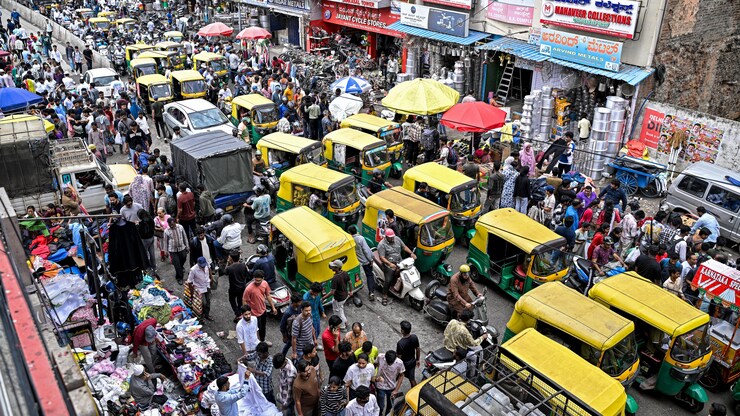
Tariffs for European car manufacturers such as Volkswagen, Renault, and Mercedes-Benz exporting to India will plummet from current levels as high as 110% for some models to 10%.
Additionally, India has agreed to lower tariffs on European products like wine, chocolate, and olive oil.
In return, Indian textiles, leather, gems, and jewelry will enter the EU with zero tariffs.
Furthermore, the agreement promises to simplify access procedures for highly skilled Indian professionals working in Europe, a significant win for India’s labor market.
Many countries are facing the unpredictable trade policies of the Trump administration.
Leaders from several countries, including Canada, have recently visited India seeking trade diversification. Prime Minister Carney also plans to travel in the coming months to attempt deals in uranium, energy, and minerals.
The US factor also directly accelerated these negotiations. Last August,
Trump made it clear that half of this was to punish India for purchasing cheap Russian crude oil after the Russia-Ukraine conflict.
Although the EU lowered US tariffs to 15% last year, some European countries faced threats of higher tariffs after opposing Trump’s attempt to acquire Greenland.
Praveen Donthi, Senior Analyst for India at the International Crisis Group, believes that after the Russia-Ukraine war, Europe realized Russia’s deep ties with India and understood it must win India to its side.
Notably, the agreement reached on Tuesday excludes the most contentious issues of agricultural and dairy access, indicating both sides were eager to sign a deal first to stabilize the broader situation.
Donthi believes that for India, after Indo-US talks stalled last fall, the Modi government also urgently needed to show domestic trade achievements.
The agreement will be formally signed later this year and, after legal scrutiny, is expected to take effect in early 2027.