Editor’s Note
This article describes the theft of eight historic pieces of jewelry from a museum, including crowns and necklaces once owned by French queens and empresses.
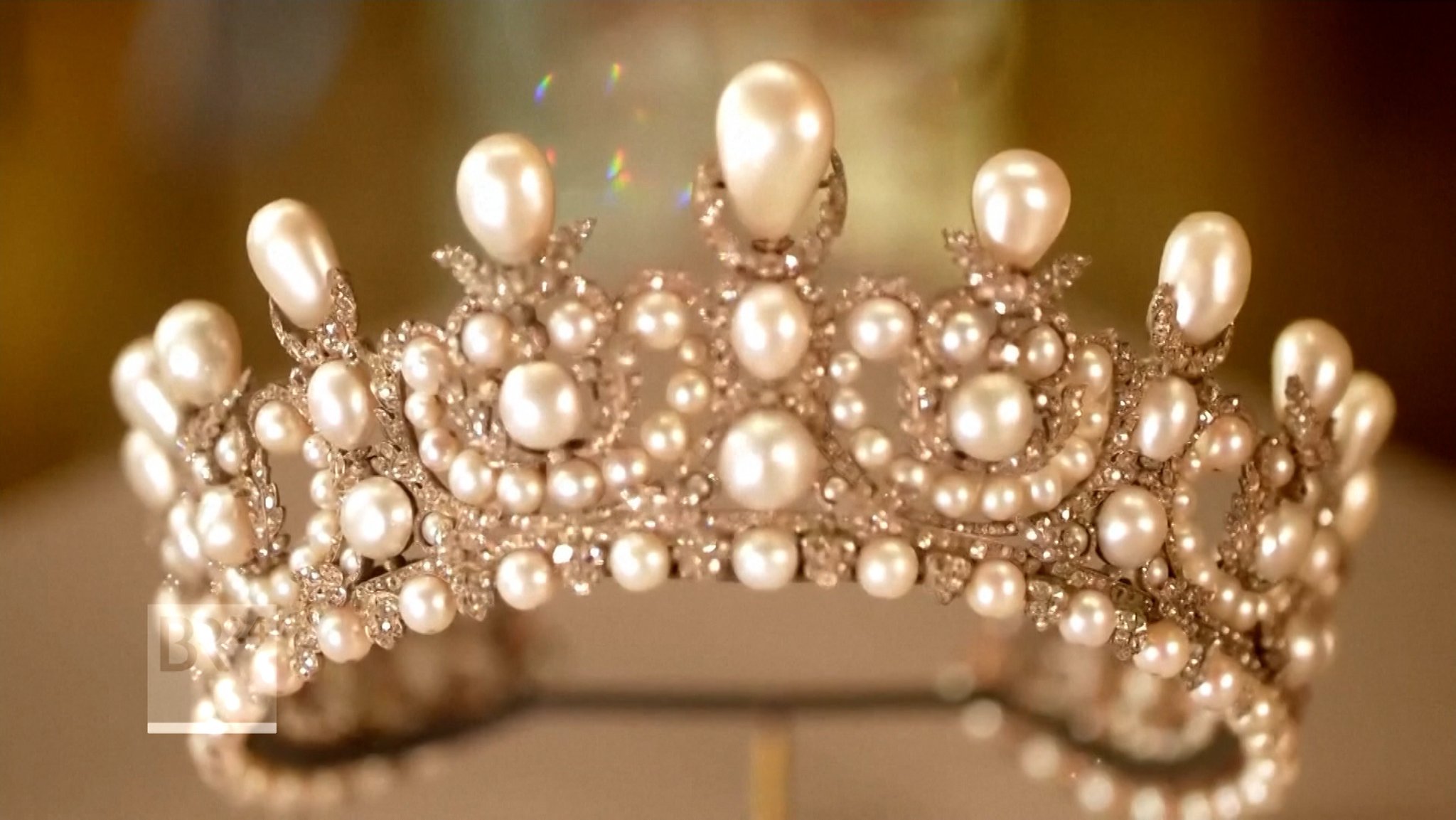
The thieves escaped with eight precious pieces of jewelry belonging to former queens and empresses, including diadems, necklaces, earrings, and brooches studded with gemstones.
The loot includes a diadem of Empress Eugénie with almost 2,000 diamonds, as well as a necklace with eight sapphires and 631 diamonds that belonged to Queens Marie-Amélie and Hortense. Furthermore, a chain with 32 emeralds and 1,138 diamonds, which belonged to Marie-Louise, the second wife of Napoleon Bonaparte, was stolen.
The thieves lost a crown during their escape: The crown of Empress Eugénie (1826–1920), wife of Napoleon III, adorned with emeralds and hundreds of diamonds, was found damaged near the Louvre.
It is questionable what the thieves will do with the jewelry. “The original pieces (unaltered) would likely be very difficult to sell,” the Federal Association of the Gemstone and Diamond Industry responded in writing to a BR24 inquiry. Exceptions might be collectors who themselves would have to exhibit criminal energy or would not know the pieces and their origin – which is rather unrealistic.
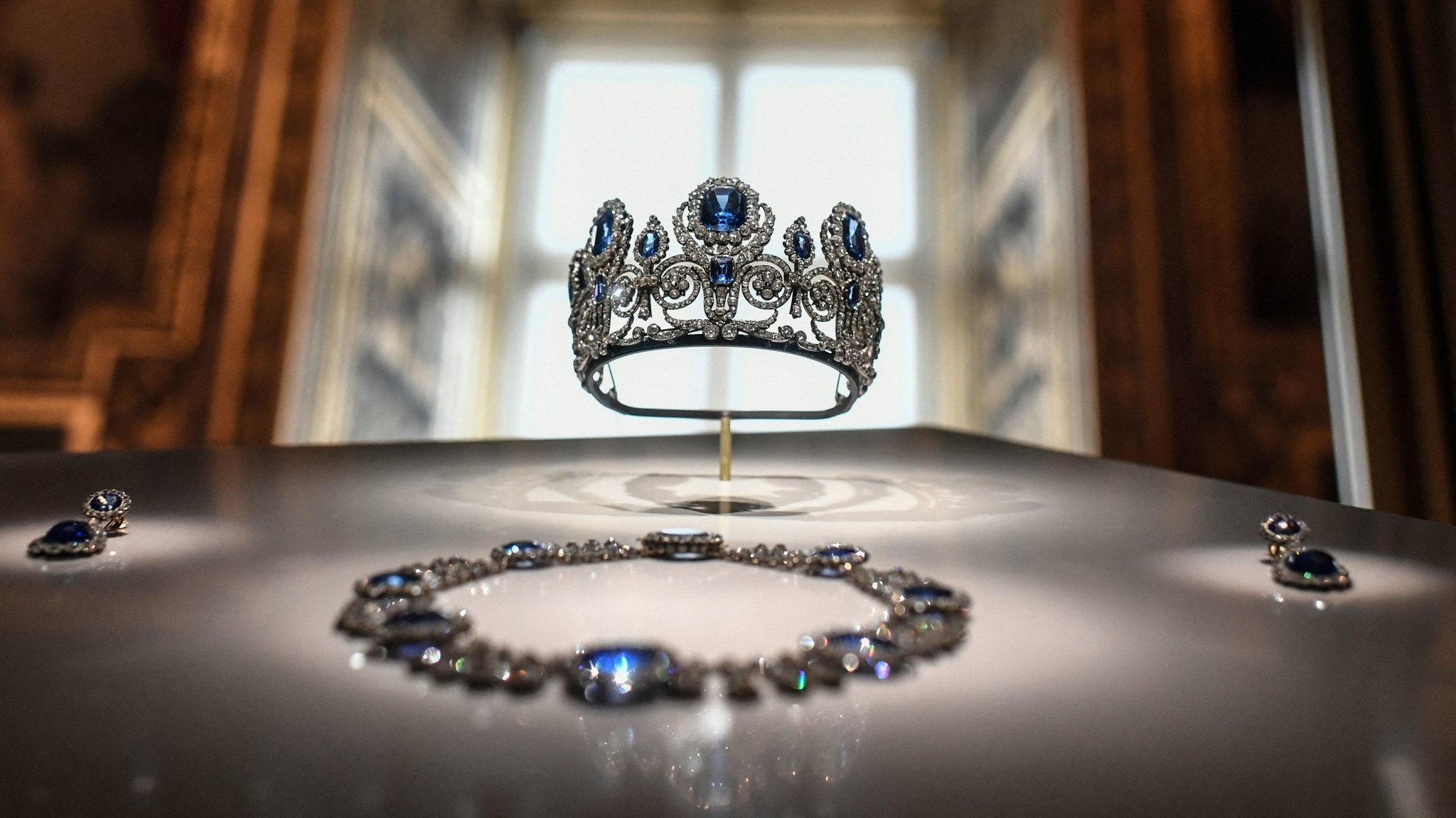
The association considers an appraisal and determination of the gemstones based on their origin and processing to be possible if they are unaltered, i.e., not recut, and there are “meaningful expert reports” on the stones that indicate weight, cut, and special characteristics.
But precisely this alteration could happen. Experts consider it more likely than the private collector possibility that the jewelry pieces will be broken up and money made from them.
No one would then be able to recognize that it is loot from a theft. If the gold is broken down into small lumps, the perpetrators could, for example, go to scrap gold dealers and claim they inherited it.
This would fit the assumption of the French Minister of Culture, who told Europe 1: “Here we are dealing with organized crime.”
For unique and culturally significant objects, there is a special form of art insurance, as the German Insurance Association (GDV) explained in response to a BR24 inquiry. “Since no market price exists for such objects, a so-called agreed insurance value is set,” the GDV stated. This practice applies not only in Germany but across Europe.
In the event of a loss, insurers would first check whether the agreed security standards were met, such as functioning alarm systems, secured display cases, documented checks, and trained personnel. “If a stolen piece is destroyed or remains permanently missing, the insurance replaces the agreed value,” said the GDV. If it resurfaces damaged, restoration costs and any loss in value would be compensated.
In 2017, thieves stole a 100-kilogram gold coin, the “Big Maple Leaf,” worth several million euros from Berlin’s Bode Museum. The loot remains missing to this day. The gold was presumably melted down.
In 2019, during the break-in at the Green Vault in Dresden, thieves seized 21 pieces of jewelry made of diamonds and brilliants worth 116 million euros. A portion of the loot from Saxony’s famous treasure chamber museum is still missing.
In 2022, a gold treasure was stolen from the Celtic Roman Museum in Manching. The court estimated the material value of the approximately 3.7-kilogram treasure at significantly more than one million euros. The majority of the loot remains untraceable to this day. Only 500 grams of melted Celtic coins have been recovered so far. The gold coins dated from around 100 BC.