Editor’s Note
This article explores a lesser-known chapter in Parisian history, revealing how the city became the global hub for the pearl trade from the 1860s to the 1930s. It traces how this commerce shaped luxury, art, and culture, culminating in the “pearl mania” of the 1920s.
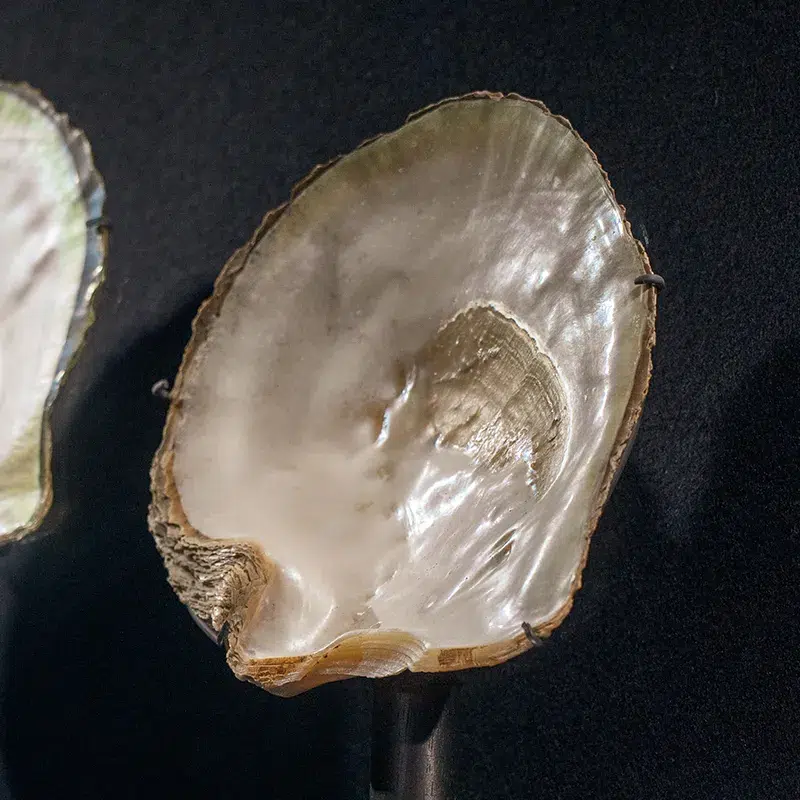
Between the 1860s and 1930s, the majority of pearls fished in the Arabian-Persian Gulf passed through Paris, where they were traded and set by the greatest jewelry houses on Place Vendôme.
Pearls shaped the Parisian luxury industry, built fortunes, inspired jewelers and artists, and found themselves at the center of a “pearl mania” that invaded all the arts during the Roaring Twenties.
It is this fascinating commercial, artistic, and human saga, halfway between art and science, that L’École des Arts Joailliers tells in the exhibition “Paris, Pearl Capital” – to be discovered for free until June 1, 2025.
In theory, every shelled mollusk can form a pearl, but most come from marine oysters in warm regions.
It is estimated that one oyster in ten thousand produces a pearl usable in jewelry, and only one oyster in fifty thousand yields an exceptional pearl. A rarity that explains the value of this precious biomineral.
Contrary to the common belief of a grain of sand forming a pearl, there is no scientific evidence to support this myth. It is thought to be rather a virus or bacterium that triggers the secretion of nacre inside the mollusk’s mantle.
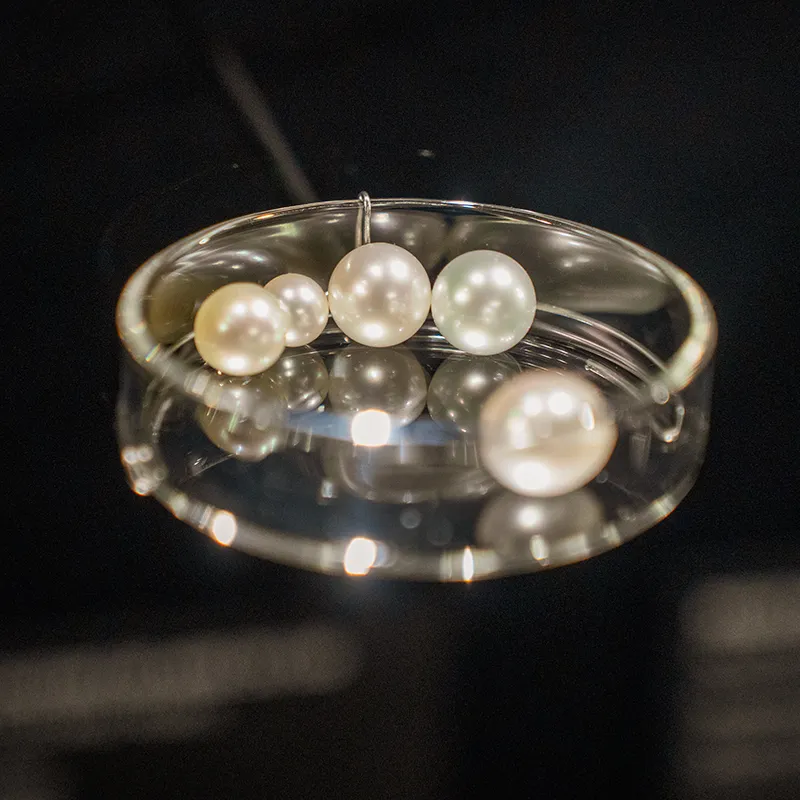
The term “natural pearl” refers to a pearl formed without human intervention, while “cultured pearl” refers to a pearl produced in a controlled environment by pearl oysters where a piece of shell is placed around which nacre forms to create a pearl.
This distinction between natural and cultured pearls only appeared from the 1920s onwards with the arrival of cultured pearls on the Parisian market.
Most natural pearls come from the Arabian-Persian Gulf, which concentrates a large number of pearl oysters. In the 19th-century collective imagination, the pearl is associated with Orientalist aesthetics: for example, in 1863, Bizet set his opera “The Pearl Fishers” in the Indian Ocean.
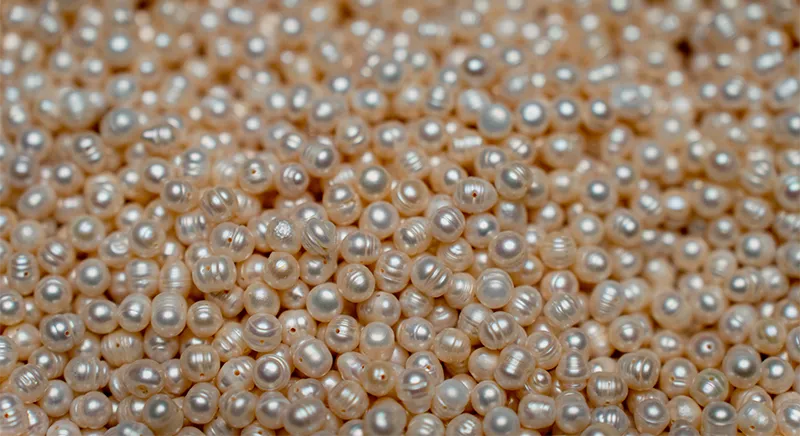
At the entrance to the exhibition, a pool of pearls invites you to plunge your hand in, touch, and handle them to better discover these treasures.
Some jewelers like Cartier took advantage of trips to India to pass through Dubai and establish close ties with pearl merchants, thus shifting the market from London to Paris.
The story seems crazy, but it’s true! In 1916, Pierre Cartier – grandson of the House’s founder – exchanged a two-strand pearl necklace for a townhouse on New York’s 5th Avenue.

Around 1900, during the Belle Époque, the great jewelry houses sought the most beautiful pearls, which they combined with platinum or diamonds to create light and dazzling jewels.
On ears, around necks or wrists… pearls swept over the bodies of high-society women, and while cream-toned pearls were highly popular, interest also began in new colors and shapes.
like cinema, photography, or painting, making the pearl one of the symbols of the Roaring Twenties. For example, in 1911, fashion illustrator George Barbier created a group of artists nicknamed “the knights of the bracelet.” These dandy artists created illustrations of 1920s fashion where pearls were omnipresent.
The 1929 economic crisis announced the end of Parisian reign over the pearl world. The awareness of the great precariousness of pearl fishermen’s living conditions – close to slavery – followed by the arrival of World War II with the deportation of Jewish merchants from Rue La Fayette dealt a fatal blow to the pearl market. Traders then massively redirected towards cultured pearls.
The exhibition by L’École des Arts Joailliers not only tells us the history of the pearl but also presents about a hundred pieces from the greatest Houses like Van Cleef & Arpels, Cartier, Fred…
Some necklaces required years, sometimes even several generations, to gather pearls of similar hues and sizes.
A rarity that justifies the prices of the most prestigious adornments.