Editor’s Note
This article reports on Ukrainian President Volodymyr Zelensky’s public rejection of a reported proposal from former U.S. President Donald Trump. The proposal, as described, would have traded U.S. support for access to Ukraine’s mineral resources. Zelensky’s statement underscores the high-stakes diplomatic and economic pressures facing Ukraine amid the ongoing conflict.
Ukrainian President Volodymyr Zelensky has stated, “I cannot sell our country.” This came after he rejected a proposal from US President Donald Trump that would have granted the United States mining rights to Ukraine’s minerals, valued at $500 billion.
Ukraine possesses significant rare earth mineral deposits, but many are located in areas currently controlled by Russian forces.
Trump suggested that these minerals should be used in exchange for continued US support for Ukraine in the war.
Trump’s proposal highlights the importance of these minerals to the US. But what are they used for, and what could they offer America?
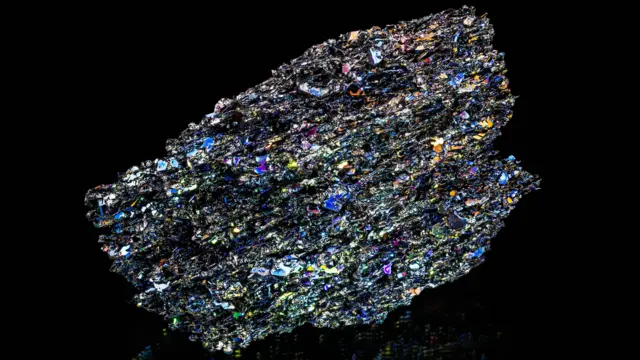
“Rare earths” is a collective term for 17 metallic chemical elements that are widely used in modern technology and industry.
These elements are crucial for the production of smartphones, computers, medical devices, and more.
They include: Scandium (Sc), Yttrium (Y), Lanthanum (La), Cerium (Ce), Praseodymium (Pr), Neodymium (Nd), Promethium (Pm), Samarium (Sm), Europium (Eu), Gadolinium (Gd), Terbium (Tb), Dysprosium (Dy), Holmium (Ho), Erbium (Er), Thulium (Tm), Ytterbium (Yb), and Lutetium (Lu).
The term “rare earth” stems from the difficulty of finding them in pure form, although deposits of some are found worldwide.
However, rare earths are often found alongside radioactive elements like thorium and uranium, and their extraction requires large amounts of toxic chemicals, making the process sometimes difficult and expensive.
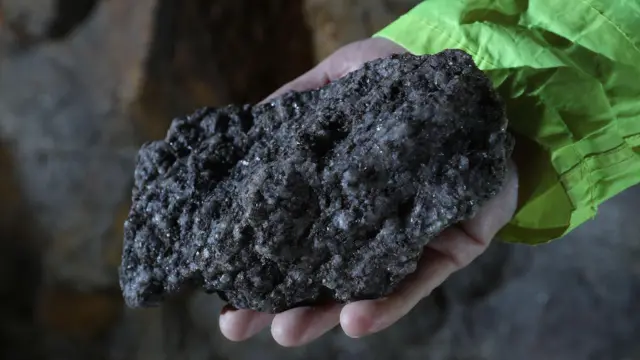
Ukraine possesses 21 of the 30 critical minerals listed by the European Union, accounting for about 5% of global reserves.
Many areas containing these elements are located in the southern part of the Ukrainian crystalline shield, primarily in the Azov Sea region. Most of these territories are currently occupied by Russia.
However, there are still promising projects in regions such as Middle Buzh, Kyiv, Vinnytsia, and Zhytomyr.
Experts note that while hundreds of potential geological objects have been identified, only some can be developed into actual deposits if economically viable.
Regarding other important Ukrainian mineral resources, according to Forbes Ukraine, about 70% are located in the Donetsk, Dnipropetrovsk, and Luhansk regions. Consequently, many deposits are within territories invaded and still occupied by Russia.
Government data shows Ukraine has about 450,000 tons of lithium reserves. Although mining plans exist, production levels are not yet determined.
Russia has occupied at least two lithium deposits: Shevchenkivske in the Donetsk region and the Kruta Balka complex deposit in the Berdyansk area. Lithium deposits in the Kirovohrad region remain under Ukrainian control.
The US interest in controlling rare earth mineral production stems largely from competition with China, which currently dominates the global supply of these critical materials.
Over recent decades, China has become the leader in mining and processing rare earth minerals, accounting for 60-70% of global rare earth production and nearly 90% of processing capacity.

US dependence on China in this area is a concern for both national security and the economy, as these materials are vital for advanced technologies, from electric vehicles to military equipment.
By Navin Singh Khadka, BBC Environment Correspondent
On the surface, this appears contradictory. While ordering an expansion of fossil fuel production and abandoning renewable energy policies, Trump is also trying to secure critical mineral resources, which are key to driving the clean energy transition.
However, these minerals are not only for clean energy transition; they are also foundational for consumer electronics, military and navigation equipment, and crucially, AI data centers.
Trump has announced a major push to expand US AI infrastructure, which will require vast amounts of critical minerals, especially copper, silicon, palladium, and rare earth elements.
Currently, the supply of critical minerals is beginning to tighten, which is one of the main reasons for the slowdown in global clean energy growth.
Experts say China’s dominance in critical minerals, including rare earth elements, is a major factor in the geopolitical influence between the US and China.
According to the International Renewable Energy Agency, China, with decades of accumulated processing technology and expertise, now controls 100% of the global supply of refined natural graphite and dysprosium, 70% of cobalt, and nearly 60% of refined lithium and manganese.
Furthermore, China dominates global rare earth element production and tightly controls critical metals worldwide, owning significant mines in Africa, Asia, and South America.
During the Biden administration, the US House Armed Services Committee stated: “To counter China’s growing control over global supply chains, the US must ensure innovative supplies of its own critical strategic minerals.”
The Trump administration appears to view places like Ukraine and Greenland as regions where innovative methods can be used to expand its supply chains.