Editor’s Note
The pre-owned luxury watch market has seen dramatic swings, from a speculative bubble fueled by new wealth to a sharp correction. As this article explores, its recovery is now being shaped by shifting economic forces, including cryptocurrency volatility and geopolitical trade policies.
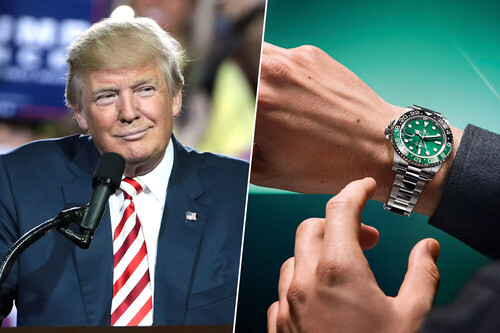
The pre-owned luxury watch market has experienced a rollercoaster ride in recent years. Following a period of record prices driven by new millionaires from cryptocurrencies and the stock market, the luxury watch bubble burst. Now, factors such as the cryptocurrency rebound and changes in the trade war initiated by the US are reshaping the recovery landscape of this exclusive market.
The interest in luxury watches does not merely reflect a passing trend. The nature of luxury watches, considered both engineering artworks and an alternative investment form that sometimes outperforms stock markets, also responds to global economic movements and the search for safe-haven assets.
During the pandemic and subsequent years, the cryptocurrency boom and the strong stock market generated a new wave of millionaires. Many of them, driven by the need to invest their profits in tangible assets, rushed to buy luxury watches.
This trend particularly affected brands like Rolex, Audemars Piguet, or Patek Philippe, whose most coveted models were hard to obtain in traditional stores due to limited production. This drastically increased demand, far exceeding supply. The result: a bubble that caused the pre-owned market for these exclusive watches to skyrocket, even doubling their original retail price.
This bubble did not take long to burst. When financial markets began to show signs of weakness, many investors who had acquired luxury watches decided to sell them, saturating the pre-owned market with pieces they had bought at inflated prices just months before.
Currently, although the pre-owned luxury watch market remains at modest levels, it is beginning to show signs of moderate recovery. As highlighted by Bloomberg, although figures are far from the levels reached post-pandemic, the sector is starting to recover, partly driven by renewed investor interest in cryptocurrencies following the rebound experienced in recent months.
The uncertainty surrounding tariffs on European luxury goods imposed by the US, including Swiss watches, could impact the pre-owned market, as tariffs affect both the increase in final retail prices and the availability of watches in key markets like the US.
Following the announcement of tariffs the US would impose on Europe, American luxury watch suppliers reacted immediately. According to data published by Bloomberg, after “Liberation Day,” which marked the start of Trump’s trade war, a 150% increase in purchase volume was recorded in the North American market in anticipation of the tariffs taking effect.
However, the following month, purchases fell by 25% because suppliers had simply bought all they could, and Trump’s tariff sanctions had not been applied. This meant the supply of new watches in stores met demand, so pre-owned market prices have remained stable.
Simultaneously, the stagnation of luxury product sales in Asia, especially China, has meant luxury watch manufacturers have more stock for European and North American markets. This also contributes to the stabilization of pre-owned prices because there is less pressure on the availability of new watches in stores.
Furthermore, the rise of high-end men’s jewelry is also contributing to a smooth recovery of the pre-owned luxury watch market. Until relatively recently, watches were the only notable piece of jewelry in men’s fashion. However, in recent years the trend has changed, and necklaces, bracelets, and other jewelry are part of men’s outfits. Not even Mark Zuckerberg has been able to resist.
In 2023, the volume of that market was $8.5 billion, but by 2025 it is estimated to grow to $9.41 billion, indicating that men’s jewelry is gaining ground and watches are no longer the only option for high-net-worth investors.