Editor’s Note
The global luxury market faces a pivotal moment, with Bain & Company projecting its sharpest potential decline since 2008. This analysis highlights the pressures of economic uncertainty, shifting consumer demographics, and market polarization.

According to the latest report from Bain & Company and the Altagamma Foundation, the personal luxury goods segment could record its sharpest decline since 2008 against a backdrop of macroeconomic instability, generational disengagement, and market polarization.
After a 2024 decline of -1% to 364 billion euros, the global luxury industry is expected to slow further in 2025. According to projections from Bain & Company, the “most likely” scenario forecasts a decline ranging from -2% to -5% for the year, an unprecedented dynamic since the 2008 financial crisis, excluding the Covid period. While the most optimistic trajectory indicates a market evolution ranging from -2% to +2%, the most pessimistic outlooks mention a potential decline of up to -9%.
states the report, citing profound cultural transformations alongside economic uncertainties, market volatility, and geopolitical tensions. These systemic factors are accompanied by a weakening of distribution networks, particularly multi-brand platforms, and the entry into a phase of increased turnover among creative directors.
Despite the overall slowdown, the study highlights the positive performance of certain categories related to experiential luxury. Travel, hospitality, dining, and private aviation, for example, benefit from sustained consumer demand for bespoke, high-value-added experiences.
This dynamic is accompanied by a marked polarization between the best-performing brands… and the others: according to the report, in 2025, the growth gap between these two groups widened by 1.5 times compared to the previous year.
Geographically, the United States and China are going through a wait-and-see phase, while markets such as the Emirates, Mexico, or Indonesia show resilience driven by rising local demand and new tourist flows.
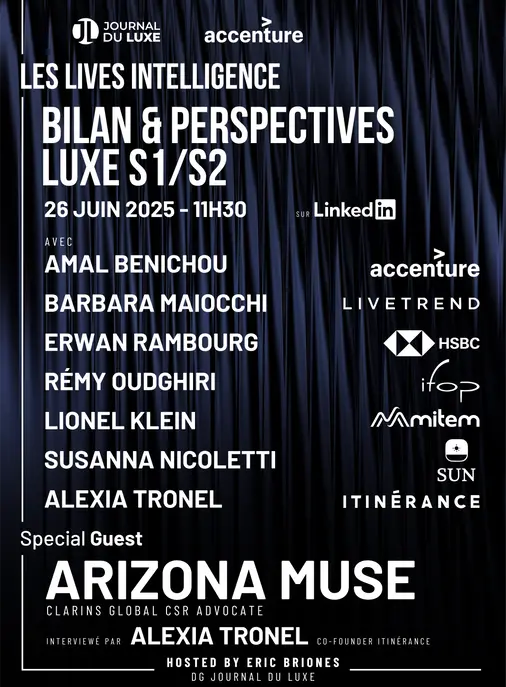
In a context of instability that seems to be settling in, the report calls on luxury players to redefine their priorities and cultivate their desirability through a value proposition centered on quality, creativity, and cultural anchoring. Experts also emphasize the strategic contributions of digital transformation in areas such as advanced clienteling, smart pricing, and hybrid retail formats.
Because in the medium term, the potential remains significant: more than 300 million new consumers are expected to enter the personal luxury goods market by 2030, half of whom will come from Generations Z and Alpha. To capture this demand, the study stresses the need to move away from a transactional logic to create a lasting emotional connection while adapting to generational aspirations.
summarizes Claudia D’Arpizio, senior partner at Bain & Company and co-author of the report.