Editor’s Note
This article examines the mounting pressures on the global luxury sector, which faces a potential double blow from existing economic headwinds and newly proposed U.S. tariffs.
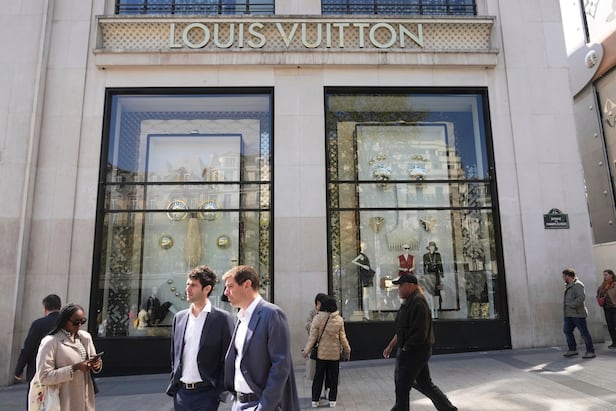
The global luxury industry is on high alert due to the tariff policies of U.S. President Donald Trump. The luxury market is already struggling with economic recession and shrinking consumption. The possibility of additional damage has been raised as President Trump announced plans to impose a 20% tariff on products from the European Union (EU) and a 31% tariff on Swiss products.
According to the industry on the 15th, the United States is one of the key consumer markets, accounting for about 25-30% of the global luxury market. Most products from major brands like Louis Vuitton, Gucci, and Chanel are produced in Europe, such as France and Italy. Since President Trump announced the reciprocal tariff plan, the stock prices of luxury companies have plummeted. Although President Trump declared a 90-day suspension of the reciprocal tariffs just a week later on the 9th, the stock prices of luxury companies have not recovered to previous levels and remain unstable.
In the French stock market, the stock price of LVMH Moët Hennessy Louis Vuitton fell 7.8% from 575.2 euros on the 2nd to 530.1 euros the previous day. LVMH is the group that owns major luxury brands like Louis Vuitton, Dior, and Celine. The stock price of the Richemont Group, listed on the Swiss stock exchange, fell 11.2% from 154.3 Swiss Francs (CHF) on the 2nd to 137 Swiss Francs the previous day. The Richemont Group owns top-tier jewelry and watch brands like Cartier, Van Cleef & Arpels, and IWC.
This implies that if stock prices fall, sales performance will also be poor. Investment bank Bernstein revised its previous forecast for luxury industry sales growth this year from 5% to a 2% decline. It particularly expects first-quarter sales of the Kering Group, which owns Gucci, to decrease by 25%.
In the case of LVMH, sales in its core fashion and leather goods division, which accounts for nearly half of the group’s revenue, were forecast to decline by 1% in the first quarter. However, in LVMH’s earnings announcement the previous day, sales in the fashion and leather goods division fell short of financial market expectations. First-quarter sales in the fashion and leather goods division were 10.108 billion euros (approximately 16.3 trillion won), a 5% decrease compared to the same period last year. The group’s total revenue, including watches & jewelry, perfumes & cosmetics, and wines & spirits, was 20.311 billion euros (approximately 33 trillion won), a 3% decrease compared to the same period last year.
Industry insiders believe it is highly likely that luxury companies will pass on the tariff burden to consumers through price increases.
Citigroup predicted in a report on the 3rd that “most luxury brands are expected to implement single-digit price increases in the U.S. within the next few weeks to partially mitigate the tariff shock.”
When headquarters raises prices, prices rise worldwide, so the Korean market is inevitably affected.
The insider added, “If the price increase幅度 from headquarters becomes larger due to tariffs, domestic consumers will also feel the impact.”
There are also forecasts that the recovery of luxury market demand will be later than initially expected, possibly only after 2026. This is because luxury companies are expected to face difficult times for a while unless the uncertainty of tariff policies is resolved.
In fact, regarding Prada’s acquisition of Versace for 1.25 billion euros (approximately 2.0232 trillion won) on the 10th, it is known that the price was lowered at the last minute due to market confusion caused by reciprocal tariffs. It was initially reported that the sale was expected to be around $1.6 billion (approximately 2.29 trillion won).
LVMH largely avoided tariff impacts during Trump’s first administration by expanding local production in the U.S. This time, it is reported that they are also considering increasing production in the U.S.