Editor’s Note
This article examines a critical disconnect between corporate certification and on-the-ground safety practices, following a fatal 2022 mine fire in Peru. It raises urgent questions about the integrity of “responsible sourcing” audits and the mechanisms meant to protect workers in global supply chains.
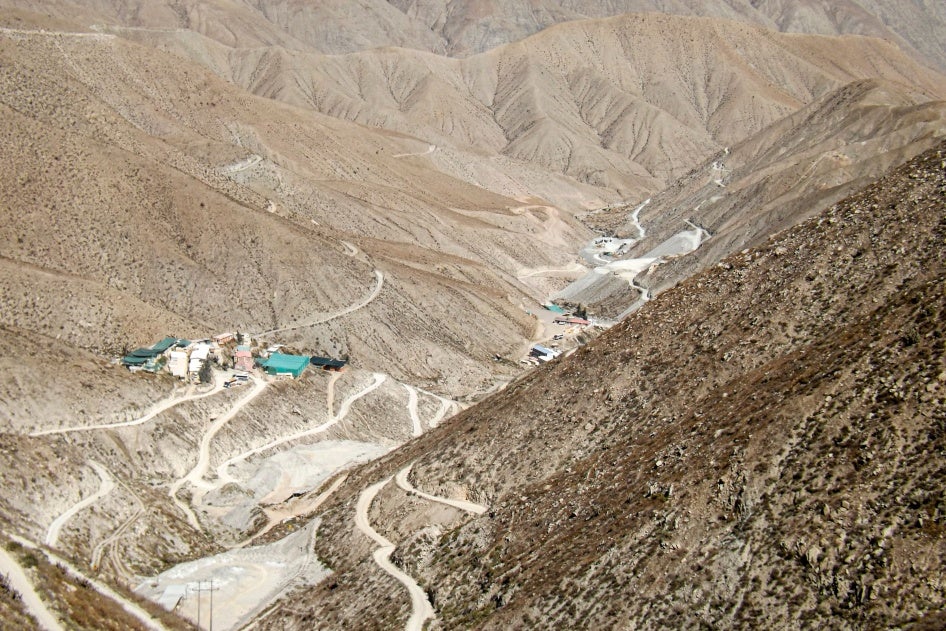
In May of last year, a massive fire engulfed the La Esperanza gold mine in southern Peru, trapping workers underground. The fire—whose origin has still not been conclusively proven—caused the tragic deaths of 27 workers. The mine had received certification from the Responsible Jewellery Council (RJC), an industry organization that requires companies to demonstrate they have established safeguards to meet its certification standards.
A recent study by an alliance of Swiss NGOs shows that the deaths were not only tragic but possibly could have been prevented. The alliance’s inquiries uncovered a prior, non-publicized investigation by Peruvian authorities, which determined that the mine lacked basic safety standards and fire prevention procedures. This was the case despite workers having complained about precarious safety standards before the disaster.
Given the existence of this report, it is even more perplexing that the mine was certified as “responsible” by the Responsible Jewellery Council. To meet the council’s certification standard, companies must adhere to its Code of Practices, which requires them to adopt rigorous safety precautions, including fire alarms and safety equipment, and to provide safety training and fire emergency procedures. When asked how it responded to the fire, the RJC told Human Rights Watch that the La Esperanza mine was suspended in January 2024, pending an internal investigation.
Previous investigations by Human Rights Watch concluded that the Code of Practices does not require companies to conduct rigorous on-the-ground human rights assessments and that the certification process lacks transparency. For example, the audit reports used to determine whether a company meets the code’s requirements are not published, nor is data on non-compliance disseminated. The only thing the RJC publishes is a summary.
In recent decades, certification schemes have proliferated across all sectors, and many have serious flaws. Audits are often superficial, not designed to detect problems, and frequently conducted remotely. In the case of the La Esperanza mine, the last audit before the fire was a paper-only review conducted in March 2023, just two months before the tragic event.