Editor’s Note
The global jewelry market, valued at $349.5 billion in 2024, is projected to reach $546.85 billion by 2033, driven by rising disposable incomes and evolving consumer trends. This article explores the key factors behind this enduring growth.
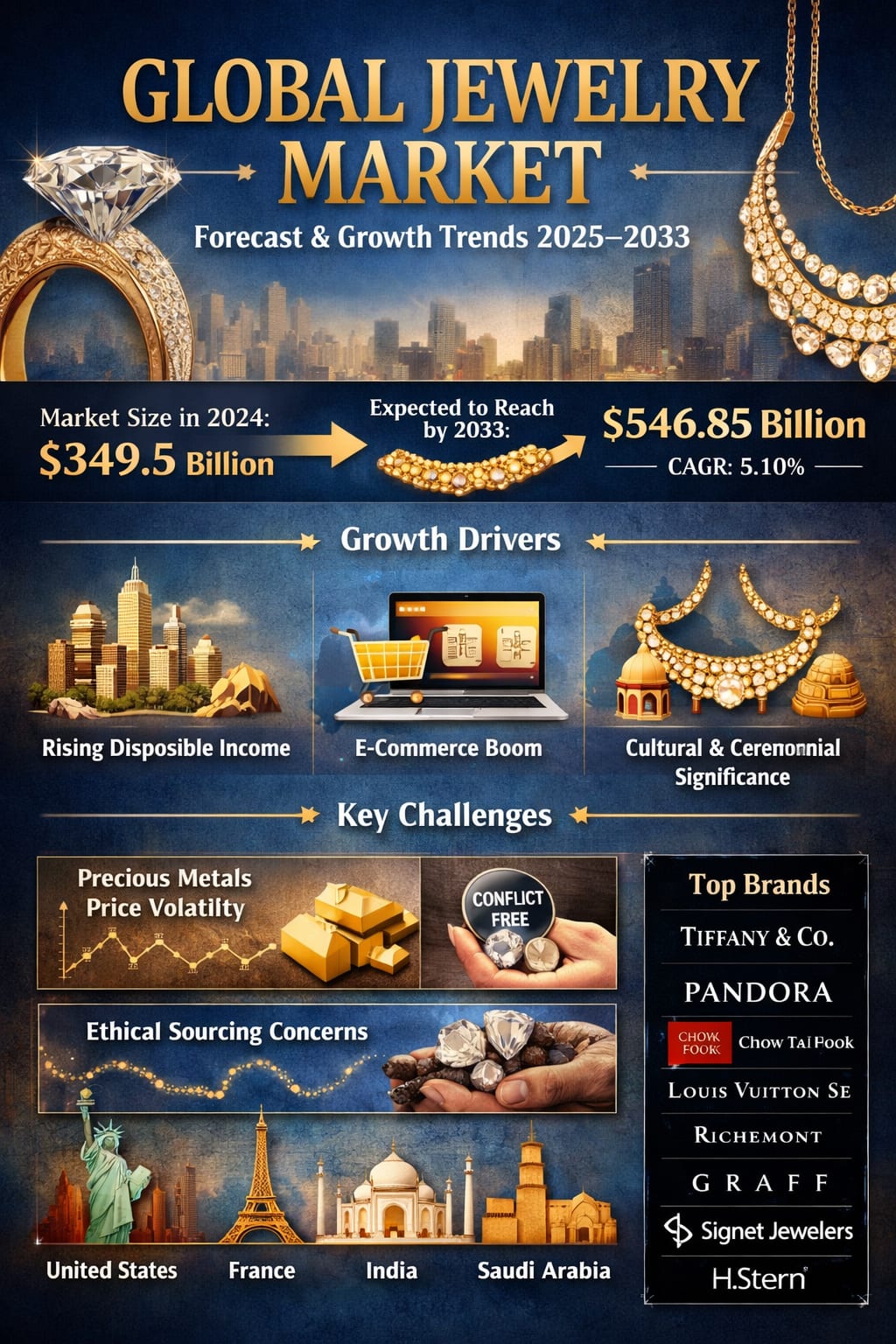
The global jewelry market continues to shine as one of the most emotionally driven and culturally rooted segments of the consumer goods industry. According to Renub Research, the Global Jewelry Market was valued at US$ 349.5 billion in 2024 and is expected to grow to US$ 546.85 billion by 2033, expanding at a CAGR of 5.10% during the forecast period from 2025 to 2033. This steady growth reflects not only rising disposable incomes worldwide but also changing fashion preferences, increasing demand for customized designs, and the enduring appeal of luxury and fine jewelry across cultures.
Jewelry, at its core, is ornamental material used for personal decoration—ranging from necklaces, rings, earrings, bracelets, and brooches to more contemporary statement pieces. Crafted from precious metals such as gold, silver, and platinum, along with diamonds, gemstones, beads, and even modern synthetic materials, jewelry serves multiple purposes. It is aesthetic, symbolic, cultural, religious, and often deeply emotional. Across civilizations, jewelry has represented wealth, social status, love, commitment, and identity.
In the modern global marketplace, jewelry remains one of the most popular gift categories, commonly exchanged during weddings, anniversaries, festivals, and milestone celebrations. Social media, celebrity endorsements, and fast-moving fashion trends have further amplified its appeal—particularly among younger consumers who view jewelry not just as an accessory, but as a form of self-expression.
Technological innovation has also reshaped the industry. From 3D design tools and advanced manufacturing techniques to digital storefronts and virtual try-ons, technology is making jewelry more accessible, customizable, and convenient to purchase. At the same time, changing lifestyles, urbanization, and the rapid growth of e-commerce platforms are fueling global demand. The combination of traditional craftsmanship and modern innovation continues to drive the long-term popularity and commercial strength of the jewelry market.
One of the strongest drivers of jewelry demand worldwide is the steady rise in disposable incomes, especially in emerging economies such as China and India. As more consumers enter the middle class, spending on lifestyle and luxury products increases. Jewelry is increasingly seen not only as a fashion statement but also as a store of value and a long-term investment, particularly in categories like gold and diamonds.
Urbanization plays an equally important role. As populations move toward cities, exposure to global fashion trends, branded retail, and modern shopping experiences increases. Urban consumers are more likely to experiment with new designs, follow international styles, and purchase jewelry more frequently for both everyday wear and special occasions. Over the coming decades, urban populations are expected to continue rising worldwide, further strengthening demand for contemporary and branded jewelry products.
The digital revolution has fundamentally changed how consumers discover, evaluate, and buy jewelry. Online platforms now allow customers to browse vast collections, compare prices, verify certifications, and even customize designs from the comfort of their homes. Technologies such as augmented reality (AR) virtual try-ons, video consultations, and online authenticity verification have helped build trust in online jewelry purchases—once considered a high-risk category for e-commerce.
Social media and influencer marketing have also become powerful tools in shaping consumer preferences. Platforms like Instagram, YouTube, and TikTok drive trends, introduce new brands, and create demand for both luxury and fashion jewelry. Millennials and Gen Z, in particular, are highly comfortable with digital-first shopping experiences, making e-commerce one of the fastest-growing distribution channels in the global jewelry market.
In many parts of the world—especially in Asia and the Middle East—jewelry carries deep cultural, religious, and emotional meaning. In countries like India, jewelry is inseparable from weddings, festivals, and important life events. Gold, in particular, is seen as a symbol of prosperity, security, and good fortune, ensuring consistent demand even during periods of economic uncertainty.
As global migration increases, these cultural traditions travel with communities, expanding demand for traditional and ethnic jewelry styles in international markets. This cultural continuity provides the jewelry industry with a uniquely stable and resilient demand base compared to many other luxury categories.
The jewelry market is highly sensitive to fluctuations in the prices of gold, silver, platinum, and diamonds. Sudden increases in raw material prices directly affect production costs and retail pricing, often leading consumers to postpone purchases or shift toward lighter or alternative products. This volatility creates challenges in inventory planning, pricing strategies, and profit margins for both manufacturers and retailers.