Editor’s Note
This article has been updated to reflect Sotheby’s Hong Kong suspending an auction of Buddhist relics following a repatriation request from India.
Sotheby’s Hong Kong has suspended the sale of 300 sacred Buddhist relics scheduled for this Wednesday after receiving a legal notice from India demanding their immediate repatriation, as confirmed by Efe.
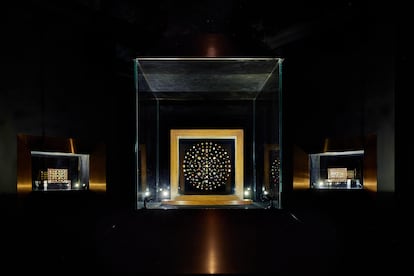
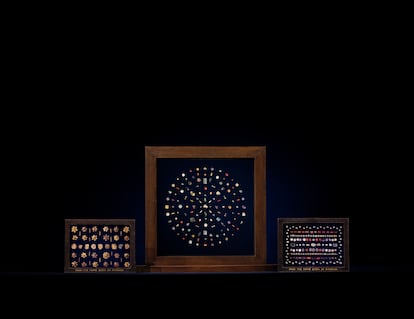
The relics include bone fragments, caskets, and precious stone jewelry valued by the auction house at around $100 million (€88 million). They were buried in a funerary monument in Piprahwa, in present-day Uttar Pradesh, India, between 240 and 200 BC, and were allegedly mixed with some of the cremated remains of Buddha. British landowner William Claxton Peppé discovered the gems in 1898 during an excavation on his property at the Piprahwa archaeological site, recognized as Buddha’s hometown. A significant portion of these objects was handed over to the Indian Museum in Calcutta a year later, in 1899, and is protected by Indian legislation prohibiting their sale or export. However, another small collection remained in the hands of the Claxton family.
India’s Ministry of Culture sent a legal notice to the auction house on Monday requesting the suspension of the bidding and demanding the repatriation of the objects “for their conservation and religious veneration.” The notification, addressed to the Hong Kong art market and Chris Peppé, asserts that the sale “violates Indian and international laws, as well as United Nations conventions.” The Indian government also requested the intervention of its diplomatic missions in the United Kingdom and East Asia and activated its Financial Intelligence Unit to coordinate measures with Hong Kong authorities. It further demanded that Sotheby’s and Chris Peppé issue a public apology to the Indian government and Buddhists worldwide, adding that it would launch a public campaign to highlight the auction house’s role “in perpetuating colonial injustice and becoming part of the unethical sale of religious relics.”
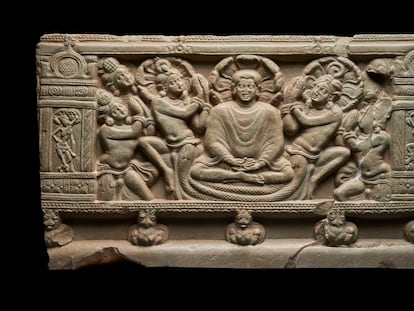
The owner, a Los Angeles-based television director and film editor, defends that since receiving the pieces, he and his cousins have worked to make them accessible to the public, ideally to a Buddhist audience, at no cost to the exhibiting institutions. They have loaned them to prestigious museums worldwide, such as the Rietberg Museum in Zurich, the Rubin Museum of Himalayan Art, the Metropolitan Museum of Art in New York, the Asian Civilisations Museum in Singapore, and the National Museum of Korea in Seoul.
Furthermore, Peppé created a website, The Piprahwa Project, where all collected research materials can be accessed, including William Claxton’s letters authenticating the discovery, which were donated to the Royal Asiatic Society.