Editor’s Note
This report details a significant attack on Tel Aviv’s central business district, affecting key financial, commercial, and technological hubs. The situation is developing.
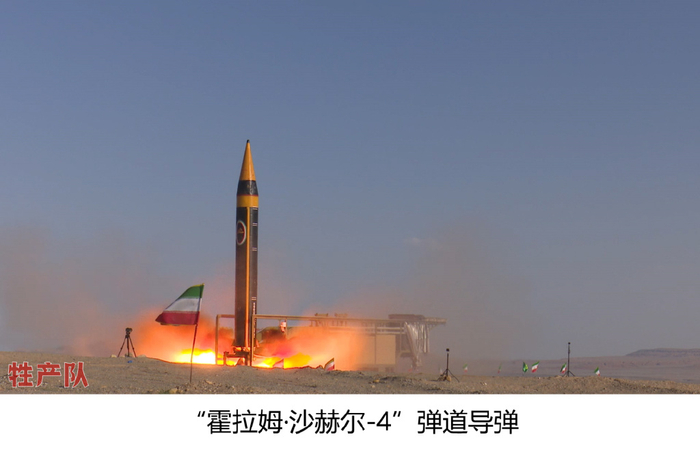
The CBD of Israel’s capital has been bombed. The stock exchange, diamond exchange center, military hospitals, and other facilities have been hit. Loud explosions were also heard near the office areas of many American companies, including Microsoft and Intel.
This is a message directed at both the Israeli and American militaries. Iran is making it explicitly clear to the United States that if U.S. forces join the war, all American assets in the Middle East will become targets for Iranian missiles.
During the first wave of attacks, Israel’s interception rate against Iranian missiles was around 90%. How did it drop to less than 10% so quickly? Iran can now penetrate Israel’s air defense network with even a single missile. What difficulties has Israel encountered behind this change?
There are three main reasons:
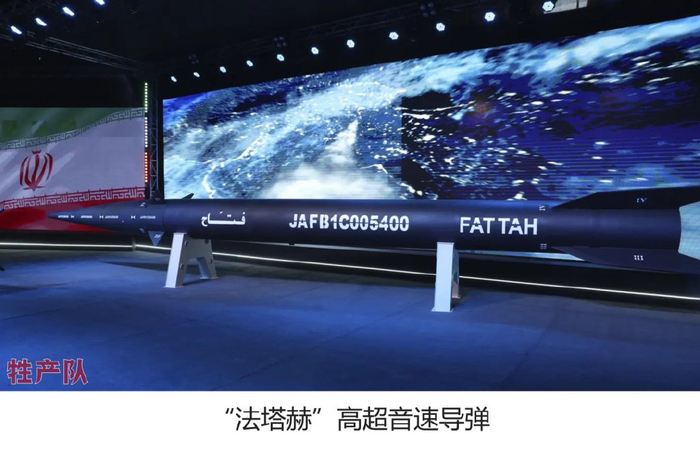
This is undeniable. For instance, the “Fattah” hypersonic missile, featuring a “wave-rider” warhead design, is hailed as the Persian version of the DF-17. Over Tel Aviv, it performed a serpentine maneuver, evading eight “THAAD” interceptor missiles before striking the city’s commercial district. This hypersonic missile technology is something even the U.S. military has not yet mastered; its “Dark Eagle” hypersonic missile has not entered mass production or service.
“Fattah” is not the most advanced; Iran holds other trump cards, such as the faster, longer-range “Fattah-2,” “Khorramshahr-4,” and “Sejjil” missiles.
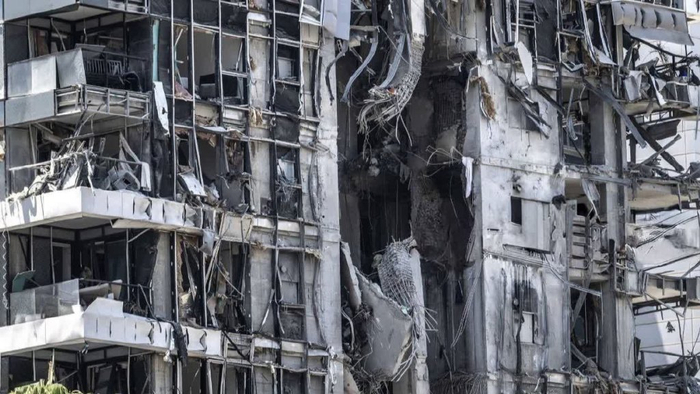
The “Khorramshahr-4” ballistic missile is particularly noteworthy. Its range is not exceptionally long, about 2,000 km, but it can be equipped with multiple independently targetable reentry vehicles (MIRVs), carrying 6 to 8 warheads.
Iran also fired an earlier version, the “Khorramshahr-1” medium-range missile, at Tel Aviv. However, it was configured with a cluster warhead containing 20 submunitions, designed to explode at an altitude of 300 meters for wider coverage and greater destructive power. This indicates Iran was still exercising some restraint.
As for the “Sejjil” missile? It’s all about quantity over quality! Its technology is not advanced; Iran launched five, all intercepted by Israel. However, Iran has stockpiled tens of thousands of “Sejjil” missiles. A single Israeli “THAAD” interceptor costs about $20 million, while “Patriot-3” and “Arrow-3” interceptors cost over $3 million each.
Israel’s total annual military budget is only $27.5 billion. Continuing like this would be unsustainable; ousting Netanyahu might be more effective than fighting.
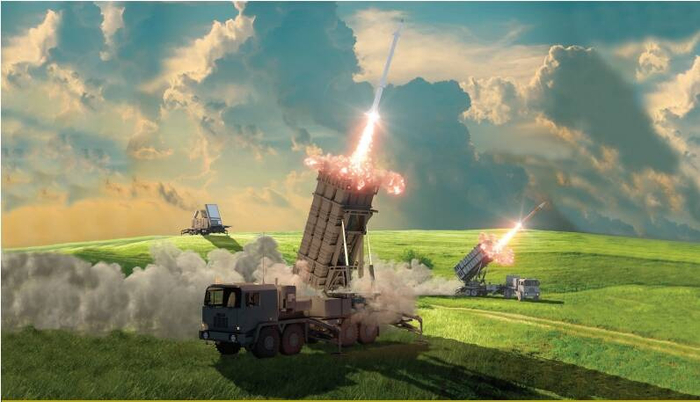
Israel lacks the capacity to mass-produce interceptors. Its “THAAD” and “Patriot-3” interceptors rely entirely on U.S. supplies, and the U.S. cannot provide an unlimited backstop.
Furthermore, U.S. military aid to Israel comes in batches. Why? Stockpiling too many interceptors in one place risks catastrophic loss if an Iranian missile hits an ammunition depot. When Israel’s first batch of interceptors was depleted, the U.S. was scrambling to replenish stocks, creating a gap during which Israel was highly vulnerable to Iranian missile attacks.
Iran has shifted from “saturation” attacks to smaller-scale, high-precision, multi-wave strikes. Iran’s primary goal is not just military; it aims to keep the entire Israeli population in a state of terror.
For example, launching two missiles every half hour, then five the next half hour, sometimes using drones, sometimes “Sejjil” missiles, sometimes “Fattah” hypersonic missiles. Israeli air defense forces, unsure of the incoming threat type, must intercept with full force, forcing them into 24/7 alertness. Israelis cannot go to work and must stay in shelters, or return shortly after leaving.
The goal is to disrupt Israel’s normal economic operations. Iranian missiles specifically target ports, refineries, power plants, the capital’s CBD, and tech industrial parks, effectively putting Israelis on collective leave.
This strategy is taking a toll. Israel’s economic resilience is weak due to scarce local resources and heavy reliance on foreign trade. Halting trade paralyzes the economy. Notably, Trump, seeing the potency of Iranian missiles, announced that a decision on whether the U.S. would attack Iranian nuclear facilities would be deferred for two weeks.
With Trump taking a step back, the pressure returns squarely to Netanyahu.