Editor’s Note
This powerful critique challenges the passive framing of the “resource curse,” shifting the focus from fate to agency and demanding accountability from those who extract and profit.

David Maenda Kithoko, co-founder of the association Génération Lumière, June 2025.
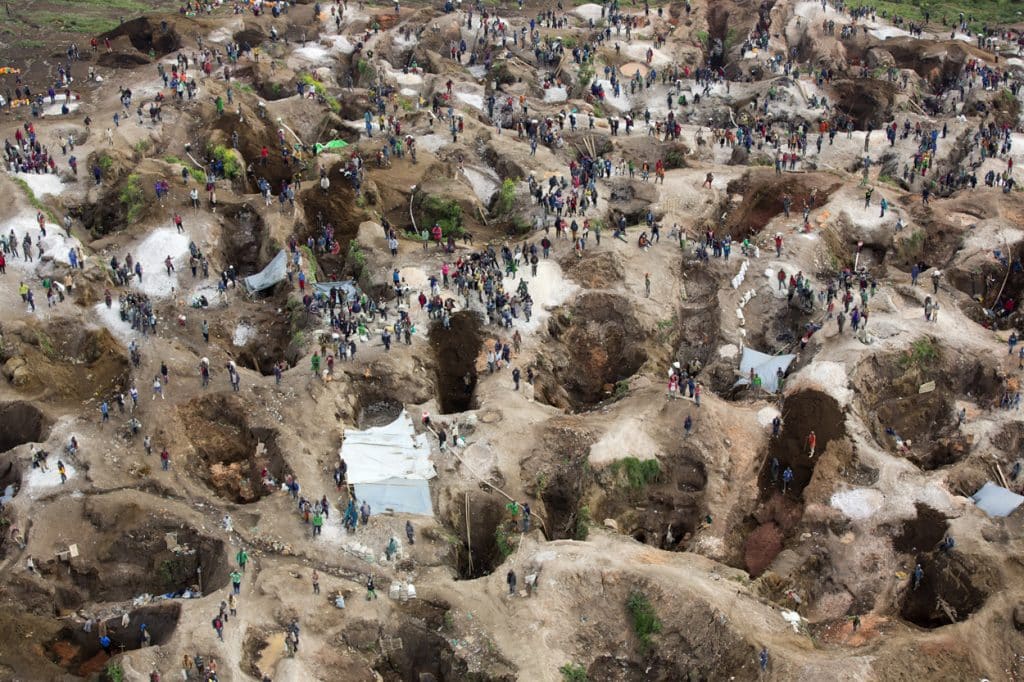
This article is the first part of a two-part investigation by Celia Izoard on mining extractivism in the DRC. The second episode is: “In Congo, Extractivism Destroys an Economy Based on Relationships.”
In the summer of 2025, the war in the Democratic Republic of Congo (DRC) has displaced 7 million people, with 3.9 million facing famine. European governments bear partial responsibility for the intensification of this deadly conflict. This responsibility extends beyond the horrific crimes of Belgian colonization, beyond French support for the dictator Mobutu which plunged the former Congo-Zaïre into a spiral of corruption and violence from which it has not yet emerged, and even beyond France’s role in the 1994 genocide in neighboring Rwanda, the main supporter of the M23 offensive in Congo. Unfortunately, Europe’s latest crimes in the Great Lakes region are not from yesterday, but from today. They stem from a banal imperial policy: that of its metal supply.
The mining projects launched in Europe in recent years tend to obscure the fact that companies on our continent could in no way be satisfied with a few thousand tons of lithium extracted in Auvergne and copper from Spain. Even if all current mining projects materialized in our countryside, they would be far from able to supply the production of aircraft, satellites and drones, data centers and networks, construction, electric cars, booming weapons production, etc. This is the very definition of an “imperial lifestyle”: European resources alone are far from being able to satisfy the European level of consumption (which is largely what the market imposes on populations). Thus, the law passed in 2023, the Critical Raw Materials Act, set a goal of supplying 10% of the Union’s needs from “local” mines by 2030. This shows that, in the best-case scenario, at least 90% of the metals extracted for European companies will be imported.
The goal of this policy is to “secure supplies” of metals (meaning: in the face of Chinese and Russian competition, among others) through imports or guaranteed access to deposits. This has translated since 2021 into the signing of “strategic partnerships” with about fifteen countries: Canada, Ukraine, Kazakhstan… These partnerships are bilateral mining agreements whose precise clauses are not published. In exchange for subsidies or investment promises, the signatory country commits to favoring European companies in the awarding of mining permits and mineral sales contracts. This is how, in February 2024, the Commission signed an agreement with Rwanda.
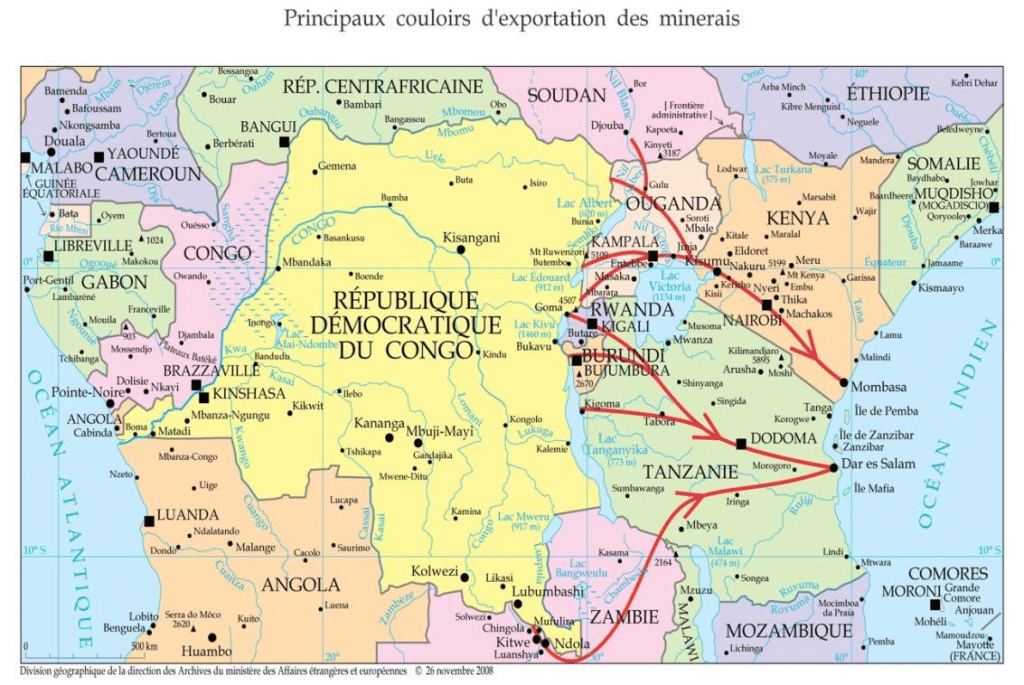
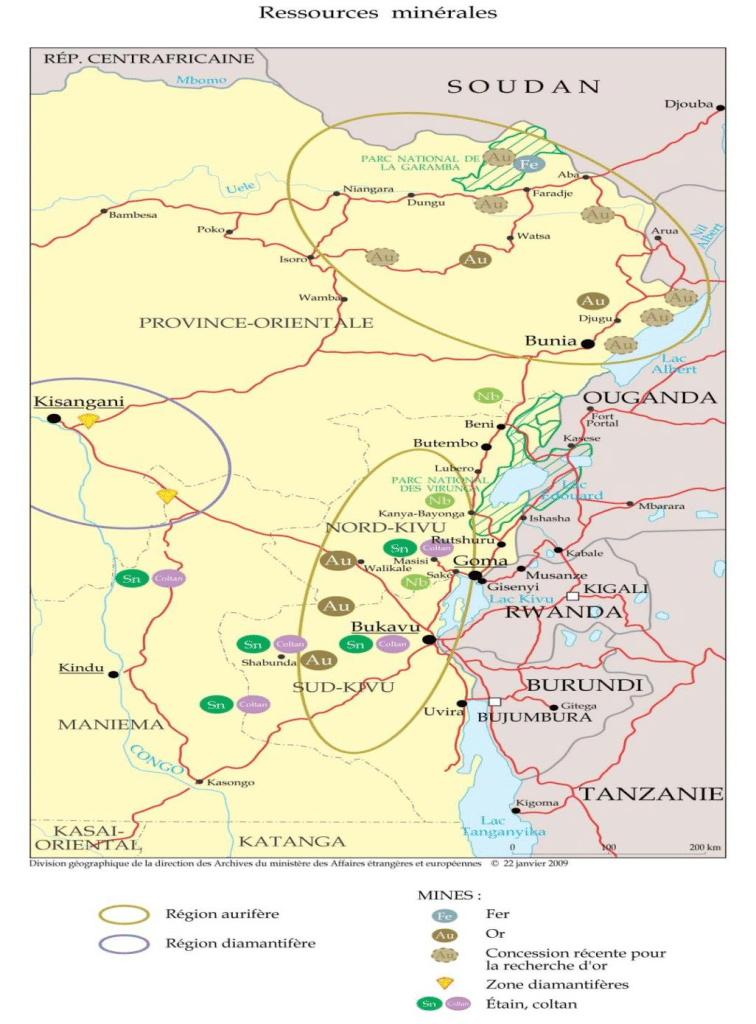
Why Rwanda? Because this East African country, bordering the DRC, “is a major global player in the tantalum extraction sector” and produces “tin, gold, tungsten,” the Commission justified. Tungsten is a very hard metal used in weaponry and aeronautics, which also, among other things, makes phones vibrate. Gold is mainly used to make ingots and jewelry. But if Europe is interested in Rwanda, it is mainly for tantalum and tin. Tantalum, a blue-gray metal derived from a mineral called coltan, is primarily used to make the capacitors found in the printed circuit boards of any electronic device. It is also found in liquid crystal displays. As for tin, obtained from a mineral called cassiterite, it is used two-thirds in solders and connections on printed circuit boards. Demand for these metals has seen regular peaks since the launch of the first PCs and PlayStations in the 1990s. One only needs to imagine the billions of printed circuit boards a data center can contain to understand that the race for artificial intelligence makes them more strategic than ever.