Editor’s Note
The GIA’s decision to cease applying its traditional 4Cs grading scale to lab-grown diamonds marks a significant policy shift, aiming to further differentiate the natural and synthetic markets. This change will simplify reports for these stones, using broad quality categories instead.
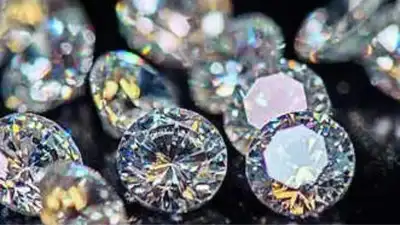
In a move poised to reshape the global gem trade, the Gemological Institute of America (GIA) has announced it will no longer apply the 4Cs grading system—cut, colour, clarity, and carat weight—to laboratory-grown diamonds.
Instead, beginning from later this year, GIA will issue simplified descriptors for such stones—broadly classifying them as ‘premium’ or ‘standard’—or no grade altogether if the quality is lacking.
Industry experts said this formally reinforces that lab-grown diamonds (LGDs), while chemically similar, are materially and symbolically distinct from natural diamonds, and must be evaluated on separate terms.
Ashok Gajera, managing director of Laxmi Diamonds, said the move to not grade the diamonds following conventional norms comes amid increasing industry introspection on how lab-grown diamonds are positioned and priced. Unlike natural diamonds, which form over billions of years deep within the Earth, LGDs are created in laboratories within weeks—raising persistent debates about their long-term value and desirability.
De Beers India’s managing director Amit Pratihari welcomed GIA’s announcement, noting that:
But Mukesh Patel, owner of Greenlab Diamonds, a lab-grown diamond manufacturer, said there were multiple other agencies that grade lab-grown stones, and a very small share of lab-grown diamonds were graded by the GIA.
Henry Smith, head of sales at the Institute of Diamonds (part of the De Beers Group), called GIA’s decision a “scientifically sound” update.