Editor’s Note
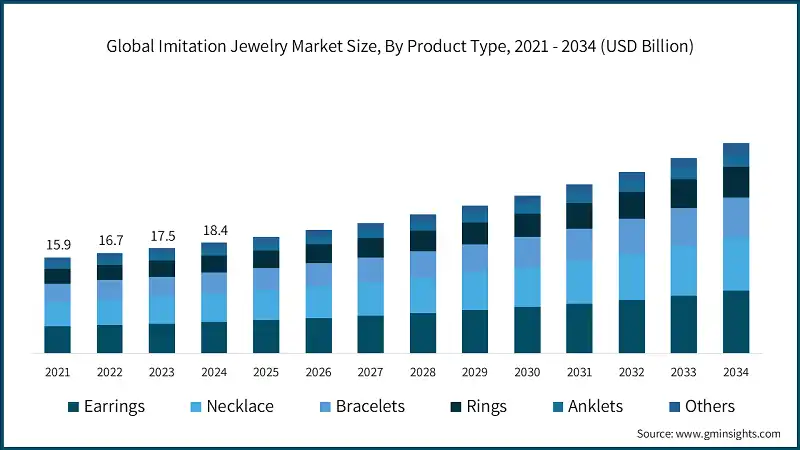
The global imitation jewelry market, valued at $18.4 billion in 2024, is projected to reach $34.9 billion by 2034, growing at a compound annual growth rate of 6.8%. This significant expansion highlights evolving consumer trends and the increasing accessibility of fashion-forward accessories.
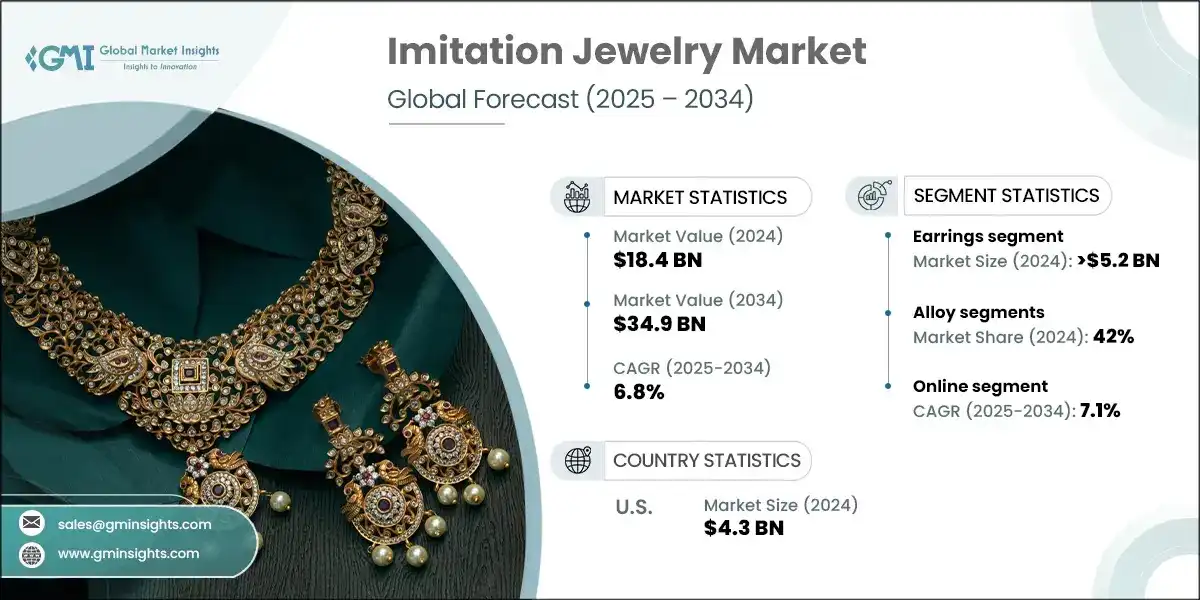
The global imitation jewelry market was estimated at USD 18.4 billion in 2024. The market is expected to grow from USD 19.4 billion in 2025 to USD 34.9 billion in 2034, at a CAGR of 6.8%.
The market for imitation jewelry is expanding due to the rising demand for personalization and customization jewelry along with the increase in gold and silver jewelry costs. An increase in gold and silver jewelry costs is one of the key drivers of the imitation jewelry industry. Imitation jewelry is significantly more affordable than genuine precious metals and gemstones. This affordability makes it accessible to a wide range of consumers, including those on a budget.
The gold price soared to unprecedented levels, surpassing $3,500 per ounce, a more than 31% increase since the beginning of the year 2025. In the UK gold prices reach an all-time high of $3,484 per ounce, representing a 23% increase over just four months. Central banks worldwide are significantly increasing their gold reserves, with China leading this strategic shift.
Over the past two years, China has imported approximately 700 metric tons of gold from the UK, tripling gold’s share in its foreign reserves to 8%. International gold prices also saw strong gains, with Comex Gold ending 2.44 per cent higher at $3,254.90 after hitting a record high of $3,263 per troy ounce.
In the first quarter of 2025, demand for gold jewelry in Saudi Arabia risen 35 percent year on year, even as global demand fell 21 percent, according to the World Gold Council. That surge comes amid a global price rally, with gold breaching $3,500 per ounce in April, up from around $2,370 a year earlier driven by geopolitical tensions, inflation fears, and aggressive central bank buying.
Increasing disposable income among global middle-class populations. With an increase in disposable income, consumers tend to spend on optional items, such as imitation jewelry, to improve their fashion sense. The increased urbanization and evolving lifestyles have further boosted the demand for fashionable and smart jewelry that has the ability to pair with different attires and events. The rise of e-commerce platforms has made it easier for imitation jewelry businesses to reach a global audience. Online retail allows for easy marketing, distribution, and sales to customers worldwide. Additionally, through social media marketing, brands have been able to associate an aspirational lifestyle by allowing customers to associate to the latest trends and styles.
The presence of fine jewelry as a substitute poses a challenge to the imitation jewelry market, potentially limiting its growth. Imitation jewelry often lacks the durability of fine jewelry, which may deter some consumers and impact market growth negatively.
The development of innovative and trendy designs in imitation jewelry presents significant growth opportunities for market players. The rising demand for customized and personalized jewelry provides an opportunity for manufacturers to cater to niche consumer preferences.
Senco Gold and Diamonds held a 1% market share in 2024. Top players including Senco Gold and Diamonds, Kanhai Jewels, Silvesto, Voylla, and RMC Gems collectively held a 3% market share in 2024.
Imitation jewelry offers a cost-effective alternative to fine jewelry, making it accessible to a broader consumer base. Its versatility in design, ability to replicate high-end trends, and affordability provide a significant competitive advantage. Additionally, the growing demand for sustainable and non-precious materials further strengthens its position in the market.
The largest and fastest-growing market is Asia Pacific. Key emerging countries include the U.S., Germany, China and India.
Advancements in manufacturing techniques and the use of innovative materials are likely to enhance product quality and design, further boosting demand. The market is also expected to benefit from the rising popularity of e-commerce platforms, which provide consumers with easy access to a wide variety of imitation jewelry products.