Editor’s Note
This article provides a concise overview of pearl farming in India, explaining the basic aquaculture process of cultivating pearls by introducing an irritant into oysters to stimulate nacre production.
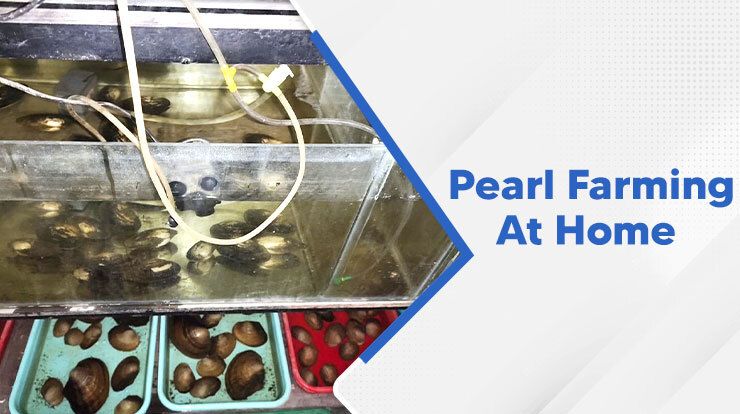
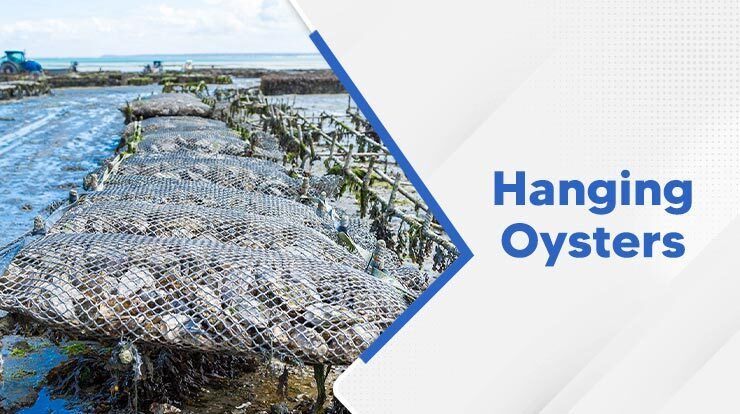
In India, pearl farming, also known as aquaculture, is the process of cultivating pearls. Farmers create artificial environments to promote oyster growth and pearl production. A foreign material, such as a small piece of plastic or shell, is inserted into the oyster. This irritation causes the oyster to produce layers of nacre, the substance that forms pearls. After several years, farmers harvest the oysters and extract the pearls.
In 2025, pearl farming is considered a highly profitable business due to rapidly growing demand for pearls. The pearl jewelry market is projected to reach USD 34.16 billion by 2033, contributing to the increasing popularity of pearl farming in India.
Pearl farming has become a major source of income and employment. It is an environmentally friendly method of pearl production that helps preserve native oyster populations. Approximately 99% of all pearls available are cultured, derived from farming mussels and oysters. Odisha ranks first in pearl farming in India.
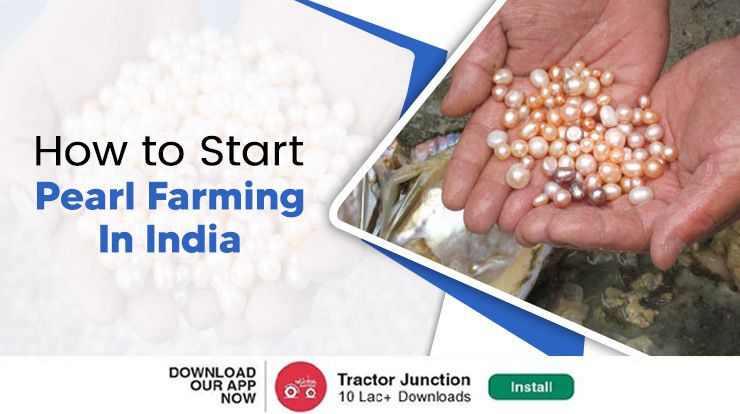
Natural gemstones like pearls are in high demand, and their prices are relatively stable compared to gold and silver. The cost of cultured freshwater pearls is approximately INR 280 per gram, while cultured saltwater pearls cost about INR 6,000 per gram in India.
Once cultured, lightweight pearls are non-perishable and can be stored indefinitely. They can be used at any time to create jewelry or adorn clothing.
Pearl farming is less labor-intensive due to its structured process, which significantly reduces labor costs. Acquiring skills from a training institute increases profit potential. This commercial farming offers high returns and income allocation.
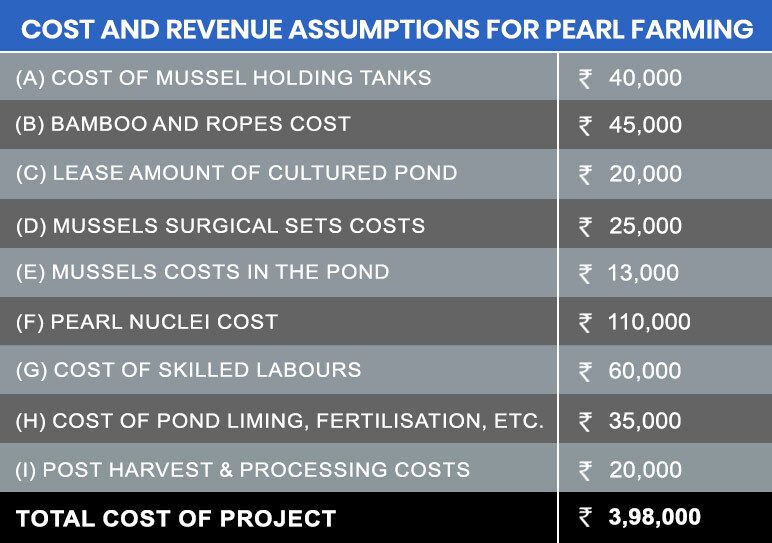
Pearl farming requires limited setup and investment costs. Resources and inputs are easily available at minimal expense. With proper training, farmers can learn to plan resources and optimize costs, maximizing returns on investment.
The Central Institute of Freshwater Aquaculture (CIFA) under the Indian Council of Agricultural Research provides national training on “Freshwater Pearl Culture.” This training helps small and marginal farmers develop entrepreneurial skills for setting up freshwater pearl farming businesses.
Other recognized institutes offer complete technical training on pearl breeding. A schedule of popular training institutes in India includes:
– Marathwada Pearl Culture (MOTI) and Training Centre, Aurangabad (Short-term)
– Freshwater Pearl Farming Training Institute, Jaipur (6 weeks)
– Wizard Pearl Farming Centre, Haryana (2 days, Practical + Theoretical)
– Swastik Pearls Farming and Training Centre, Uttar Pradesh
Pearl farming requires less investment and offers higher returns, with potential profits of 50-60% of the investment. Pearls have strong demand in national and export markets. In 2022, India exported $3.79 million worth of pearls, ranking as the 19th largest pearl exporter globally.
Pearl farming can be combined with fish farming and other commercial aquaculture activities. With the right training and tools, profits can reach up to 100%, though this requires long-term effort.