Editor’s Note
This article reports on the significant proceeds from the sale of jewelry belonging to the late Austrian billionaire Heidi Horten, despite the controversy surrounding her husband’s Nazi past. The headline and text have been updated to reflect the final total raised.

Despite the controversy surrounding the Nazi past of her husband, the sale of jewelry belonging to the late Austrian billionaire Heidi Horten, who died in 2022, has already brought in $202 million (€186 million).
The auction house Christie’s announced the sum of around $200 million on Monday. The final part of the auctions will take place in November. In light of the criticism, Christie’s reiterated that the proceeds from the sale would be fully donated to charitable purposes in accordance with Heidi Horten’s wishes.
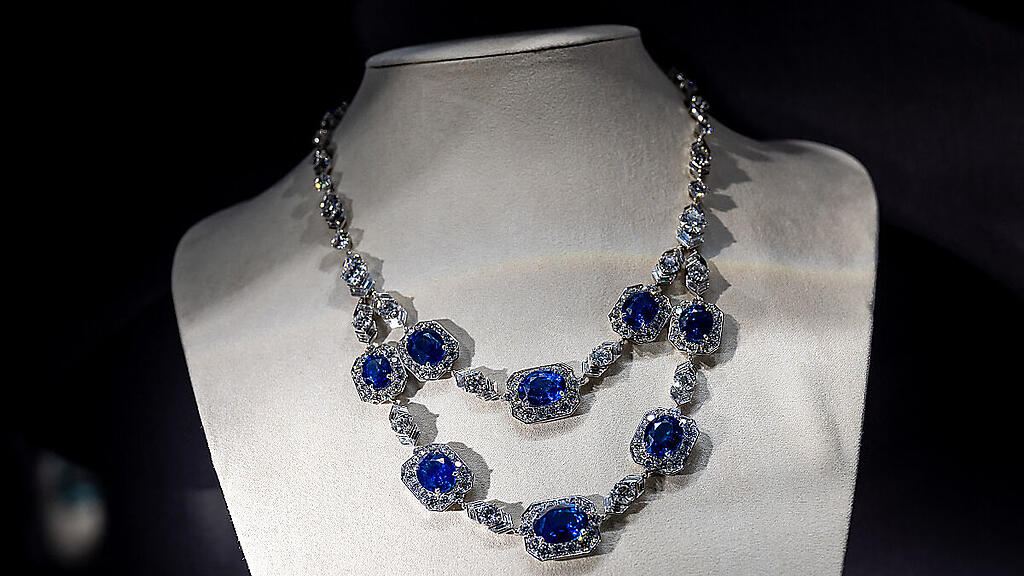
Horten’s collection includes more than 700 pieces of jewelry. The final parts are set to go under the hammer in November. The proceeds from the auctions have already far surpassed the previous record for a jewelry auction of $116 million. That amount was raised by the sale of Hollywood diva Elizabeth Taylor’s estate in 2011.
Some pieces, however, did not sell for the hoped-for sums. For a Cartier ring with a 25.59-carat “pigeon’s blood” ruby, “only” $11 million was ultimately bid, instead of the expected $15 to $20 million.
The shadow of the Nazi past of German businessman Helmut Horten hangs over the auctions. According to a historian’s report published in January 2022, commissioned by the Horten Foundation, Helmut Horten was a member of the Nazi Party (NSDAP) for an extended period. In 1936, three years after the Nazis seized power, he, then 27 years old, took over the Alsberg textile department store in Duisburg after its Jewish owners had fled.
He later took over other businesses that had previously been owned by Jewish owners. He was therefore accused of being a beneficiary of the “Aryanization” of Jewish businesses during the Nazi era. According to the historian’s report by Peter Hoeres, Horten reached a settlement with the Jewish former owners of the Alsberg textile department store after the end of the war. A department store in Wattenscheid was returned to its original owners.
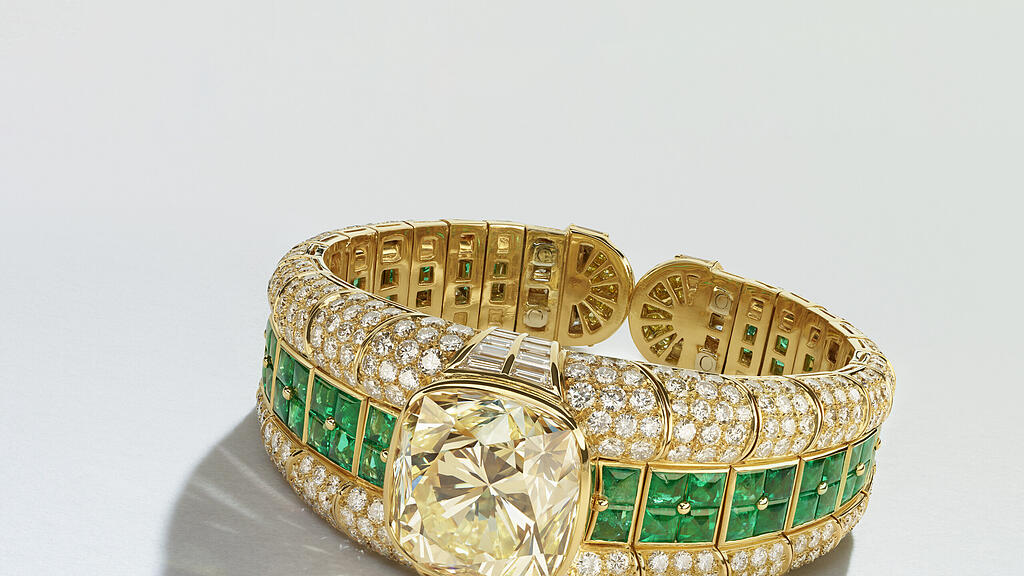
In the case of a business takeover in Königsberg, however, Horten likely resisted civil reparations payments, according to the analysis, because he knew there were no enforceable legal claims against him.
The report states that a “certain ambivalence” was shown. Horten had sought out-of-court settlements.
According to the expert report, Horten’s thinking was not “determined by Nazi ideology,” yet he enjoyed a “certain appreciation from the Nazi authorities.” His company in Duisburg was used as a distribution operation, and Horten was efficient in this role. According to a statement from the denazification proceedings, Horten was briefly imprisoned in 1944. He was expelled from the Nazi Party that year. According to the report, the reasons were disputes with Nazi officials and suspicion of improper distribution of goods.

According to “Forbes,” Heidi Horten left behind a fortune of $2.9 billion when she died last year at the age of 81.