Editor’s Note
The Asia luxury goods market is poised for sustained growth, driven by rising affluence and evolving consumer preferences. This analysis highlights key trends and projections shaping the sector’s future.
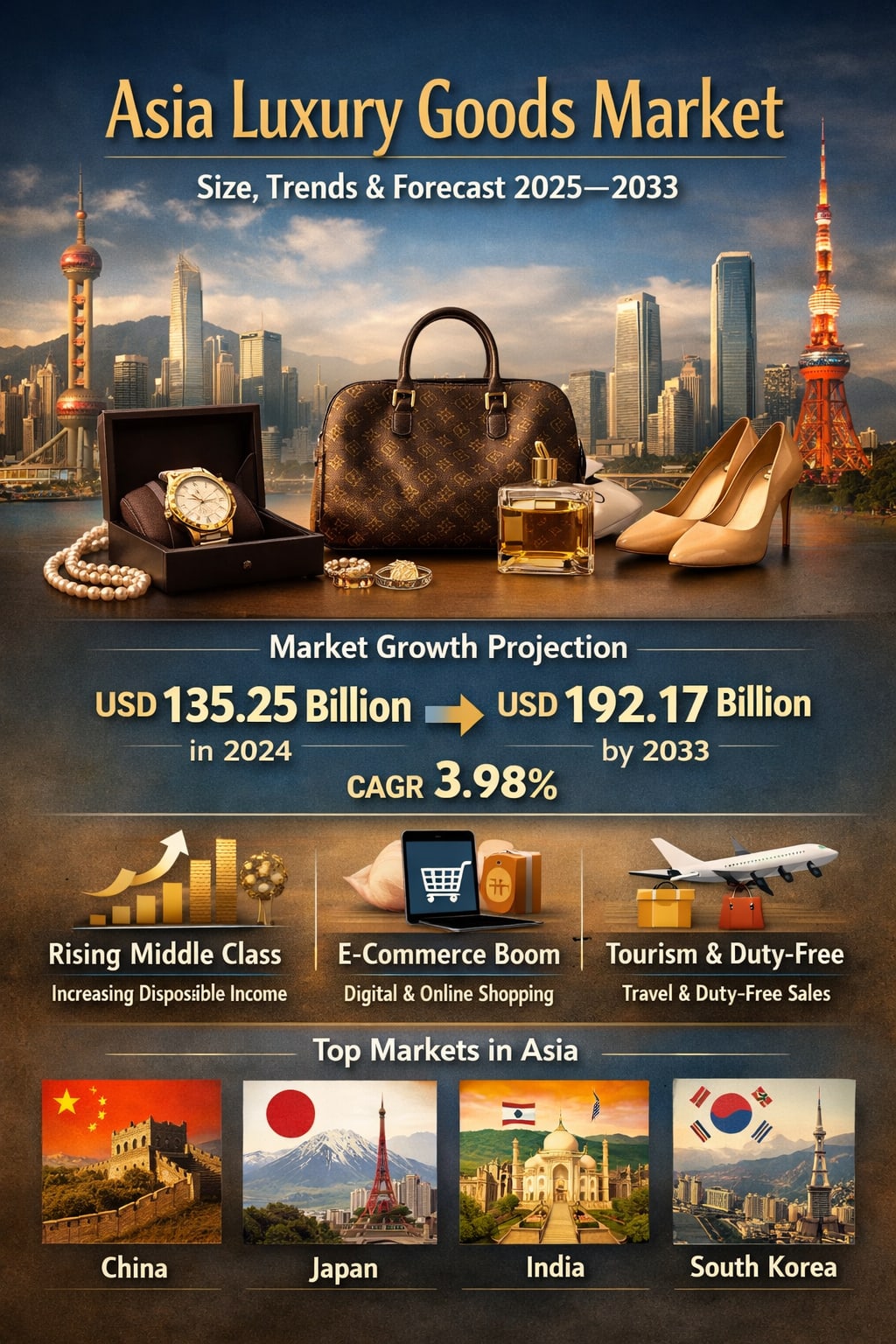
The Asia Luxury Goods Market is entering a decisive growth phase, reflecting deep structural shifts in consumer behavior, wealth creation, and digital commerce across the region. According to Renub Research, the market is expected to expand from USD 135.25 billion in 2024 to USD 192.17 billion by 2033, registering a CAGR of 3.98% during the forecast period. This steady rise is being powered by increasing disposable incomes, growing brand consciousness, and the rapid expansion of the middle-class population in countries such as China, India, and Japan.
Luxury goods, by definition, go far beyond everyday necessity. They represent craftsmanship, heritage, exclusivity, and social status. From designer apparel and premium footwear to high-end watches, jewelry, and luxury accessories, these products serve both emotional and symbolic purposes for consumers. In Asia, luxury is no longer confined to a small elite. It is increasingly becoming a lifestyle aspiration for millions of urban consumers who associate premium brands with success, self-expression, and global sophistication.
At the same time, the region is witnessing a powerful transformation in how luxury is discovered, marketed, and purchased. Digital channels, social commerce, and cross-border travel are reshaping the traditional luxury retail model. The result is a more dynamic, competitive, and opportunity-rich market that continues to attract global luxury houses and emerging premium brands alike.
Luxury products are typically characterized by superior quality, limited availability, strong brand heritage, and high perceived value. In Asia, these attributes are now being combined with personalization, experiential retail, and digital engagement. Luxury is no longer just about owning a product; it is about the story, the experience, and the emotional connection with the brand.
Across the region, luxury goods are purchased not only for personal use but also as gifts, investments, and collectibles. High-end watches and jewelry, for example, are often viewed as stores of value, while premium fashion and accessories are increasingly used to signal identity and social standing. The shift toward experiential luxury—such as exclusive events, private previews, and personalized services—further reflects how consumer expectations are evolving in Asia’s major markets.
1. Rising Middle Class and Disposable Incomes
One of the most powerful forces behind the expansion of the Asia luxury market is the rapid growth of the middle class. By 2030, nearly 65% of the world’s middle-class population is expected to live in Asia, representing around 3.5 billion people. This massive demographic shift is creating a broader base of consumers who can afford and aspire to buy premium products.
In countries like China and India, millions of consumers are moving into higher income brackets each year. With greater purchasing power comes a stronger desire for brand prestige, quality, and international labels. Luxury brands are responding by expanding their retail footprints, introducing entry-level luxury products, and tailoring their offerings to local tastes and cultural preferences.
2. Digital Transformation and E-commerce Expansion
The digital revolution has fundamentally changed how luxury is marketed and sold in Asia. Social media, e-commerce platforms, and live-streaming have become essential tools for reaching younger, tech-savvy consumers. Online luxury sales are growing rapidly as brands invest in digital showrooms, virtual try-ons, and immersive shopping experiences.
Major beauty and fashion houses have already demonstrated the power of digital engagement through live-shopping events and interactive online campaigns. Industry research suggests that live shopping could account for around 20% of global online purchases by 2026, highlighting how quickly consumer habits are shifting. In Asia, where mobile-first behavior is widespread, digital channels are no longer optional—they are central to luxury growth strategies.
3. Tourism and Duty-Free Shopping
Tourism continues to play a critical role in Asia’s luxury ecosystem. Countries such as Japan and South Korea benefit significantly from duty-free shopping, especially in airports and major tourist hubs. The appeal of tax-free purchases, combined with exclusive product assortments, makes travel retail a key sales channel for luxury brands.
With international travel rebounding after the pandemic, luxury spending by tourists is once again accelerating. For example, duty-free sales in Japan reached USD 450.7 million in May 2024, driven largely by high-value purchases such as luxury bags and jewelry. This revival of travel is expected to provide a strong tailwind for the regional luxury market over the coming years.
Counterfeit Products and Brand Dilution
The widespread availability of counterfeit luxury goods remains a serious challenge, particularly in fast-growing markets. Fake products not only erode brand value but also undermine consumer trust. To combat this, luxury companies are increasingly investing in authentication technologies, blockchain-based tracking systems, and stricter supply chain controls to protect their intellectual property and preserve brand integrity.
Economic Uncertainty and Market Volatility
Global economic headwinds, inflationary pressures, and currency fluctuations can impact consumer confidence and discretionary spending on luxury items. Brands must navigate these uncertainties while maintaining their premium positioning and appeal to value-conscious yet aspirational consumers.