Editor’s Note
**Editor’s Note:** This article examines how rising prices are reshaping the jewelry industry, from a shift toward platinum and synthetic diamonds to the risks of impulsive holiday purchases.
Platinum instead of gold, synthetic instead of real diamonds: Price developments are having consequences in the industry. Spontaneous Christmas shopping can be risky.
When buying jewelry, consumers are increasingly looking for alternatives, according to an industry expert – not least due to the gold price rally this year. For example, there is a clear trend towards platinum for wedding rings, said Guido Grohmann from the Federal Association of Jewelry, Watches, Silverware and Related Industries (BVSU) in Pforzheim. In particular, 600 alloys, which consist of 60 percent platinum, are in demand.
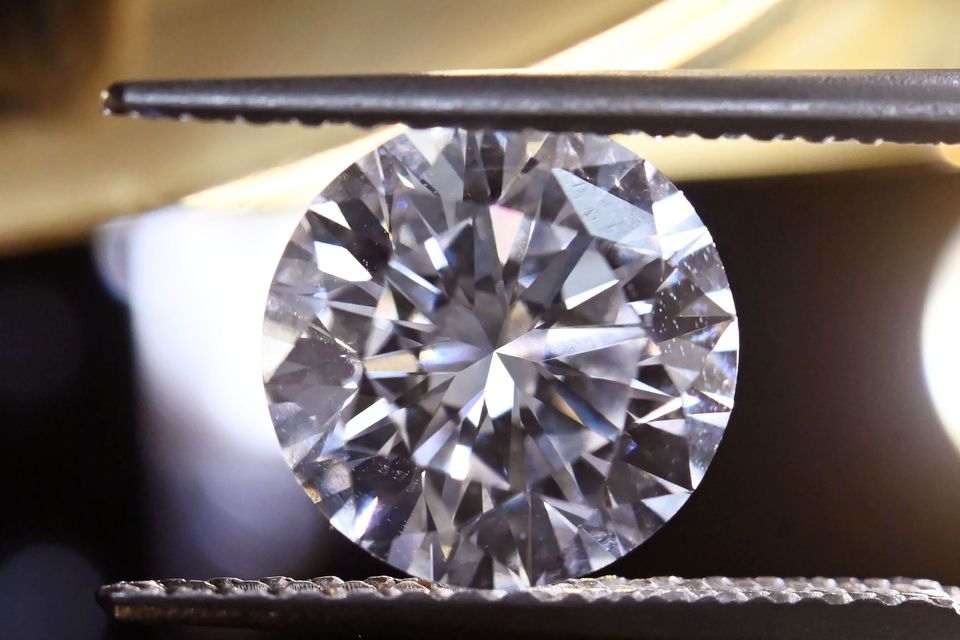
The market share of synthetic diamonds is also growing.
This is one of several reasons why the distribution of natural diamonds is in crisis. A producer even stopped mining in a mine in Canada during the year due to a lack of sales opportunities, said the BVSU managing director.
However, Grohmann assumes that the competitive situation should resolve itself – and that synthetic diamonds will not simply replace their naturally occurring counterparts. Rather, synthetic diamonds are likely to prevail in the low-price segment, while natural diamonds will prevail in the high-price segment. To produce synthetic diamonds, carbon particles are pressed at high temperatures under extreme pressure.
Christmas business is increasingly coming down to a final sprint, Grohmann reported: Many customers only set off at the end of Advent, shortly before Christmas Eve. But if someone comes on December 22 with specific ideas about what a piece of jewelry should look like or what size a ring should be, it could become problematic.
Especially since the warehouses of jewelers and manufacturers are no longer as full as they used to be, as rising prices also affect the level of insurance, the expert explained. However, customers need not worry:
With the four main precious metals gold, platinum, silver, and palladium, as well as different alloys, there is also a wide range of options.
Overall, jewelry business in the upper price range is going very well, according to Grohmann.
Such expensive pieces of jewelry are probably also seen as an investment.
The situation is different in the middle and lower price ranges.
In the jewelry industry, according to the association, jewelry and precious metal products worth 4.98 billion euros were exported by the end of the third quarter of 2025. This represents an increase of around 29 percent compared to the same period last year. Imports of jewelry products, at 4.7 billion euros, were around 44 percent higher than in the first nine months of 2024.
To put the high increases into perspective, the BVSU stated in November:
A large part of the increases in trade statistics is therefore due to price and currency effects and not to higher demand.
