Editor’s Note
Pandora’s European launch of lab-grown diamonds, crafted with renewable energy and recycled metals, highlights a key trend in the sustainable jewelry sector. This move aligns with the broader growth of the global gemstones market, projected to expand significantly by 2033.
In June 2024, Pandora launched its lab-grown diamond collection in Denmark, marking its first introduction to the European market after successful debuts in the Americas, Australia, and the UK. These diamonds are produced using 100% renewable energy and set in recycled metals, strengthening Pandora’s position in the sustainable jewelry market.
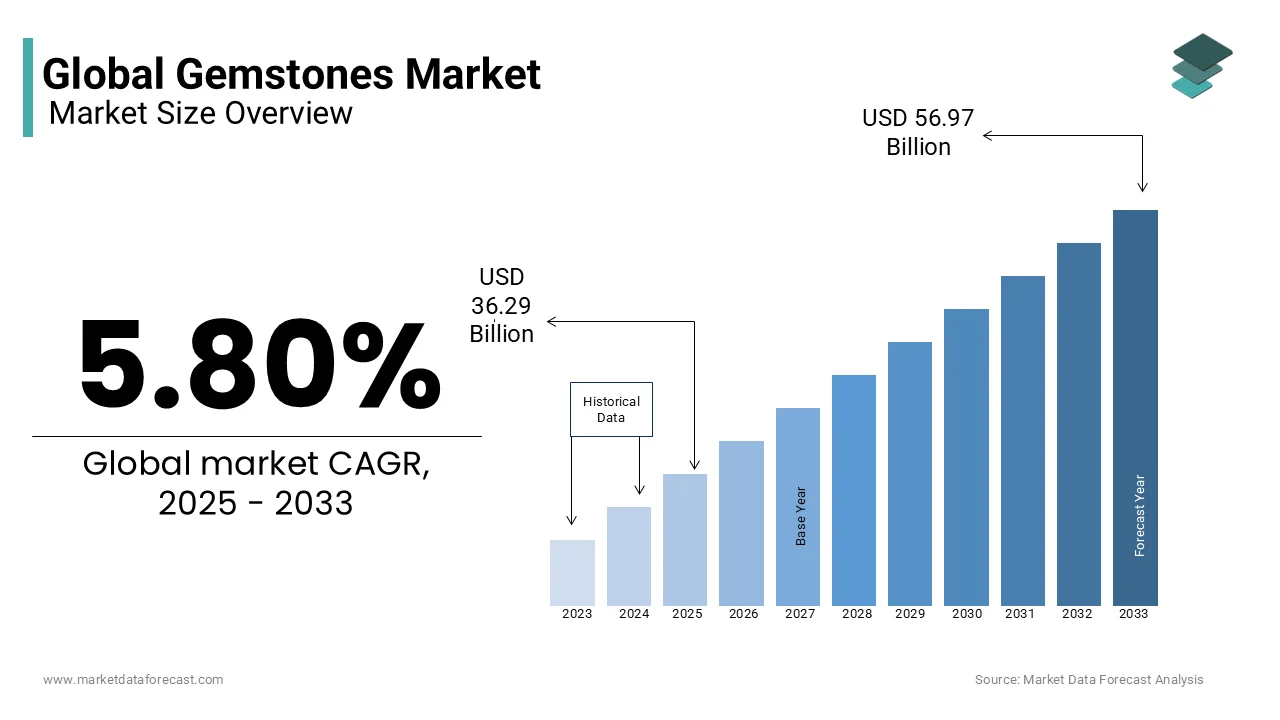
The global gemstones market was valued at USD 34.30 billion in 2024. The global market is expected to reach USD 56.97 billion by 2033 from USD 36.29 billion in 2025, rising at a CAGR of 5.80% from 2025 to 2033.
Gemstones are precious and semi-precious stones such as diamonds, rubies, sapphires, emeralds, and a diverse range of colored gemstones. These stones are prized for their rarity, aesthetic beauty, and unique physical properties, including hardness, refractive index, and color saturation. Their applications extend beyond ornamental jewelry to include industrial uses, such as in cutting, grinding, and high-precision instruments for diamonds due to their unmatched hardness on the Mohs scale. A noteworthy statistic is that over 80% of the world’s emeralds are sourced from Colombia, as per data from the Gemological Institute of America (GIA), while Myanmar is responsible for nearly 90% of the world’s rubies of gem quality. Additionally, diamonds, the most popular gemstones, are not only valued for their brilliance but also their industrial utility, with around 70% of mined diamonds being used in industrial applications according to the International Gem Society. As consumer demand grows for ethically sourced gemstones, traceability and certification have become central concerns is reshaping the industry’s approach to sourcing and production.
The increasing consumer awareness surrounding ethical sourcing and environmental sustainability has become a pivotal driver in the gemstones market. Consumers are prioritizing transparency in the supply chain for conflict-free and responsibly mined gemstones. According to the Kimberley Process Certification Scheme (KPCS), over 99.8% of the global diamond supply is now certified as conflict-free which is impacting on industry-wide adherence to ethical sourcing practices. Furthermore, the growing popularity of lab-grown gemstones, which offer the same physical and chemical properties as natural stones but with a significantly reduced environmental footprint is reshaping market preferences. The U.S. Geological Survey reports that lab-grown diamond production rose by 15% in 2021 is highlighting this shift towards sustainable alternatives. This trend is further fueled by regulatory frameworks and consumer demand for traceability in the gemstone supply chain.
Innovations in gemstone cutting, treatment, and authentication technologies are significantly enhancing the value and accessibility of gemstones. Advanced techniques like laser cutting, 3D printing for custom jewelry designs, and sophisticated spectroscopic methods for gemstone verification are driving market growth. The Gemological Institute of America (GIA) has reported that over 80% of gemstones are now processed using advanced laser technology, ensuring higher precision and reducing material wastage. Additionally, blockchain technology is increasingly being employed for gemstone traceability by offering secure and transparent records of a gemstone’s origin and journey through the supply chain. According to the U.S. Patent and Trademark Office, filings related to gemstone authentication technologies have increased by 20% over the past five years with ongoing innovation in the industry. These advancements not only improve gemstone quality but also reinforce consumer trust in the authenticity and ethical sourcing of their purchases.
The gemstones market is significantly restrained by the high costs and price volatility associated with natural gemstones. Factors such as geopolitical tensions, mining restrictions, and fluctuating demand contribute to unpredictable pricing. The U.S. Geological Survey indicates that the price of high-quality emeralds and rubies has increased by over 30% in the past decade due to limited supply from key regions like Colombia and Myanmar. Additionally, economic instability in gemstone-producing countries can disrupt supply chains is further driving price fluctuations. This volatility makes it challenging for both consumers and retailers to maintain consistent pricing strategies is limiting broader market accessibility. For investors, these unpredictable shifts can deter engagement when alternative investment assets offer more stable returns.