Editor’s Note
This article previews a significant piece of jewelry history—the 18th-century diamond tassel necklace of the Marquesses of Angelsey—which was a highlight of Sotheby’s Royal & Noble Jewels sale in Geneva.
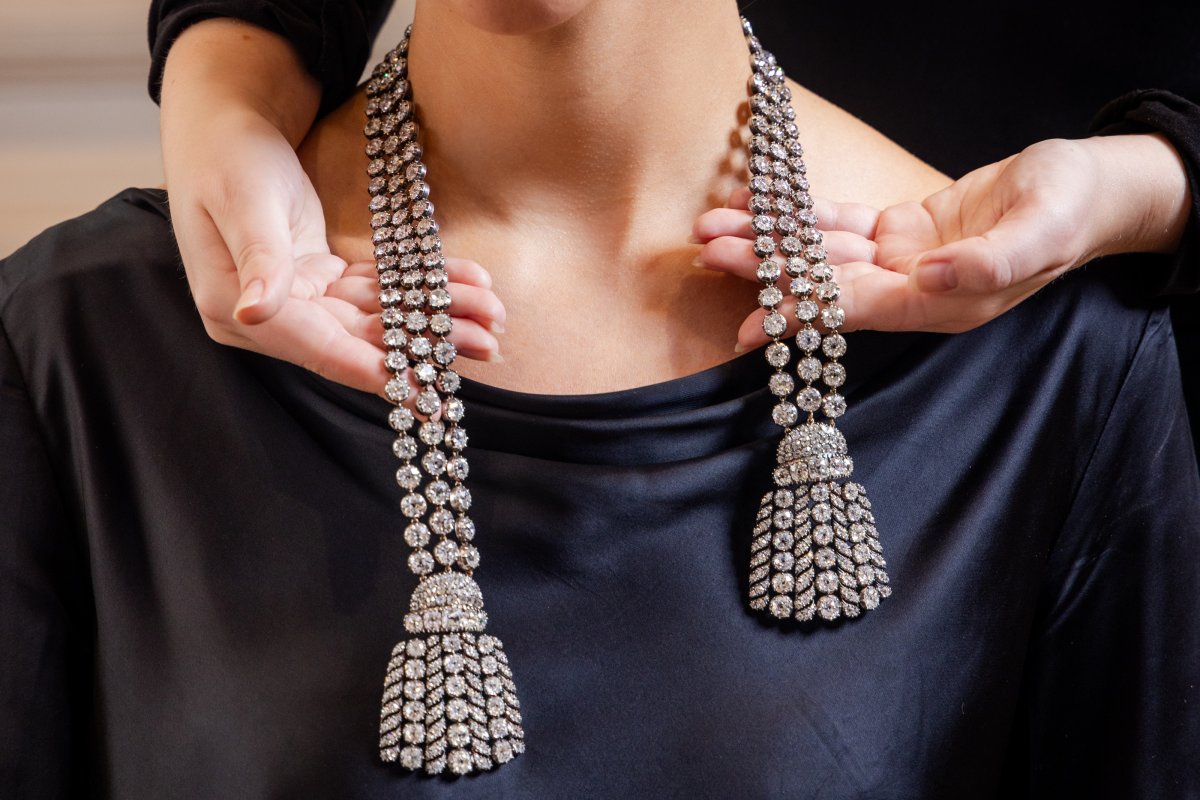
The auctioneer’s hammer has officially fallen on the magnificent Royal & Noble Jewels sale at Sotheby’s in Geneva. Let’s start with the big one right off the bat: the diamond tassel necklace once owned by the Marquesses of Angelsey. This unusual necklace got lots of pre-sale attention. One, it dates to the eighteenth century, and few pieces of jewelry of this caliber from that era have survived and been sold in a public auction. Two, experts at Sotheby’s stated that they believed it was possible that the necklace contains diamonds that were once set in the infamous Boehmer & Bassenge jewel that helped to bring down the French monarchy in the 1780s.
There’s no firm documented link between the two pieces, but the whiff of Marie Antoinette was enough to drive the price of this piece sky-high. Auction estimates were set at 1,600,000-2,400,000 Swiss francs (or $1,800,000-2,800,000 USD).
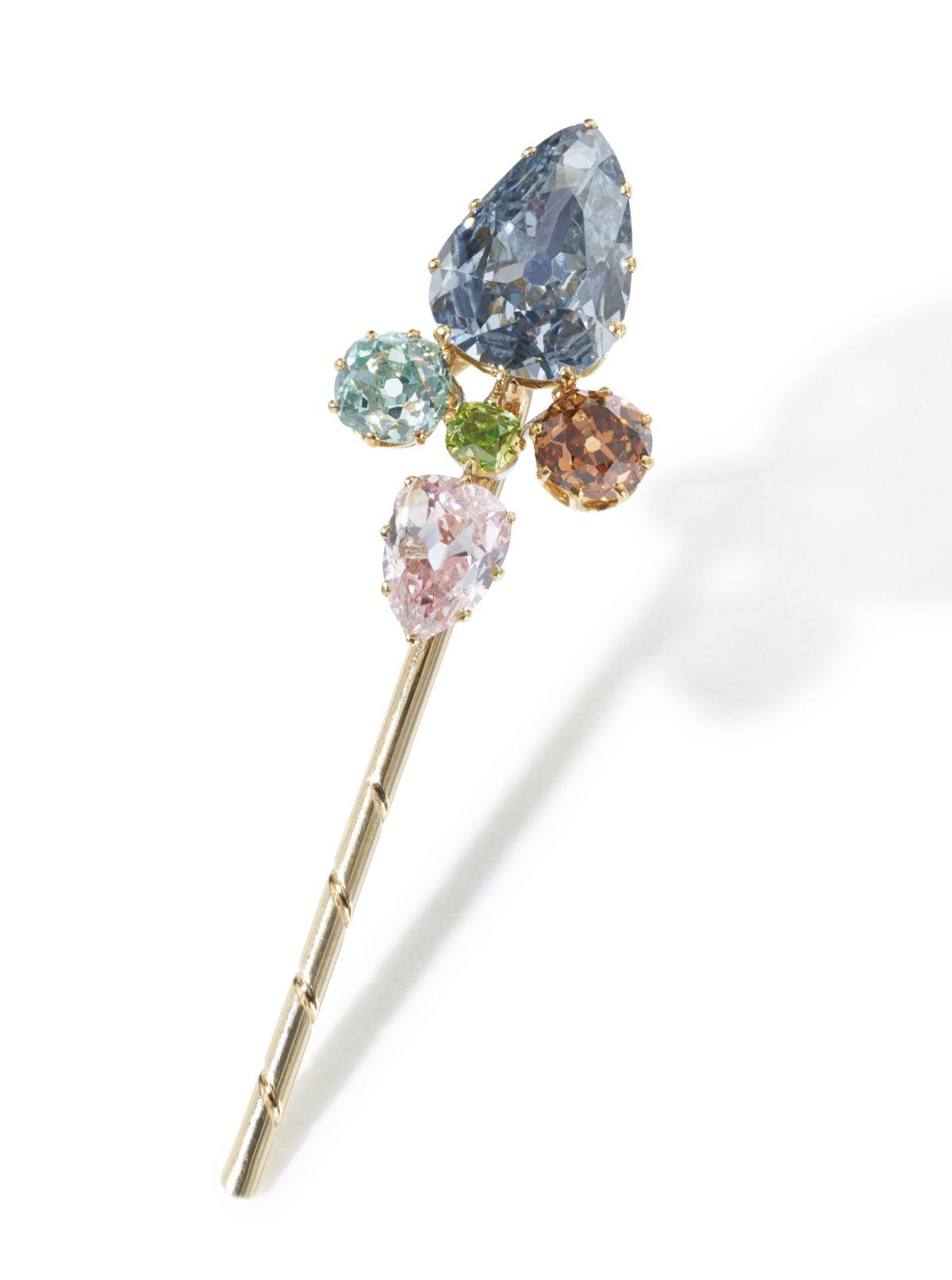
The next highest number achieved in the sale came from this unique tie pin, which is set with gray-blue, pink, green, brown-orange, and green-yellow diamonds. The jewel belonged to Tsar Ferdinand I of Bulgaria, who reigned from 1887 to 1918. Ferdinand, who was a grandson of King Louis Philippe I of France and a cousin of Queen Victoria and Prince Albert, loved to pile on ornaments and decorations—so much so that one cousin, Lady Helena Gleichen, revealed that he was nicknamed “the Christmas-Tree” within the family. The colorful tie pin certainly fits within that image. The estimate for the jewel was set at 450,000-600,000 Swiss francs, or approximately $500,000-700,000 USD.
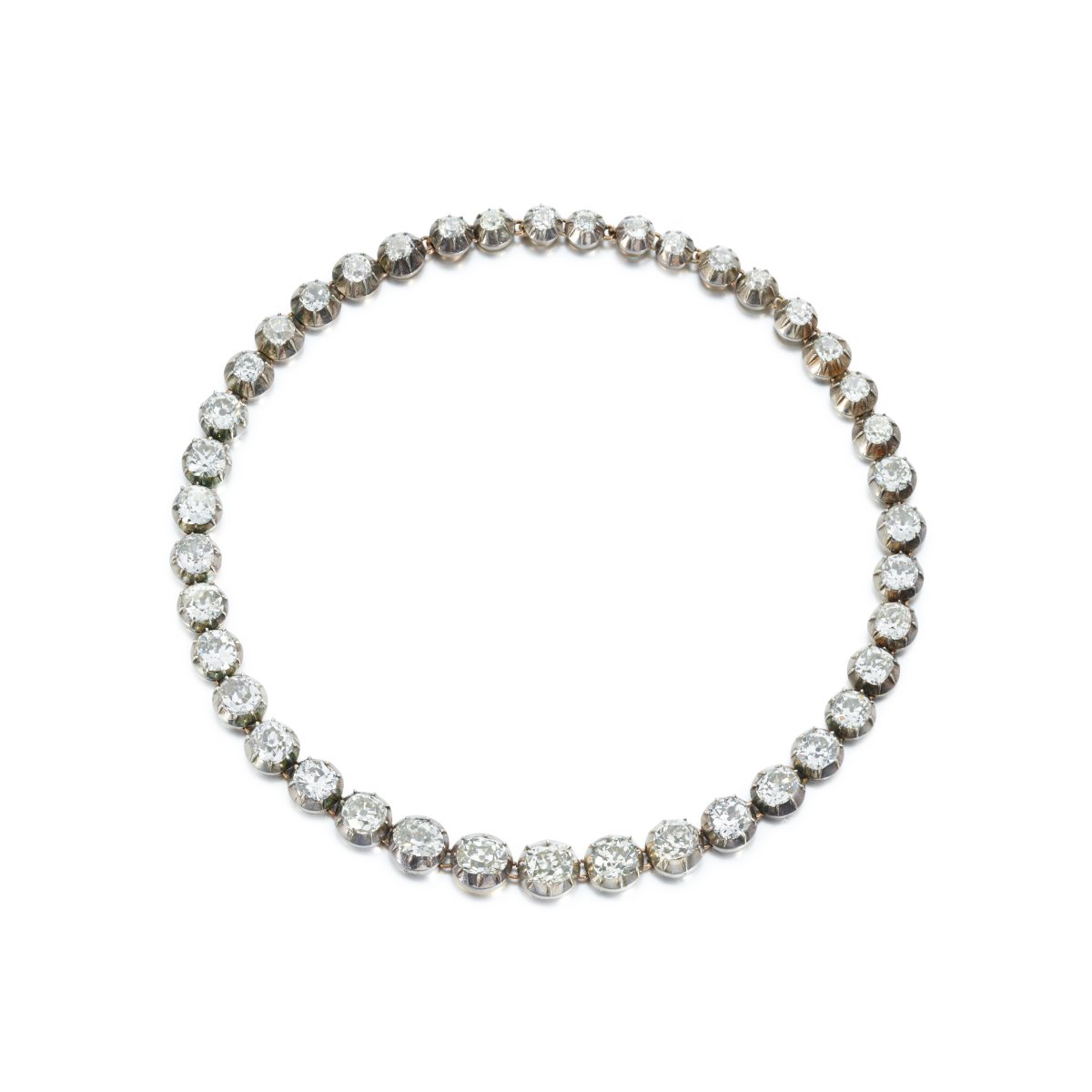
The descendants of Tsar Ferdinand also offered this classic diamond collet necklace as part of the sale. While the Angelsey necklace had a possible advertised connection to Marie Antoinette’s downfall, this necklace is likely set with stones that genuinely belonged to her daughter, the Duchess of Angoulême. Her diamonds, originally set in a grand tiara, were inherited by her niece and nephew, the Duchess of Parma and the Count of Chambord. They used the diamonds to make a range of new jewels for their family members. It’s likely that one of those jewels is this necklace, which was given to Princess Marie Louise of Bourbon-Parma, the Duchess of Parma’s granddaughter, when she married Tsar Ferdinand in 1893. It was later inherited by her daughter, Princess Eudoxia.
Eudoxia didn’t have children of her own, so it’s likely that the necklaces were inherited by the children of her younger sister, Princess Nadezhda. They offered it in the Sotheby’s sale for an estimated price of 90,000-130,000 Swiss francs (or around $104,000-150,000 USD).
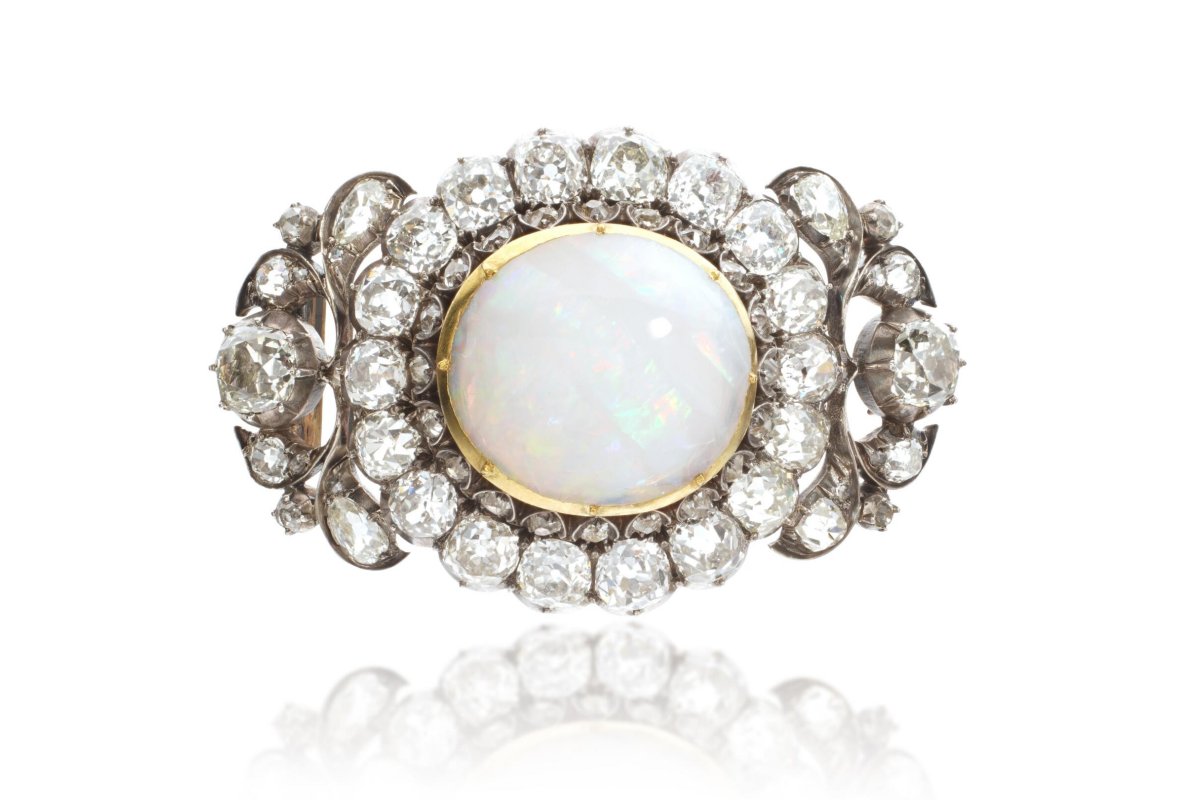
There were also jewels in the sale that Princess Nadezhda’s descendants inherited from the relatives of their father, Duke Albrecht Eugen of Württemberg. Among them were two opal and diamond cluster brooches. These were originally clasps on a pair of pearl bracelets, wedding gifts from Grand Duchess Maria Antonietta of Tuscany (a great-aunt of Princess Marie Louise, wife of Tsar Ferdinand) to her new daughter-in-law (and niece), Princess Maria Immaculata of Bourbon-Two Sicilies, in 1861. Maria Immaculata’s daughter, also named Maria Immaculata, inherited the opal, diamond, and pearl bracelets. At some point after her wedding to Duke Robert of Württemberg in 1900, she had the clasps removed from the bracelets and remodeled to wear as brooches.
Robert and Maria Immaculata did not have children, and much of their estate was inherited by their nieces and nephews. Sotheby’s anticipated that the opal and diamond cluster brooches would sell at auction for between 13,000-22,000 Swiss francs (or around $15,000-26,000 USD).
A survey of the jewels owned by the former royal family of Bulgaria turns up pieces connected to fascinating moments in the history of the royal house. One of these is this gold, diamond, and sapphire brooch, which is said to have originally been made by Fabergé as a button for Grand Duke Vladimir, an uncle of the last Emperor of Russia. Vladimir’s wife, Grand Duchess Maria Pavlovna, was a first cousin of Tsar Ferdinand’s second wife, Princess Eleonore Reuss of Köstritz. When Vladimir died in 1909, Tsar Ferdinand hurried to Russia to be present in person for his funeral—a decision that had difficult diplomatic consequences, given Bulgaria’s place in the fabric of Europe at that point in time.
Grand Duchess Vladimir had this button transformed into a piece of mourning jewelry, engraving her late husband’s initials and date of death on the back of the piece. She either gave it directly to Ferdinand or asked him to pass it along to one of his family members. The brooch ended up with his younger daughter, Princess Nadezhda, who left it to her descendants. They offered it for sale at Sotheby’s with an auction estimate of 5,500-7,000 Swiss francs, or approximately $6,300-8,000 USD.