Editor’s Note
The recent imposition of steep US tariffs has placed India’s vital gems and jewellery sector under severe strain, threatening exports and employment. As industry bodies appeal for urgent government intervention, the outcome will test trade diplomacy and economic resilience.
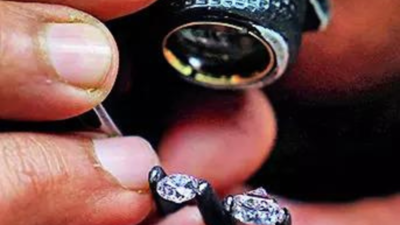
India’s gems and jewellery industry faces a crisis as the US imposes 50% tariffs, disrupting diamond exports. The Gems and Jewellery Export Promotion Council (GJEPC) urges the Centre for immediate relief, including credit extensions and moratoriums, to cushion exporters. With potential job losses in Surat, the council seeks policy and monetary interventions, hoping for a swift resolution considering the broader India-US relationship.
The Gems and Jewellery Export Promotion Council (GJEPC) has urged the Centre to announce immediate relief measures after the United States imposed 50 per cent tariffs on Indian goods, a move that exporters say has started hurting the $40 billion industry.
The penal duties, which came into effect on August 27, have already disrupted shipments to India’s biggest export market for diamonds.
Ray said exporters had “front-loaded” consignments to the US, anticipating tariff action, but the sudden move had left the sector reeling.
Front-loading refers to accelerated shipment of goods ahead of an expected disruption such as tariff hikes or regulatory changes.
Ray was in Kolkata to attend a conclave on the diamond industry organised by the Indian Chamber of Commerce (ICC). According to GJEPC data, gross exports of gems and jewellery rose 15.98 per cent to $2.17 billion in July, while gross imports grew 26.55 per cent to $1.8 billion.
The US remains India’s largest market for diamonds, and the fallout of the duties is expected to be severe on Surat, which processes nearly 90 per cent of the world’s diamonds and directly employs about two lakh workers.
The council submitted a detailed memorandum to the government on August 28, seeking policy, banking and monetary interventions to cushion exporters from the disruption. Its demands include extending the export obligation period under duty-free gold import schemes from 90 days to six months for shipments to the US, and allowing SEZ units to offload inventory into the domestic market and undertake reverse job work.
On monetary measures, the industry has recommended a reimbursement mechanism covering 25-50 per cent of the additional US tariffs for the August–December 2025 period, deferment of interest on working capital loans, a six-month moratorium on packing credit loans related to US exports, and reintroduction of the interest equalisation scheme.
GJEPC has also sought enhanced market access assistance for global exhibitions and promotion of Indian jewellery abroad. With orders slowing and cancellations mounting, it has flagged the risk of job losses in Surat and elsewhere, urging support for workers through personal loan restructuring, education grants for girl children and temporary coverage under the Ayushman Bharat scheme.
Ray expressed hope that the “penal tariff” would be short-lived.