Editor’s Note
This article examines a recent congressional provision that drastically reduced fines for certain fishing companies, a decision made without awaiting technical review. It highlights concerns about the process and its implications for environmental enforcement.

In less than 24 hours, without legal basis or waiting for the technical opinion of the Ministry of Production (Produce), the Permanent Commission of Congress ordered an 80% reduction in fines imposed on fishing companies up to the year 2020. This provision particularly benefits companies that were sanctioned by Produce for illegally extracting species in the Paracas National Reserve.
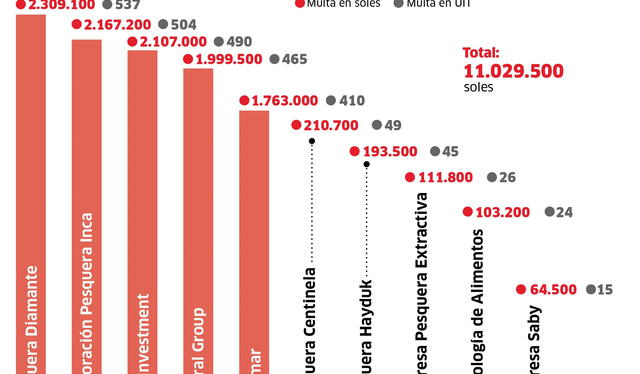
With the congressional provision, industrial fishing companies would stop paying around S/10,000,000.
According to the sanctions database of Produce, the list of fishing companies that have accumulated the largest amount of fines because their vessels carried out extraction work in the Paracas National Reserve are: Pesquera Diamante (S/2,309,100); Corporación Pesquera Inca (S/2,167,200); and CFG Investment (S/2,107,000).
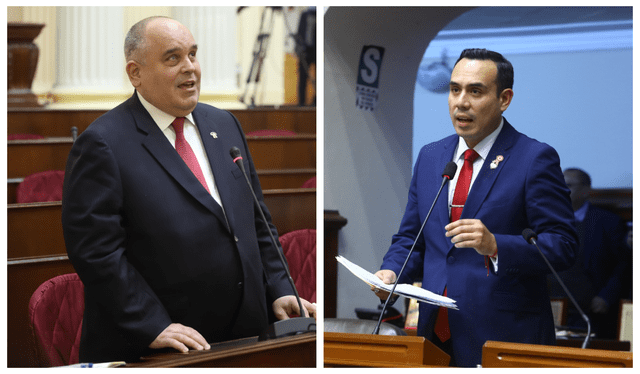
On the morning of Friday, July 19, during the session of the Permanent Commission, Congressman Jorge Morante (former Popular Force, now We Are Peru) proposed adding the exoneration of 80% of fines for fishing companies to the debate on an Executive Branch project to increase public investment.
After a simple statement from Morante, who argued, unusually, that his proposal “will improve revenue collection,” the Budget Committee chaired by legislator José Jerí (We Are Peru) gave the green light to the initiative that benefits companies that are part of the National Fisheries Society (SNP). The Permanent Commission approved the ruling the same day.

Thus, Congress approved the 80% reduction in fines for fishing companies, in a context where the SNP has initiated a legal battle to obtain authorization to extract marine species in an area where it is not permitted: the Paracas National Reserve. After the National Service of State-Protected Natural Areas (Sernanp) rejected the SNP’s request, the powerful industrial fishermen’s guild has turned to the courts to achieve its goal.
In the Executive Branch project being debated by the Congressional Commission, the measure in favor of fishing companies was not contemplated, so Congressman Jorge Morante’s proposal was presented at the last minute and did not merit the slightest discussion.
When consulted about his initiative, Congressman Morante argued that its purpose is not to benefit the industrial fishermen who have accumulated more than S/11,000,000 in fines for illegal fishing.
However, the project made no distinction between industrial and artisanal fishermen.
In the project for the exoneration of fines for illegal fishing by legislator Jorge Morante, it is indicated that it is aimed at the entire fishing sector. If his interest was the artisanal fishermen, he should have presented an initiative with that precision. Consequently, the approved rule satisfies the sector with the largest fines: the industrial fishermen.
Morante made the proposal without legal or technical basis and the president of the Budget Committee, José Jerí, accepted it and it was not debated.
It is also noteworthy that the exoneration of fines by up to 80% applies to sanctions prior to 2021, despite the fact that the so-called “Fisheries Package” granted a similar benefit in 2022. Therefore, the new discount will particularly benefit companies recently fined for illegally fishing in the Paracas National Reserve in 2020.
La República asked the National Fisheries Society (SNP) if its members have had any relationship with the approved project that discounts 80% of fines for fishing companies.
He also clarified that they will not take advantage of the rule approved by Congress that favors them.
The SNP recently appealed a judicial decision against its request to fish in the Paracas National Reserve and has turned to Indecopi for the same purpose.