Editor’s Note
**Editor’s Note:** This piece explores the enduring allure of jewelry—not just as adornment, but as a meaningful asset and heirloom. We spoke with experts Nobuyuki Harada and Christie’s Vicky Sek to guide readers on making thoughtful choices that balance beauty, joy, and lasting value.
Jewelry offers multifaceted appeal: the joy of discovery, the happiness of wearing it, and the asset value of passing it down through generations. So, what kind of jewelry should we choose today? We asked two specialists who are knowledgeable about gemstones and well-versed in the market: Nobuyuki Harada, a jewelry advisor, and Vicky Sek, Chairman of Christie’s Asia Pacific Jewelry Department.
Joined Suwa Trading in 1983. While serving as a gemstone buyer, he also handled jewelry production. In 2017, he established Jewelry Advisor & Gallery, which advises on how to utilize owned jewelry. He also provides advice to jewelry professionals.
With over 30 years at the prestigious auction house Christie’s, she has led the jewelry department primarily in Asia. Her curation skills, backed by long experience and expertise, along with strategies based on understanding market diversity, have earned her high trust from collectors worldwide.
The intense focus on jewelry surged after the pandemic, driven by a desire for beauty and its value as an asset in an unstable economy. Vicky Sek of Christie’s analyzes the jewelry auction market trends:
The value of a gemstone is not determined solely by its beauty or price. Regarding the criteria for judging truly valuable gemstones, jewelry advisor Nobuyuki Harada says:
Finding a gemstone with the grade, reliability, and story that allows for long-term use and inheritance is the essence of choosing valuable jewelry.
Pink diamonds and blue diamonds have seen particularly sharp price increases in recent years. Shown here is a Toi et Moi ring featuring colored diamonds sold at a Christie’s auction (Pink-Orange Diamond 5.01ct × Blue-Green Diamond 5.01ct × Diamond × Gold).
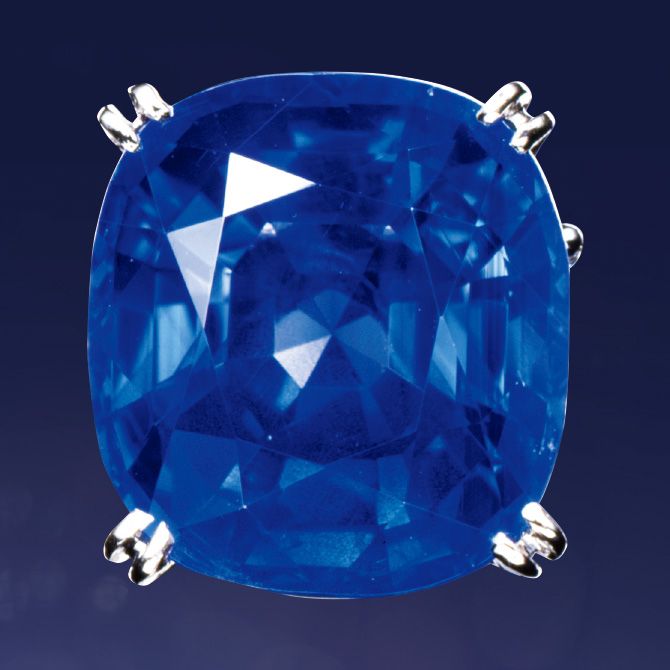
Kashmir: Characterized by a soft blue with a faint milky tone due to extremely fine inclusions. The unique blue resembles cornflower, hence also called “cornflower blue.”
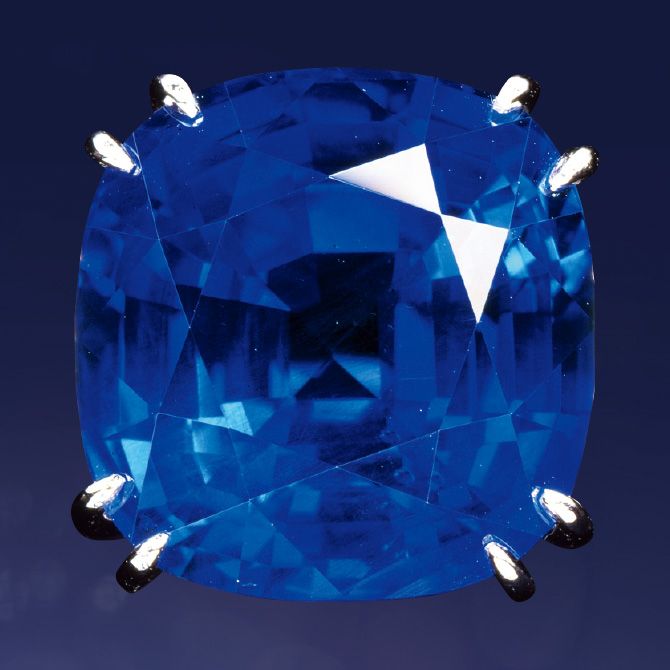
Burma (present-day Myanmar): Known for producing many large sapphires. Features a deep, rich, vivid royal blue. Now almost entirely mined out.
Sri Lanka: Characterized by a bright, transparent blue. High-quality Sri Lankan sapphires, even if small, do not appear dark and exhibit a beautiful tone.
The appeal and value of the three major precious stones vary greatly depending on origin and treatment. For example, with sapphire: “Prices soar for stones from origins that are becoming difficult to obtain due to mine closures. Sapphire is popular as the ‘blue gemstone,’ but mining in Kashmir, one of the three major origins, ended 100 years ago, and production from Burma and Sri Lanka has also decreased, making them very expensive. Therefore, Madagascar sapphires are worth noting. Although the origin has a short history, they offer beauty and diversity close to the three major origins, and many are untreated, making them a very promising option expected to see future price increases” (Harada).
“For colorless diamonds, also pay attention to the cut shape. Fancy shapes other than round brilliant, such as marquise (left), oval, pear shape (center), and emerald cut (right), appear larger and more brilliant due to their elongated shape compared to rounds, even with the same carat weight. The emerald cut, in particular, features an elegant reflection of light, emitting a timeless sparkle. Well-shaped fancy cuts are rarer than their price suggests. For color, it is advisable to choose high-color grades (around D, E, F) on the GIA diamond color grading scale, which are colorless and transparent” (Harada).
Right: Ring (Jade cabochon approx. 21.8×17.0×11.4mm × Diamond × Gold). Left: Necklace (Jade approx. 11.0-9.5mm, 51 beads, Round Ruby × Baguette-cut Diamond × Gold).
“Jade is a gemstone particularly popular in the Asian market and is handled exclusively in Hong Kong among the five major auction venues. In ancient China, jade was a special item originally permitted only for emperors and nobility, symbolizing status and authority. Even today, for many people of Asian descent, wearing jade signifies status and character, and it is traded at high prices” (Sek).