Editor’s Note
The global luxury market demonstrated remarkable resilience in 2023, achieving record growth despite economic headwinds. This summary is based on the latest annual Luxury Study from Bain & Company and Fondazione Altagamma.
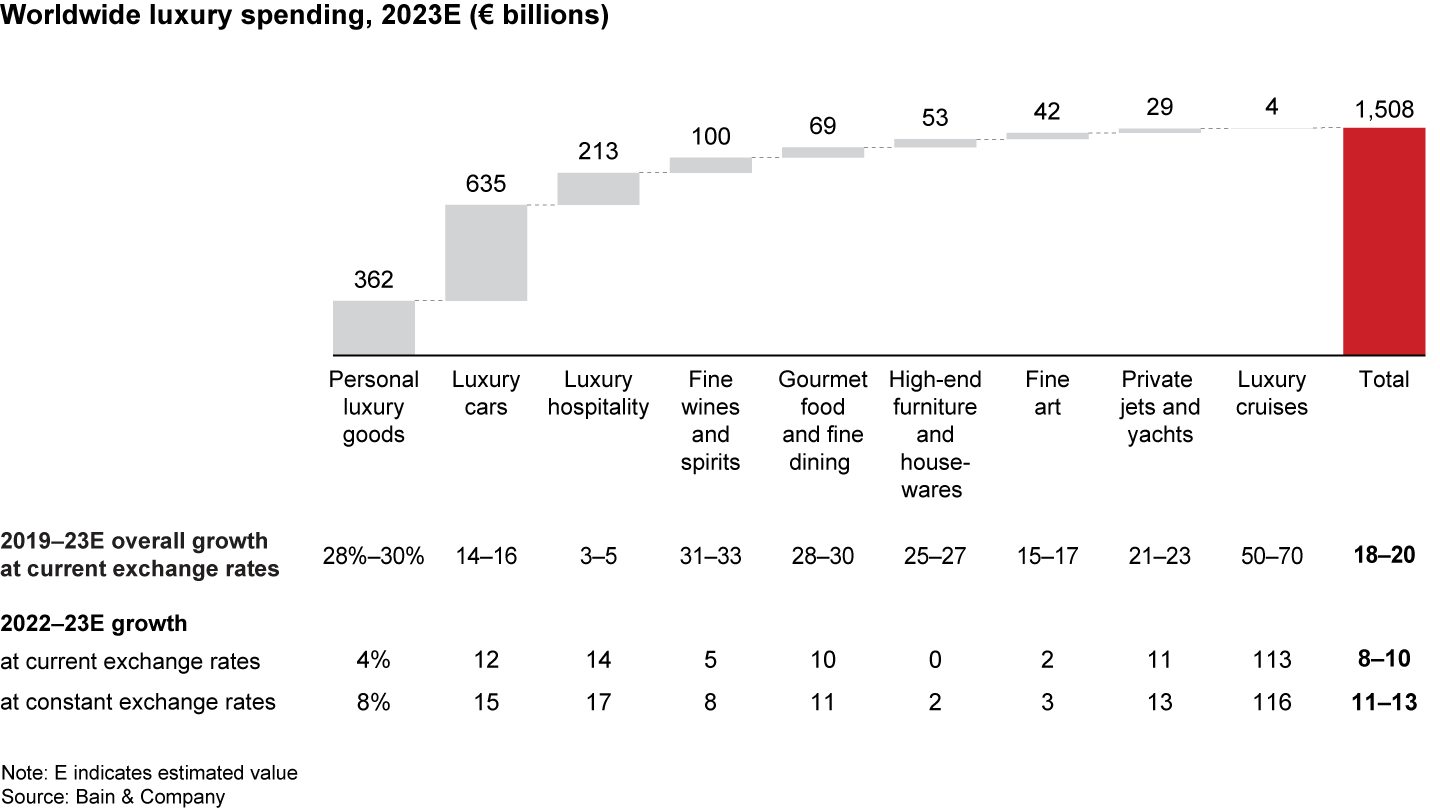
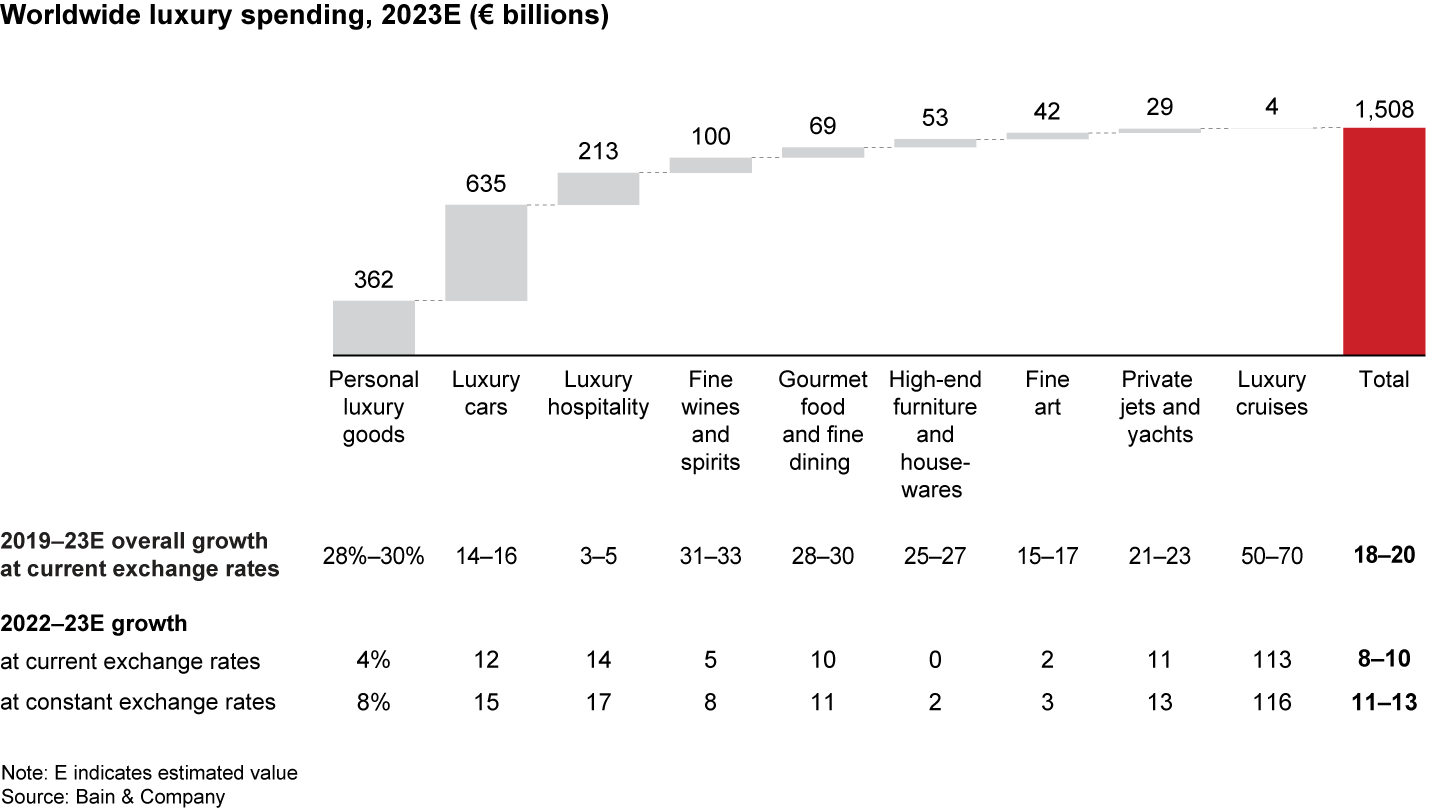
Despite challenging macroeconomic conditions, we estimate the overall luxury market reached €1.5 trillion globally in 2023, a robust 8% to 10% growth over 2022 at current exchange rates (11% to 13% at constant exchange rates), setting a record for the industry and proving its unparalleled resilience. These are key findings from the 22nd edition of the annual Luxury Study, released by Bain & Company and Fondazione Altagamma, the trade association of Italian luxury goods manufacturers.
The overall luxury industry tracked by Bain & Company encompasses both luxury goods and experiences. It comprises nine segments, led by luxury cars, luxury hospitality, and personal luxury goods, which together account for more than 80% of the total market. The growth in total spending was consistent with the growth rate in 2022 and translated to a nearly €160 billion increment in spending across all luxury segments. In particular, spending on experiences recovered to historic highs, fueled by a resurgence in social interactions and travel.
The market for personal luxury goods—the “core of the core” of luxury segments and the focus of this analysis—continued growing and is likely to have reached €362 billion in 2023, 4% higher than 2022 at current exchange rates (8% at constant exchange rates). However, the market performance softened quarter by quarter, and uncertainty remained heading into the fourth quarter, with diverging signals coming from a reaccelerating Chinese market and decelerating markets in the US and Europe.
This slowdown has resulted in growing performance polarization. In 2023, we estimate that about two-thirds of brands experienced growth (vs. 95% in 2022). Average profitability stabilized as a result of the counterbalancing forces of inflationary pressure and continued investment for the future against sustained price elevation.
Global luxury tourist purchases have nearly returned to prepandemic levels in absolute value, but upside potential remains (in particular, to catch up to pre–Covid-19 market share).
Asia set the pace for growth thanks to strong domestic demand and a renewed influx of Chinese tourists across the region. Japan boomed due to local customers and a weak yen favoring touristic inflows. Mainland China posted a strong performance after its first quarter reopening but slowed progressively as new macroeconomic concerns arose. Southeast Asian countries experienced positive momentum from strong intraregional tourism and growing interest from local consumers, especially in Thailand. Conversely, South Korea faced a challenging year, with unfavorable macroeconomic headwinds slowing local consumption, a strong currency that led tourists to buy elsewhere, and Korean outflows to international destinations.
Europe continued to benefit from the progressive pickup of tourism, which stimulated growth across all countries, with resort locations attracting high spenders alongside key luxury cities. Even if macroeconomic instability impacted local aspirational customers, the top customers maintained a positive momentum that fueled market growth.
Meanwhile, the Americas region has decelerated throughout the year, posting an 8% drop from 2022 as widespread uncertainty put a dent in aspirational customers’ spending. Top customers remained confident but shifted their spending abroad, as the US dollar remained strong against the Euro and price differentials favored overseas purchases.
In the rest of the world, Saudi Arabia accelerated, attracting investments from major luxury brands, and Australia provided fertile ground for growth.
Monobrand stores led the distribution ecosystem, favored by consumers’ thirst for a return to in-person interactions. Stores continued to blend physical and digital experiences, as epitomized by the increasing role of clienteling in sales. Multi-brand environments suffered from a sharp slowdown in both department and specialty stores, with rising questions on their role and value proposition to best serve consumer needs in the future. Online market share, which is increasingly difficult to track separately from stores, saw a marginal erosion; within that channel, monobrand websites experienced a normalization of their growth, while online retailers’ quest for traffic has pushed toward increased markdowns.
All personal luxury goods categories grew due to continued price elevation, partially undermining volumes for the first time in a decade. Fueled by an investment mindset, jewelry was set to reach €30 billion in market value in 2023, with fine jewelry affirming itself as a bright spot for investments amid uncertainty. Ready-to-wear was on a positive trend, favored by top spenders in the ultra-high offering, with unfolding demand for excellence and durability. Beauty, propelled by makeup and fragrances, enjoyed positive momentum thanks to the notorious “lipstick effect”—the phenomenon that consumers feel inclined to treat themselves to less costly luxury goods in times of economic crisis—in the Americas and Europe. Watches continued to thrive despite a rising polarization around a few industry winners. And after overperformance in recent years, growth in leather goods and shoes slowed.