Editor’s Note
This article highlights a notable 7% year-on-year sales growth for major domestic retailers in May. The key insight is that while overall customer traffic declined, a significant increase in spending per visit drove the expansion. This suggests a shift in consumer behavior towards more deliberate, higher-value purchases.
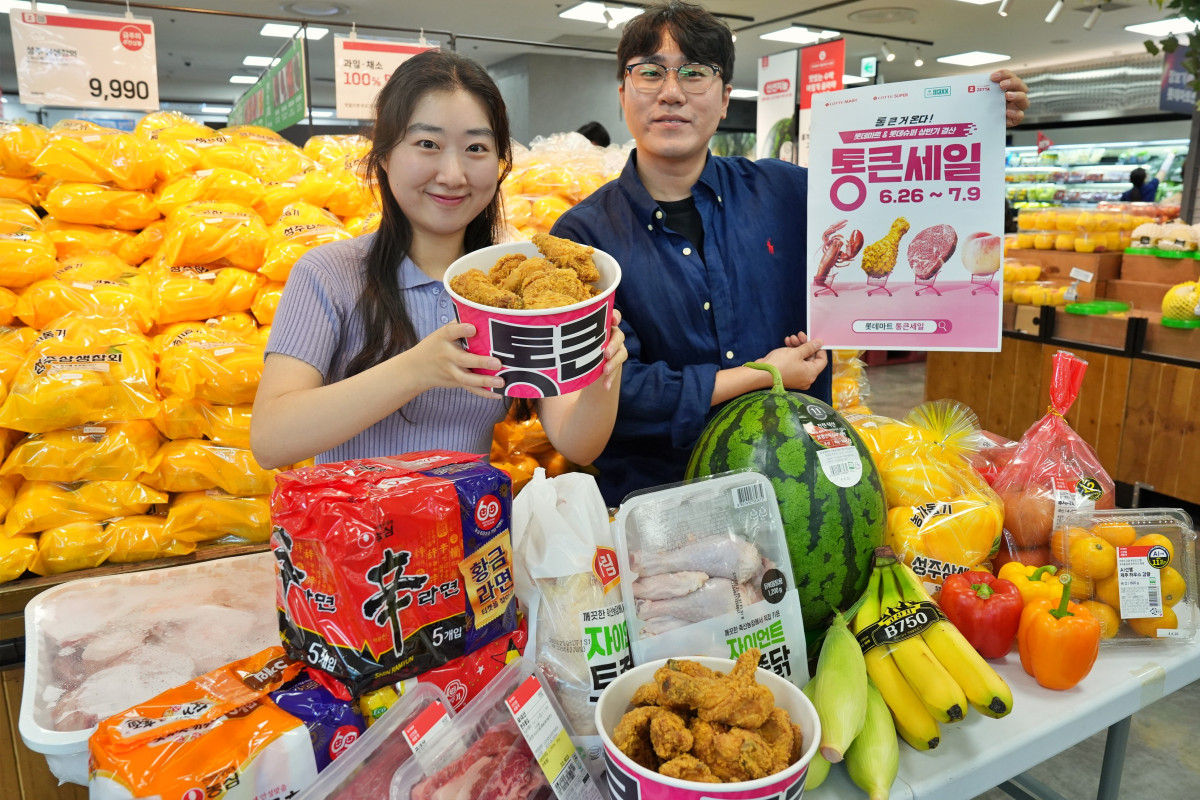
Sales of major domestic retailers in May grew by 7% compared to the same period last year. Although the number of customers visiting department stores and large-scale marts decreased, the amount purchased per visit increased, significantly contributing to the sales expansion.
According to data released by the Ministry of Trade, Industry and Energy on the 25th, sales from 23 major domestic retailers in May totaled 16.1 trillion won, a 7.0% increase compared to the same month last year.
Online sales increased by 13.0%, while offline sales grew by 0.9% each. This marks the first time offline sales have increased year-on-year in four months, following January which benefited from the ‘Lunar New Year effect’.
Among offline channels, sales rose at department stores (2.3%), large-scale marts (0.2%), and corporate supermarkets (1.0%), while convenience store sales (-0.2%) saw a slight decline.
The number of offline transactions decreased at department stores (-2.0%), large-scale marts (-2.5%), and corporate supermarkets (-3.1%), but increased at convenience stores (0.5%). The average purchase amount per transaction rose at department stores (4.4%), large-scale marts (2.8%), and convenience stores (3.1%), but fell at corporate supermarkets (-0.5%).
The Ministry noted that while May had one more holiday than last year, the number of customers visiting large marts and department stores decreased. However, due to price inflation and increased sales centered on high-value items, the purchase amount per visit rose.
Analyzing offline sales by product category, sales of luxury items in the jewelry and watch category (8.1%) increased significantly, while food (1.0%) saw only a slight rise.
Conversely, the slump continued in home appliances & culture (-7.8%), children’s goods & sports (-2.5%), and fashion & miscellaneous goods (-3.7%).
Online sales continued their growth trend, centered on food (18.2%) and services (37.3%). However, the sales slump in fashion & clothing (-4.6%) and sports (-12.7%) categories, affected by the expansion of C-commerce platforms like AliExpress and Temu in the Korean market, persisted.
The share of online sales among total major retailer sales reached 53.1%, up 2.9 percentage points from the same month last year.
The Ministry’s data aggregates sales trends from 13 offline retailers—including department stores (Lotte, Hyundai, Shinsegae), large-scale marts (E-Mart, Homeplus, Lotte Mart), convenience stores (GS25, CU, 7-Eleven), and corporate supermarkets (E-Mart Everyday, Lotte Super, GS The Fresh, Homeplus Express)—and 10 online retailers such as SSG, Coupang, and 11st.