Editor’s Note
This analysis highlights the strategic shift driving recent mineral supply chain announcements. As nations increasingly view critical minerals as a matter of national security and brace for trade uncertainty, efforts like the Canada–Mexico partnership underscore a move toward regional alignment to secure essential industrial inputs.
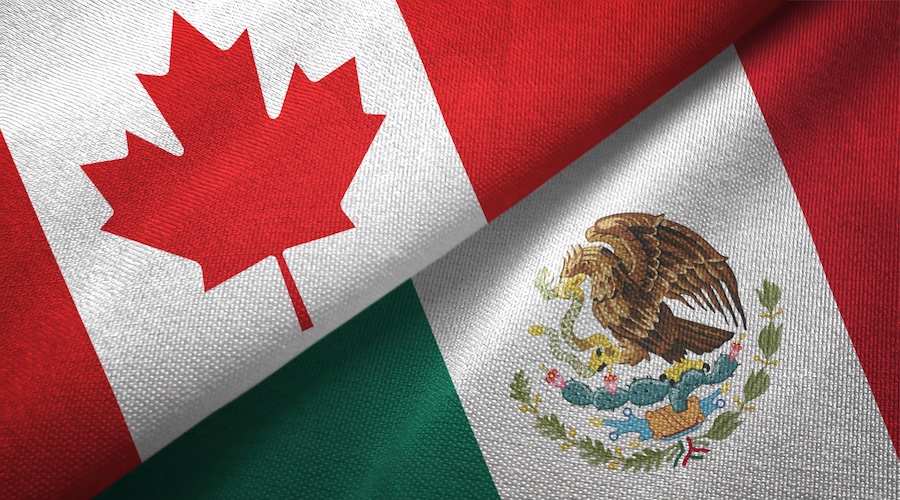
The timing reflects mounting concern over supply-chain security. Governments increasingly treat access to minerals used in electric vehicles, power grids, electronics and defence systems as a national security issue. That is why recent announcements link “supply chains” directly with “minerals.”
Trade uncertainty also plays a role. Mexican reporting frames the Canada–Mexico effort as preparation for potential turbulence around USMCA/TMEC and broader North American trade rules. By aligning on inputs that keep factories operating, both countries aim to reduce vulnerability to policy shifts.
Mexico has also signalled it wants to move beyond simply extracting and exporting raw materials. Officials have stressed the importance of capturing more value through processing and refining, where margins, jobs and strategic leverage are often greater. Canada, which has deeper experience in parts of the midstream segment, could offer expertise and capacity as Mexico builds out that capability.
The Canada–Mexico announcement does not name specific minerals. That absence matters. The headline signals intent, but key details remain undisclosed.
However, context provides clues. Mexico recently launched a separate US–Mexico Action Plan on Critical Minerals, committing the two countries to identify priority minerals and coordinate trade tools to reduce supply vulnerabilities. In parallel discussions, lithium, nickel, cobalt and other battery-related materials frequently surface, reflecting rapidly rising demand and the concentration of processing in a limited number of jurisdictions.
Because this is effectively a plan to publish a plan, the 2026 document will determine whether the initiative carries weight. Investors and industry participants will look for a short list of priority minerals, concrete measures to address permitting, standards, customs and project finance barriers, and a pipeline of processing, refining and infrastructure projects. Without those elements, the effort risks remaining diplomatic signalling rather than becoming an investment roadmap.
Today’s mineral partnerships take a different approach. Rather than attempting to fix prices, governments focus on de-risking supply chains and accelerating investment.
Canada anchors G7-linked collaboration through the Critical Minerals Production Alliance, designed to speed up projects and strengthen partner supply chains. The Minerals Security Partnership brings together countries including Canada, the EU and Japan to co-ordinate diplomatic and financial support for strategic energy mineral projects. In Europe, policy-driven alliances emphasize rare-earth magnets and motors, which are essential for EVs, wind turbines and defence systems and whose processing remains concentrated.