Editor’s Note
This article explores how technologies like OpenUSD are revolutionizing 3D design workflows, enabling seamless collaboration and turning creative concepts into precise CAD models. Platforms such as NVIDIA Omniverse are pivotal in this transformation, bridging powerful tools like Rhino with next-generation digital ecosystems.
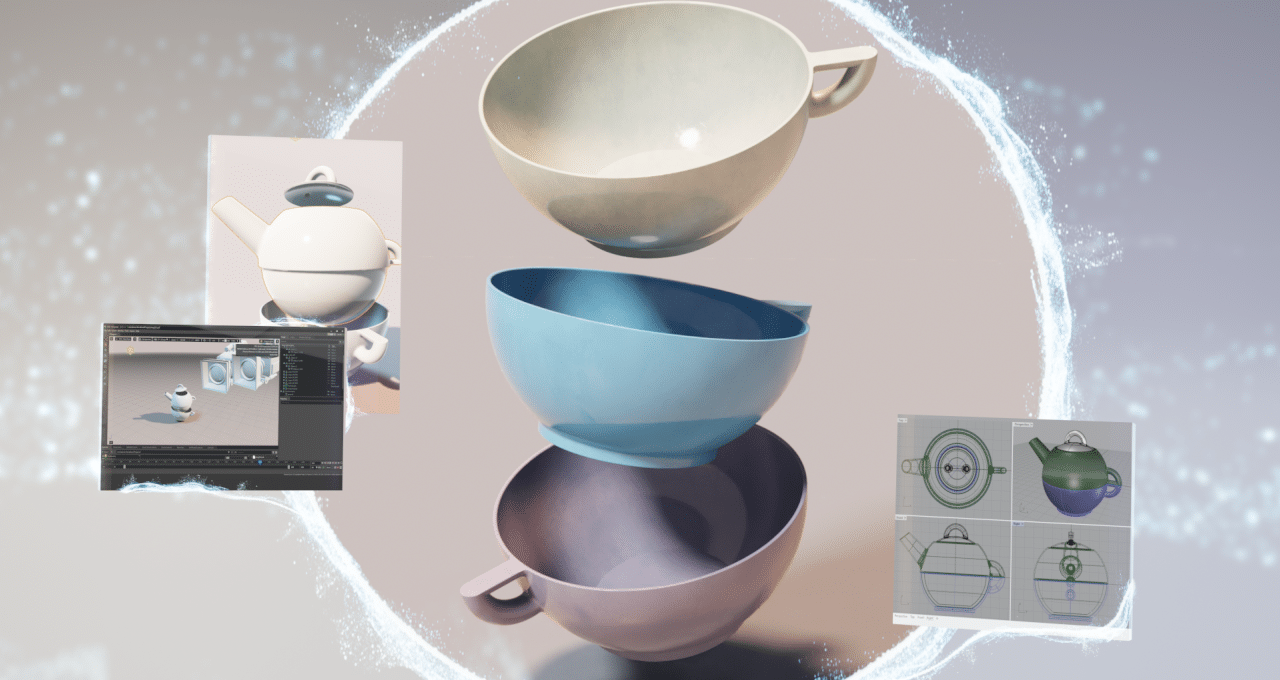
Powerful 3D tools combined with groundbreaking technologies can transform how designers bring their visions to life. Universal Scene Description, or OpenUSD, is enabling this synergy. It serves as the foundational framework for the NVIDIA Omniverse platform, which facilitates the development of OpenUSD-based tools and 3D workflows.
Rhinoceros, commonly known as Rhino or Rhino 3D, is a robust computer-aided design (CAD) and 3D modeling software used across various industries—from education and jewelry design to architecture and marine modeling. Its latest software release includes support for OpenUSD export, among other updates, positioning it among the growing number of applications adopting this new 3D standard.
Tanja Langgner, a 3D artist and illustrator with a background in industrial design, relies on Rhino to construct CAD models for production evaluation or rendering. She frequently undertakes freelance work in production and visualization, assisting clients with tasks ranging from concept design to CAD and 3D modeling.
she said, particularly when faced with designs requiring intricate surface patterns.
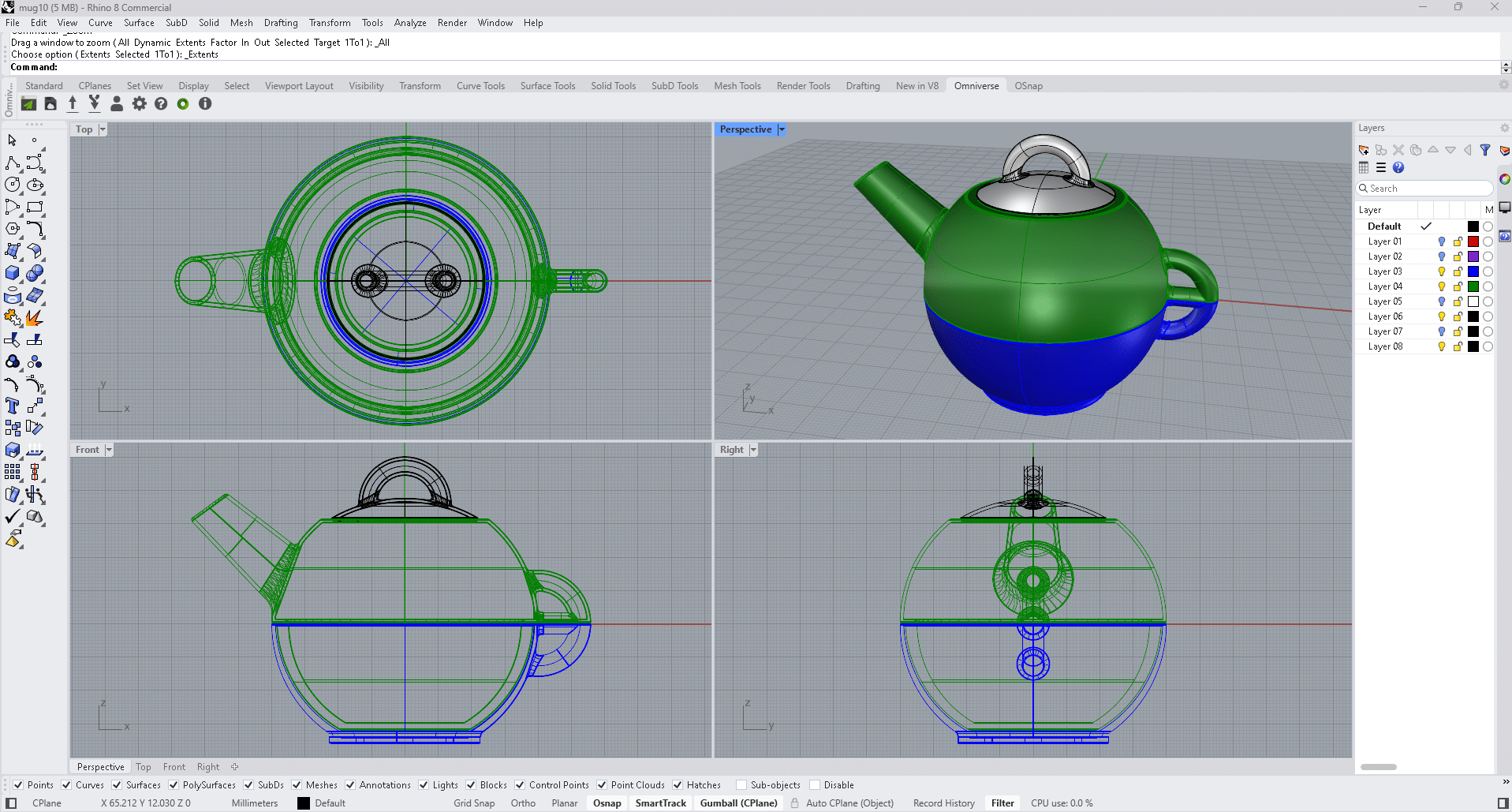
Langgner, who is familiar with OpenUSD for easily transferring assets between applications, can now export OpenUSD files directly from Rhino with the new update, further streamlining her design workflow.
Mathew Schwartz, an assistant professor in architecture and design at the New Jersey Institute of Technology, also utilizes Rhino and OpenUSD in his 3D workflows. His research and design lab, SiBORG, focuses on understanding and improving design workflows, especially concerning accessibility, human factors, and automation.
he said. Schwartz recently demonstrated, in a community livestream, how he uses Rhino 3D and generative AI to create real-time navigation graphs for spaces accommodating wheelchair or crutch users.
Rhino 8, now available, brings significant enhancements to the 3D modeling experience. It enables the export of meshes, mesh vertex colors, physically based rendering materials, and textures, allowing users to seamlessly share and collaborate on 3D designs with enhanced visual elements.

The latest Rhino 8 release also includes improvements to:
Modeling: New features include PushPull direct editing, a ShrinkWrap function for creating watertight meshes around various geometries, enhanced control over subdivision surfaces with the SubD Crease control tool, and improved functionality for smoother surface fillets.
Drawing and illustration: Precision-boosting enhancements to clipping and sectioning operations, a new feature for creating reflected ceiling plans, major improvements to linetype options, and enhanced UV mapping for better texture coordination.
Operating systems: A faster experience for Mac users thanks to Apple silicon processors and Apple Metal display technology, along with significantly accelerated rendering via the updated Cycles engine.
Development: New Grasshopper components covering annotations, blocks, materials, and user data, accompanied by a new, enhanced script editor.
Future Rhino updates will expand export capabilities to include NURBS curves and surfaces, subdivision modeling, and the option to import OpenUSD content. The Rhino team actively seeks user feedback on desired import platforms and applications, continually working to make OpenUSD files widely accessible and adaptable across 3D environments.