Editor’s Note
This analysis examines the sharp divergence in precious and industrial metals on February 23, 2026, framing gold and silver’s surge against a market sell-off as a classic “risk-off” rotation, distinct from the declines in platinum and copper.
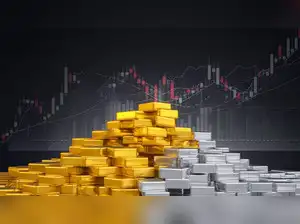
Gold futures hit $5,230.70 on February 23, 2026 — up nearly 3% in a single session — as the Dow Jones crashed 807 points (−1.64%), the S&P 500 fell 1.23%, and the Nasdaq shed 1.44%. Silver exploded +5.66% to $87.00, outpacing even gold. Meanwhile, platinum slipped 0.90% and copper fell 0.95%. These four metals diverged sharply — and it is not random. It is a textbook risk-off rotation with a clear, readable logic.
Not all metals move together. The critical divide: gold and silver are monetary metals — stores of value with a 5,000-year crisis history. Platinum and copper are industrial metals — their demand is tied directly to manufacturing output, auto production, and economic growth. When Wall Street panics, these two groups move in opposite directions. That is exactly what happened today.
Silver is rising faster than gold today for one specific reason: it runs on two engines simultaneously.
Every solar panel uses approximately 20 grams of silver. Every electric vehicle requires 25–50 grams. AI data centre semiconductors rely on silver for connectivity. The silver market has run a structural supply deficit for five consecutive years. When fear-driven buying collides with a supply shortage, prices accelerate hard.
Copper is nicknamed “Dr. Copper” on trading desks because it has an unparalleled track record of predicting economic turning points. Its price reflects real-time global demand for construction, manufacturing, electronics, and infrastructure.
Copper briefly touched all-time highs in late January before crashing nearly 15% from those highs. Goldman Sachs estimated a copper market surplus of 600,000 tonnes last year. Chinese industrial activity — the world’s largest copper consumer — has softened heading into Q1 2026.
This sharp split in metal prices is not random. It reflects a classic risk-off rotation during Wall Street uncertainty. Investors rushed into safe-haven assets after renewed trade war fears triggered by comments from Donald Trump.
Treasury yields fell sharply, with the 10-year yield dropping to 4.03%. Bitcoin lost over 3%. The message from markets is clear: capital is seeking protection.

The primary keyword here is Gold and Silver vs Platinum and Copper — and the answer lies in their economic role.
Gold and silver are bought during fear. Platinum and copper depend heavily on economic growth.
Platinum is part of the “precious metals” family in name only right now. Its demand is primarily industrial — automotive catalytic converters account for over 40% of annual platinum demand. Today’s tariff fears and recession signals mean fewer cars produced, fewer converters needed, and lower platinum demand. It hit an all-time high near $2,920 in late January 2026 but has weakened steadily since. Unlike gold, it carries no reserve-currency status. When institutional fear spikes, platinum absorbs the industrial slowdown — it does not attract safe-haven capital.
When recession risks rise, investors expect slower construction, weaker auto sales, and reduced manufacturing demand. That hurts platinum and copper. But fear boosts demand for assets that store value. That benefits gold and, increasingly, silver.
Today’s market action confirms this divide.
Gold futures (GC00) are trading at $5,230.70, up $149.80 (+2.95%), with 107K volume. The 52-week range sits between $2,844.10 and $5,626.80 — a massive rally in a short period.
Gold is rising for five structural reasons:
First, flight to safety. When equities fall sharply, institutional money moves into gold. Today’s 814-point Dow drop triggered exactly that.
Second, central bank buying. Global central banks purchased around 1,150 metric tonnes in 2025 — one of the strongest accumulation years on record. Countries including Poland, India, and China have diversified reserves away from the US dollar.

Third, dollar weakness and Fed credibility concerns. Political pressure on the Federal Reserve has created uncertainty. Gold benefits when confidence in monetary policy declines.
Fourth, falling Treasury yields. With the 10-year yield at 4.03%, real yields are easing. Gold becomes more attractive when bond returns fall.
Fifth, global trade tensions. Tariff warnings reignited fears of slower global growth.
Gold is behaving exactly as a safe-haven asset should during market stress.
Silver futures (SI00) jumped 5.66% to $87.00, significantly outperforming gold.
Silver has a dual identity. It acts as both:
A safe-haven metal
An industrial metal
Every solar panel contains about 20 grams of silver. Electric vehicles use 25–50 grams. AI data centers require silver in semiconductors and power systems.
At the same time, the silver market has recorded five consecutive years of supply deficits. That structural shortage amplifies price moves during risk-off moments.

When investors rotate into precious metals, silver often moves more aggressively than gold due to its smaller market size and tighter supply.
However, silver is also more volatile. Historical data shows that sharp rallies can reverse quickly.