Editor’s Note
This analysis from ARD’s financial desk examines how sharp declines in gold and silver prices are creating turbulence across broader markets, including a weak start for Germany’s DAX index. The piece highlights the interconnected nature of asset movements during periods of volatility.
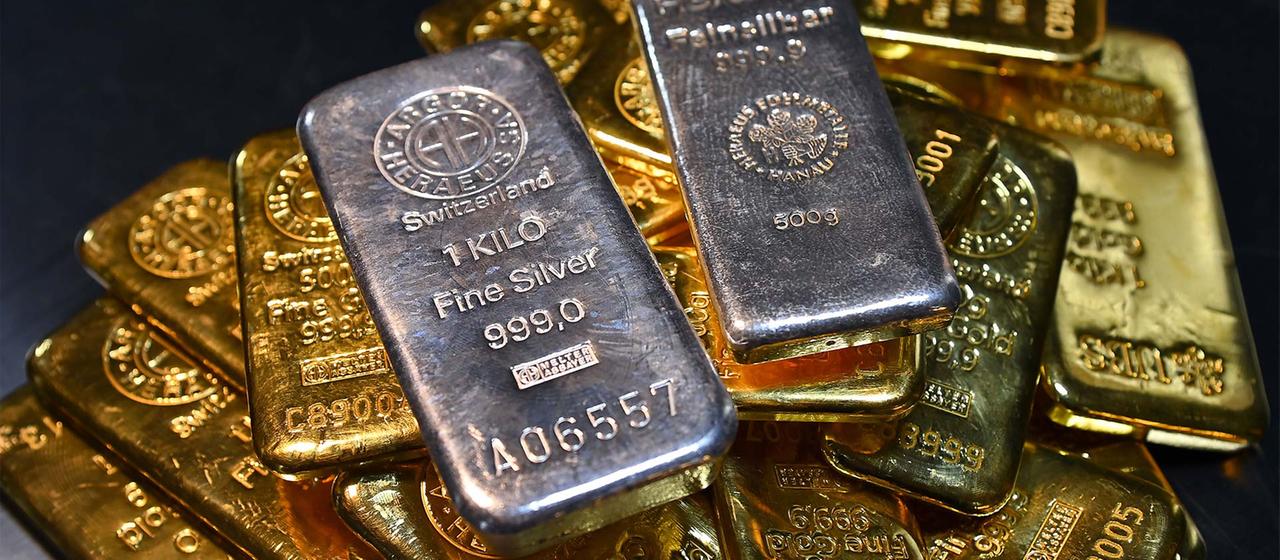
The price turbulence continues to grip the financial markets into the new month. The defining factor this morning was another sharp plunge in gold and silver. The situation has since calmed down.
By Detlev Landmesser, ARD Financial Desk
The extraordinary turbulence in gold and silver is also radiating to other markets. Experts explain the DAX’s weak start to the new week primarily by the fact that the strong downward movement in precious metals has dragged down other assets as well:
By midday, the stock market had stabilized significantly again. The DAX worked its way up continuously and gained 0.9 percent to 24,760 points in the early afternoon.
Initially, the quotes for gold and silver continued their sharp correction at the start of the week. The gold price plunged to $4,402 per troy ounce in the morning, its lowest level in four weeks, before the quote recovered. In the early afternoon, a troy ounce cost around $4,779, roughly the same as on Friday evening. Just last Thursday, the precious metal had reached an all-time high of $5,595.
The silver price also stabilized somewhat. Here, the plunge was even more drastic. The price per troy ounce temporarily slumped to $71.38 in the morning, after a record high of $121.65 last week. Most recently, silver was trading at $83.83.
A significant trigger for the sharp correction in precious metals since Friday was a tangible surprise: US President Donald Trump nominated Kevin Warsh as the future head of the US Federal Reserve (Fed). The former Fed governor is considered a “hawk,” tending towards a more restrictive interest rate path to control inflation. Observers had long expected Trump to appoint an advocate of looser monetary policy to the helm of the Fed. Market participants spoke of a veritable “Warsh Shock.”
This personnel decision has thus shaken the perspective of further falling US interest rates, which on the one hand strengthened the dollar. Since metals are traded in dollars on the global market, the exchange rate of the American currency has a major influence on demand. A strong dollar makes metals more expensive, which dampens demand and weighs on prices. At the same time, interest-free gold becomes relatively more attractive when the interest rate outlook no longer points so strongly downwards.
Looking back at the sharp price increase for gold and silver, one must speak of a short-term “overshooting” of prices. The extreme market movement had also attracted speculators who had bet on credit on further rising prices of precious metals and were now caught off guard. These then have to liquidate positions, which further weighs on prices – a downward spiral ensues until the situation is cleared.
Nevertheless, many observers remain optimistic regarding the further prospects for precious metals. The commodity experts at Deutsche Bank have reaffirmed their target for the gold price at $6,000 in the course of this year. According to analyst Michael Hsueh, the fundamental price drivers remain intact. In addition to geopolitical uncertainties, Hsueh points primarily to persistently strong demand from Chinese investors. The prospect of further falling interest rates also remains after the personnel decision for the Fed leadership.
The analysts at Heraeus also see the reasons for rising prices as still intact.
