Editor’s Note
This article explores how Van Cleef & Arpels’s enduring fascination with classical ballet, spanning over 80 years, continues to evolve and inspire its latest ‘Ballet Précieux’ high jewelry collection.
For over eight decades, Van Cleef & Arpels has drawn inspiration from the world of classical dance. With the latest creations of ‘Ballet Précieux’, this dialogue has deepened further.
The relationship between Van Cleef & Arpels and the world of dance traces back to 1920s Paris. At that time, one of the Maison’s founders, Louis Arpels, and his nephew Claude would often attend performances at the Opéra Garnier, a venue just steps away from the Maison’s Place Vendôme boutique. This fascination with dance soon manifested in jewellery. In the early 1940s, the first dancer clips emerged, depicting ballerina poses and their costumes in gold and precious stones.
Over the decades, these figures have become one of the Maison’s most distinctive signatures. Their balanced silhouettes, expressive poses, and detailed costumes not only reflect the discipline of classical ballet but also showcase Van Cleef & Arpels’ mastery of craftsmanship. In 2007, the launch of the ‘Ballet Précieux’ High Jewellery collection gave new dimension to this dialogue with dance. The collection is a tribute to the art of dance through exceptional and unique clips.
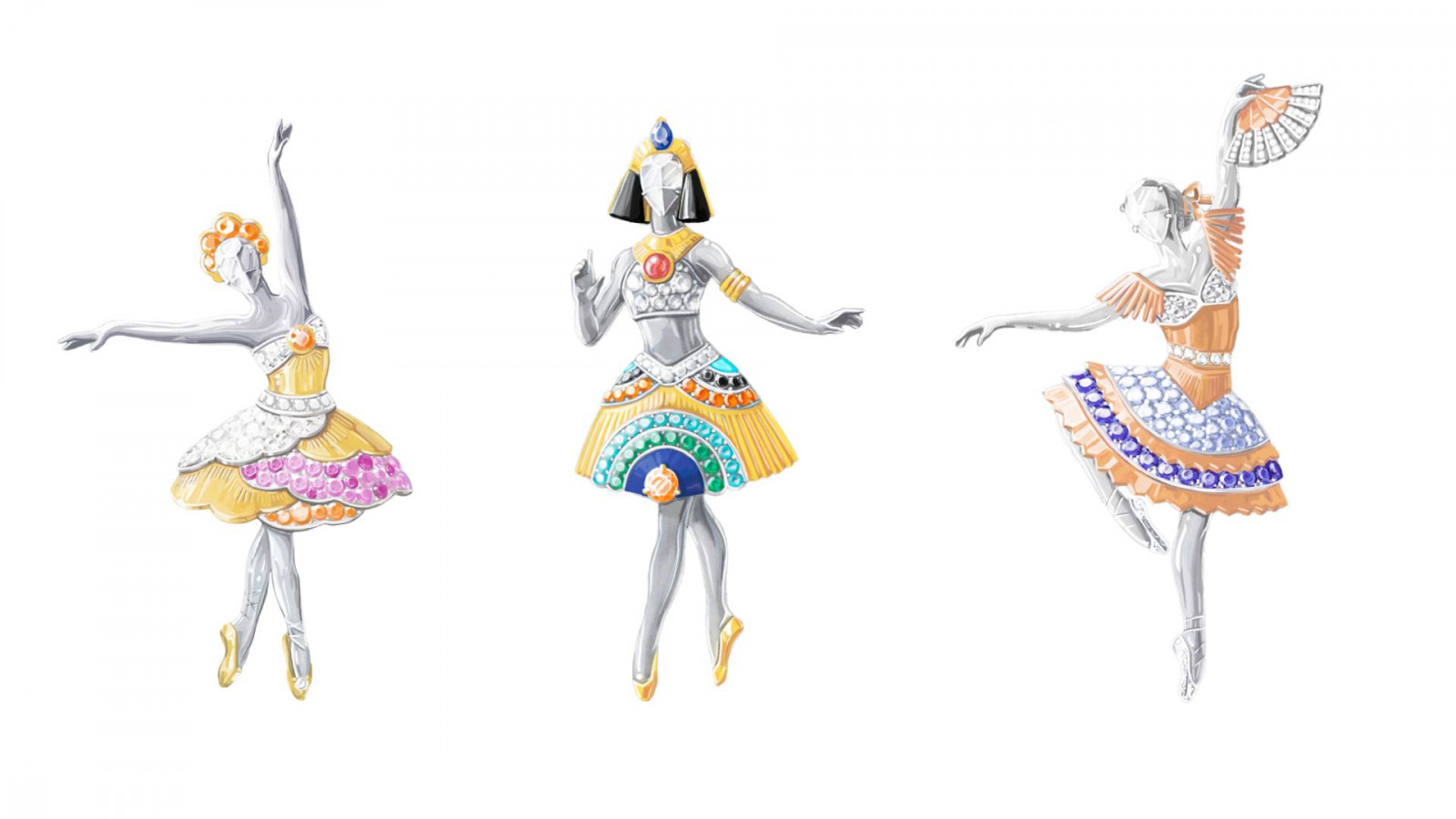
For 2026, the Maison has unveiled 12 new ballerina clips, forming a precious ‘corps de ballet’. Each creation is inspired by classical ballet, particularly works from the Romantic period, transforming iconic stage characters into sculptural jewels.
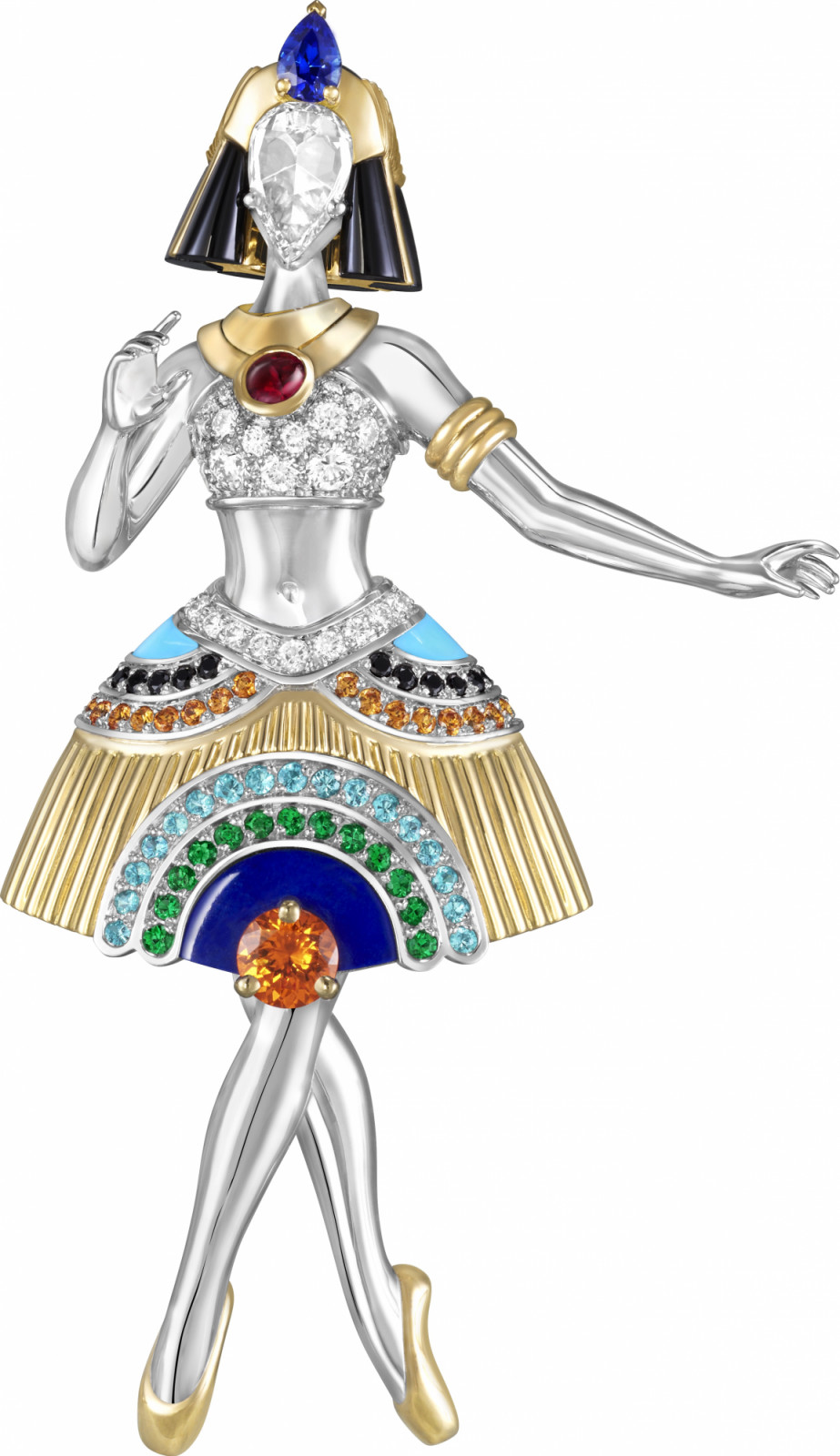
Among the most captivating pieces in the collection is the Cléopâtre Ballerina Clip. Inspired by French composer Jules Massenet’s opera and the allure of ancient Egypt, it features a headdress made of a pear-shaped stone, a bib necklace, armbands, and a golden costume set with contrasting gemstones. The stunning combination of emeralds, rubies, sapphires, turquoise, lapis lazuli, and garnets with diamonds reflects the richness of dramatic costume.
The Castilla Ballerina Clip is equally dynamic, showcasing the energy of Spanish dance as reinterpreted in the ballet Don Quixote. From her open fan to her distinctive pose, the entire silhouette possesses a unique vibrancy. Sleeves made of gold threads accentuate the pose of her raised arms, while the skirt comes alive in a vibrant harmony of diamonds and sapphires.
Elsewhere in the collection, the Danse de Séville clip references Carmen, its skirt reminiscent of the drama of flamenco style. Pink sapphires and diamonds animate the lower part of the costume, while polished gold intensely reflects the light. In contrast, L’Esprit de la Forêt evokes the ethereal heroine of La Sylphide. It features feathered wings set with diamonds and a stone-set tutu, conveying the lightness of Romantic ballet suspended in air.
Inspired by Coppélia, the Rêverie de Coppélius clip captures the stillness of a mechanical doll through its balanced pose and gem-set hem. Taken from The Golden Cockerel, the Reine de Shemakhan is distinguished by sculpted gold, lacquered sleeves, and brightly coloured sapphires, reflecting Persian-influenced costume.
Each ‘Ballet Précieux’ creation begins as a sculpture in green wax, shaped by hand to refine the pose and proportions. Once the desired movement is achieved, the wax is replaced by gold. The gold is then meticulously polished or sculpted before the gemstones are set. Different types of finishing—such as hammered or guilloché—are applied to the gold to evoke the texture of fabric, lace, or embroidery under theatre lights.
The selection of gemstones is equally precise. Van Cleef & Arpels’ gemologists orchestrate an exact harmony of colours that illuminates each character while maintaining balance within the collection. Diamonds, emeralds, sapphires, rubies, and ornamental stones are combined to enhance depth and contrast, allowing each figure to express its distinct mood.