Editor’s Note
This article explores how a personal passion can evolve into a profitable venture, as illustrated by one enthusiast’s journey into watch trading. It highlights the moment of inspiration that bridges a hobby and a business mindset.
The Trader’s Story: From Hobby to Profit
Eduardo, an engineer by profession and a watch enthusiast, met one of Spain’s most aggressive ‘traders’ one day in Madrid.
“He bought at a good price and sold with a small margin because he moved a large volume. When I met him, I realized I could buy and sell watches without losing money, so I started doing it with that goal in mind,” he recounts.
He started with low-end watches, some Chinese. He bought and resold, mainly on portals and internet forums like Chrono24, the most reputable one.
“To start, you must have a lot of money or a lot of passion.”
He did it out of passion. As a collector. Hundreds of models have passed through his hands, though he admits only a few captivated him.
“In the end, with watches costing a thousand and a bit, I’ve managed to make hundreds of euros in profit.”
A year and a few months after starting, he bought himself a Rolex Pepsi GMT Master with the profits, which can be found from 9,500 euros in the second-hand market. This market has experienced a real ‘boom’ in the last five years, with a brutal spike during the pandemic. All luxury watches have appreciated significantly.
Price Increases of Up to 60%
According to the Chrono24 index, Rolex prices have increased on average by 27.60%; Cartier by 51.17%; Patek Philippe by 52.26%; and Audemars Piguet by 59.11%. The same applies to Jaeger-LeCoultre or Panerai, among others.
“It’s like gold, it doesn’t lose value, and with some models you can make money even right out of the store, like with the Rolex Daytona [Paul Newman’s favorite], the Pepsi GMT, or the Nautilus. You can make thousands of euros on a sale. You must have the contacts, though,” notes Eduardo.
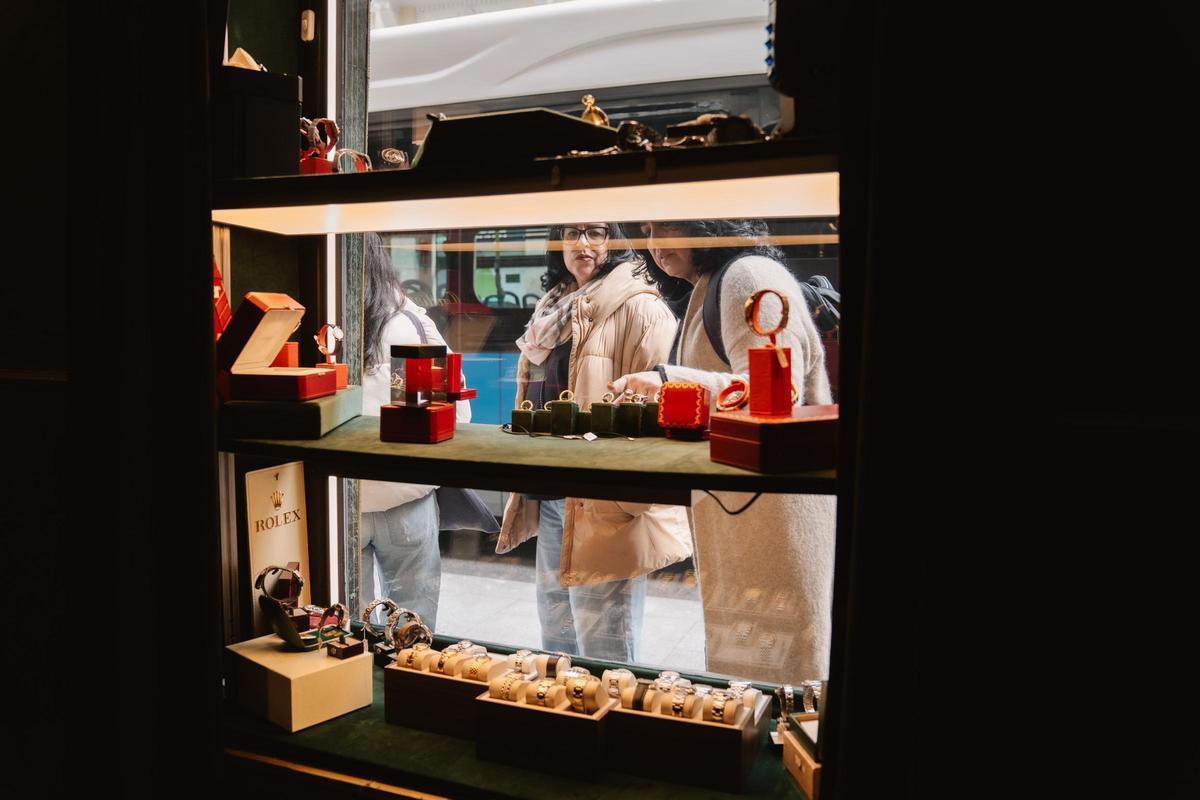
The key to everything is exclusivity. Many models have very limited editions, and many brands do not sell to just any customer. At Patek Philippe, for example, you have to make an appointment just to enter the store. At Rolex, you order a model, but it can take up to two years to get it because demand exceeds supply. That is if you are already a trusted customer and have spent money there previously.
“There are people who may want a specific model and they won’t sell it to them because they don’t sell to everyone. It’s like a Ferrari. They look at you, take your details, and maybe they call you or maybe not. I know people who trade in Asia or the Middle East and for a 15,000-euro Rolex they buy in a store, they can get 20,000,” points out Eduardo.
Radio Ads and a Veteran’s Perspective
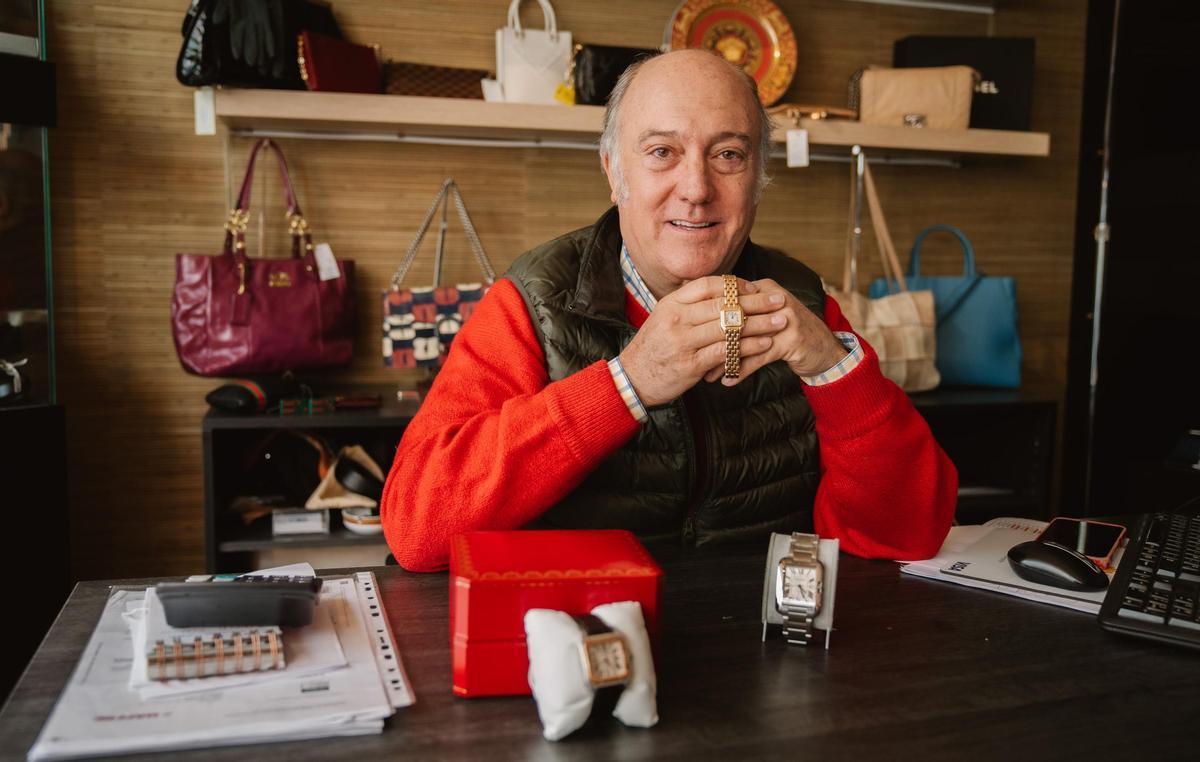
The market is so booming that there are even ads on the radio, specifically on Onda Cero Madrid, offering to “buy Cartier” regardless of condition or decade. The ad is the work of Manuel Ugarte, a watchmaker. The son of an antique dealer, he has been buying and selling second-hand wristwatches for 40 years. He was one of the pioneers in Spain.
“When I started, antique dealers weren’t interested in wristwatches,” recalls Manuel in one of his two shops in Madrid (Virgen de Los Peligros) where he sells watches, jewelry, and used luxury clothing.
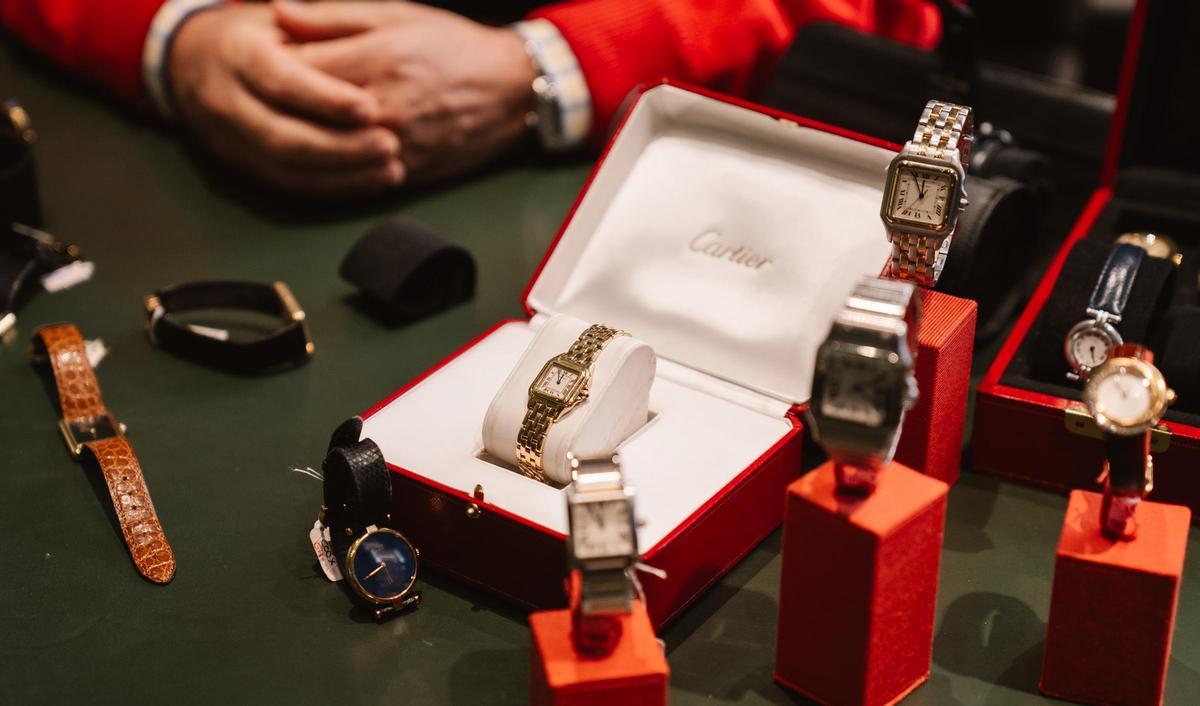
“Now it’s crazy, look, I have a second-hand gold Cartier Panthère that I sell for 11,000 euros; in the store, new, it’s worth 24,000 euros. If you buy it from me, in five years you can easily sell it for 14,000 euros,” he states about another factor influencing this market boom: the appreciation of watches that are decades old.
Rolex Daytona or Nautilus, the Most Demanded
“There are vintage watches, like the Patek Philippe Nautilus [ranging from 90,000 to 300,000 euros depending on the model] or the classic steel Rolex Submariner [from 16,000] that are currently at exorbitant prices,” confirms Álvaro Carrera, owner of the Madrid establishment Carrera, also specializing in second-hand. Specifically, these two models, like the coveted Daytona, have increased their price by more than 40% in recent years.
Just last year, the solid gold Daytona model increased its price between 13% and 14%, according to Chrono24.
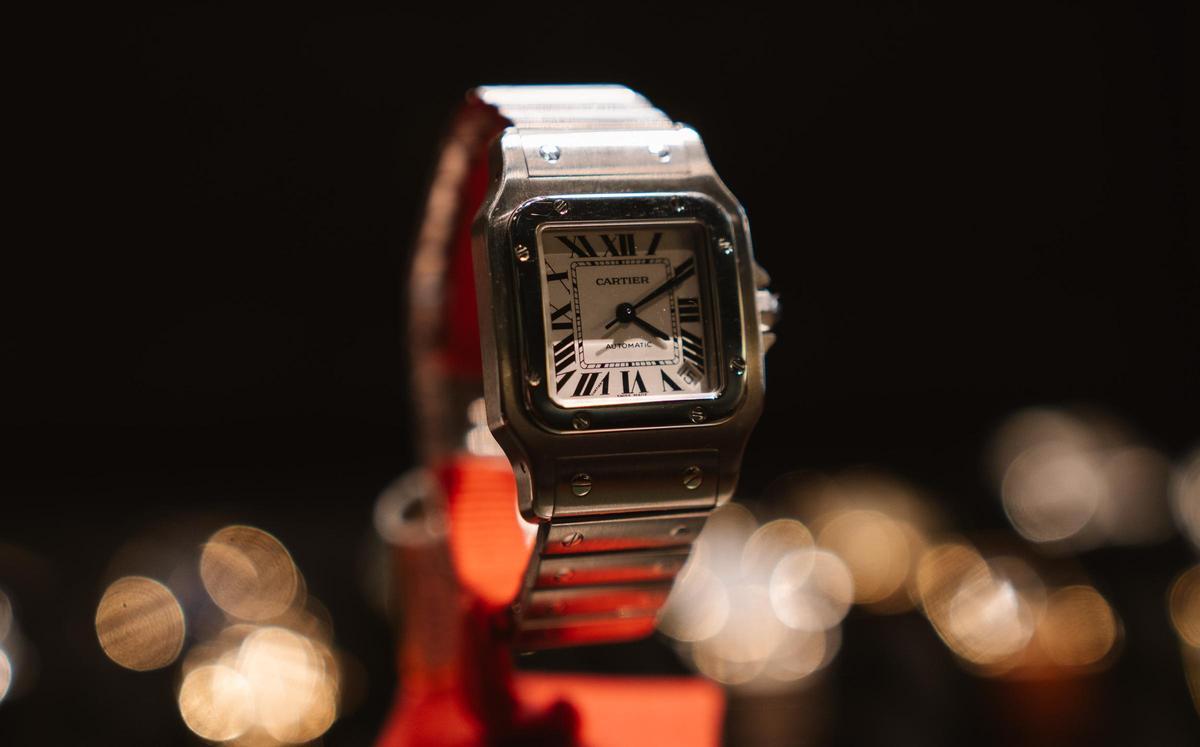
“In the second-hand market, anything called Panthère, Tank, and Santos by Cartier is appreciating, they are very expensive,” points out Manuel about other mythical models that maintain or increase their value.
For him, Cartier is the most exclusive watch brand because, when it was created at the beginning of the last century, it was a “different brand” from all other watches “because it is closer to jewelry than a watch and has a special design.”
“They are watches that are being made now just like a hundred years ago, with small modifications; that’s something incredible, that’s why they maintain or increase their value, because they are timeless,” appreciates Manuel while showing a women’s Tank from 20 years ago that he sells for 6,700 euros, more than it cost new.
According to him, the ‘boom’ currently experienced in Spain with used watches is something that has been happening in other European countries for decades:
“In Paris or London, this was already being done a hundred years ago.”