Editor’s Note
**Editor’s Note:** This article examines the reliability of “nickel-free” labels on jewelry, revealing that laboratory tests found nickel, lead, and cadmium in several samples from major retailers. Readers with allergies should exercise caution.
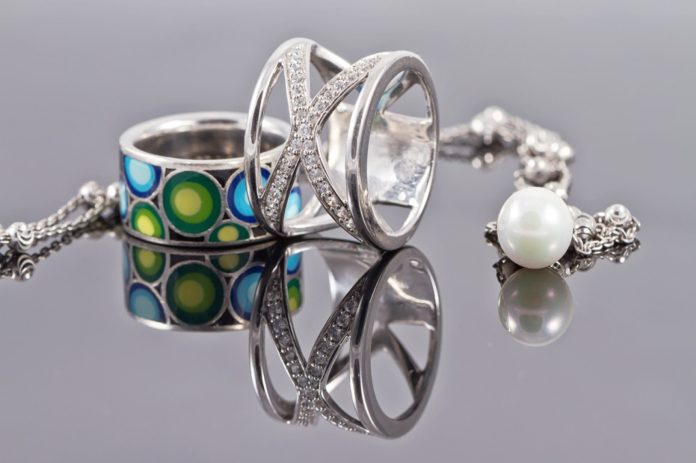
The label “nickel-free” affixed to jewelry for sale is not a guarantee for those with allergies. The Swiss magazine K-tipp conducted a laboratory analysis of several commercially available jewelry items labeled with this reassuring term, discovering that some samples contain not only nickel but also lead and cadmium.
Under scrutiny were 28 items purchased from both wholesale distributors and retail chains. These products came from various brands: Claire, Coop City, Clock House, Muller Pharmacy, Esprit, Fizzen, Globe, H&M, Mango, Manor, Migros, New Yorker, Tally Weijl, and Zara.
Of these, 22 were found to be “clean,” while in 6, the presence of the hazardous material was detected, despite the label stating “nickel-free.” This is a true deception for consumers, whose health is thus put at risk. Nickel was found, for example, in the feather necklace from Manor, which was immediately removed from sale by the company.
More than a quarter of Europeans have a skin allergy to at least one substance, and nickel is the most common cause of allergies. For the British Journal of Dermatology, researchers interviewed approximately 12,500 people across Europe. The worst result came from nickel itself, with a full 14.5 percent of respondents being allergic to it. And women are more affected than men.
Nickel allergy causes uncomfortable itching, redness, and swelling. To protect the skin from irritation, the advice is to use hypoallergenic jewelry, such as those made from pure medical plastic or pure medical titanium. Alternatively, choose pure gold and silver, as cases where the allergy manifests even when wearing jewelry made from these materials are rare (and in any case, the primary cause is always the nickel content in the jewelry: for example, 585 gold consists of 58.5% gold; the rest is made of less noble metals).
However, we find nickel not only in jewelry and some common objects but also in certain foods: some legumes, certain types of dried fruit, spinach, and tomatoes contain more or less significant traces of nickel.