Editor’s Note
**Editor’s Note:** This report highlights a troubling new tactic in wildlife crime: poachers are now carving rhino horns into jewelry at the source to bypass detection. As conservation groups sound the alarm, the story underscores the escalating ingenuity of illegal trade and the urgent need for adaptive enforcement measures.
Man and Planet
Society
Endangered Species
Rhino Horns Transformed into Jewelry to Evade Controls
RN Editorial Staff
30 Sep 2017
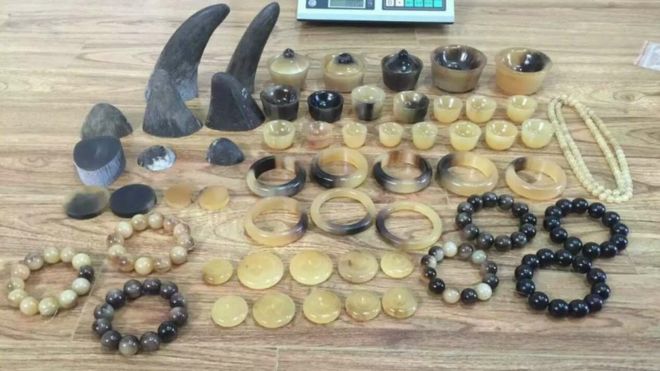
To evade border controls, poachers have begun adopting a new technique: transforming rhino horns into crafted items directly at the capture site.
The alarm was raised by the association Traffic, which focuses on the conservation of endangered species.
While the methods of crossing borders change, the destinations for rhino horns remain the same. The main market remains China, where horn powder is still a key ingredient in traditional medicine preparations.
In contrast, finished crafted items are increasingly in demand in Vietnam. Here, possession of rhino horns is seen as a true status symbol, particularly sought after by men as it is believed to bring luck and protection.
According to Traffic, however, the routes to reach these two Asian countries have also changed, a sign that—despite more thorough controls and stringent restrictions—demand for this material remains high.
It is estimated that since 2007, 7,100 rhinos have been killed in Africa. A staggering number, considering only 25,000 remain in the wild. According to the animal welfare organization Save the Rhino, if the killing rate does not decrease, these mammals are destined to become extinct within the next decade.
Reproduction permitted with link to original and citation of source: rivistanatura.com