Editor’s Note
**Editor’s Note:** In this piece, Associate Editor Lenore Fedow explores the enduring human desire for protection through jewelry, tracing the cultural and historical significance of talismans from Native American turtle amulets to the Italian cornicello.
From Native American turtle amulets to the Italian cornicello, Associate Editor Lenore Fedow delves into the history of pieces of jewelry believed to shield the wearer.
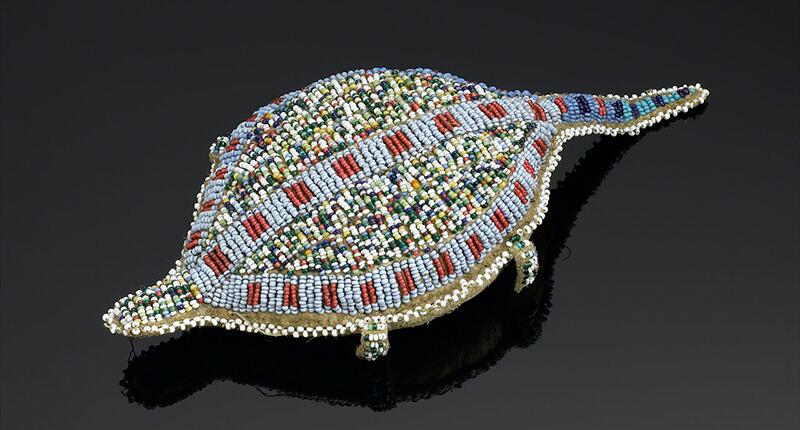
Native American children were given turtle amulets to protect themselves from illness and promote longevity. It is one of four examples of protective jewelry Associate Editor Lenore Fedow explores in this blog post. (Image courtesy of Wikimedia Commons/Science Museum, London. Wellcome Images)
But for as long as we’ve believed in bad luck and curses, we’ve also believed there were ways to protect ourselves, and those included wearing jewelry.
Across cultures, jewelry has served as both adornment and protection for centuries, its beauty doubling as a safeguard for the wearer.
Join me as I take a look through some notable protective amulets throughout jewelry history.
Once made of red coral, it’s taken various forms through the years and has been embraced by jewelry designers many times over; check out these modern cornicello charms from Ariel Gordon and Loren Stewart.
Religious jewelry as protection stretches back thousands of years, but the Tau Cross has a particularly interesting backstory.
It can lead to convulsions, as well as muscle spasms, delusions, hallucinations, and crawling sensations on the skin, all similar to what Anthony was described to have experienced. Ergotism can also cause a burning sensation in the limbs, giving it the nickname “Saint Anthony’s Fire.”
Symbolism coupled with beautiful, intricate craftsmanship is a hallmark of Native American jewelry.
It wouldn’t be a historical jewelry blog without input from Isabelle Corvin, staff gemologist at Panowicz Jewelers in Olympia, Washington.
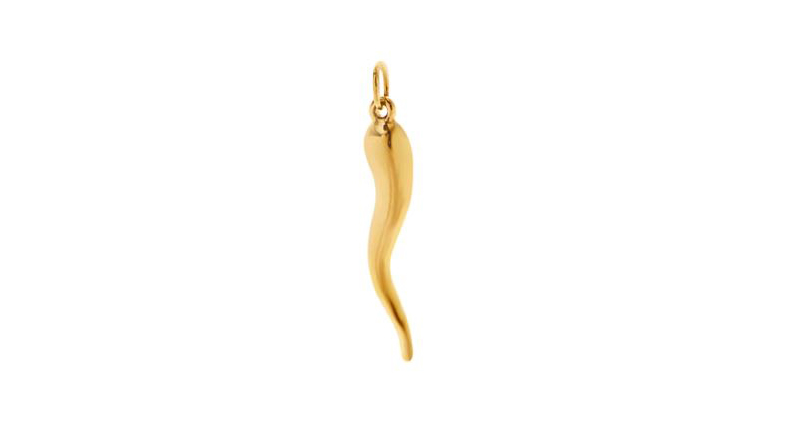
A 14-karat gold cornicello pendant by Ariel Gordon ($95). The horn-shaped pendant is believed to ward off bad intentions. (Image courtesy of Ariel Gordon website)
My mother was a fervent believer in “il malocchio,” or the evil eye, the belief that someone could be so jealous of you that the envy would manifest into a curse on you.
One way to protect yourself and repel the curse was to wear the cornicello, or “little horn,” a small pendant that looks like a red chili pepper.
In addition to protecting oneself, the symbol is thought to promote fertility and virility.
You can still find the charms today, hanging off necklaces, keychains, and rearview mirrors, particularly in southern Italy, where my family is from, and in Italian-American neighborhoods, where my family is now.
Similar to the superstitions surrounding pearls and opals, it’s considered bad luck to buy a cornicello for yourself.
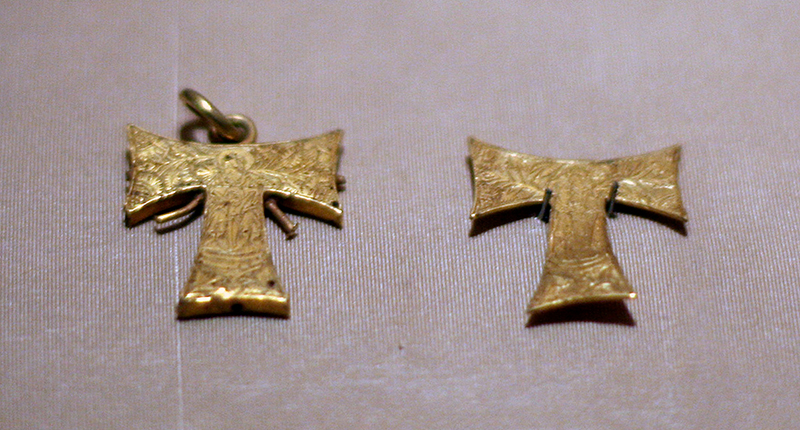
Cast and engraved gold Tau Cross pendants circa 1485 England from the Cloisters Collection at The Metropolitan Museum of Art in New York (Image courtesy of Wikimedia Commons/shooting_Brooklyn)
We’re taking it back to the first millennium to talk about the Tau Cross.
The story has monks, poison, and demonic visions, so buckle up.
The t-shaped cross is named after the Greek letter “T” and was known to the Romans as “crux commissa,” or “connected cross” in Latin.
Also known as Saint Anthony’s Cross, it is linked to Saint Anthony of Egypt, 251-356 AD, one of the earliest monks and a founder of organized Christian monasticism.