Editor’s Note
This article explores shifting preferences in the gemstone market, highlighting how consumer taste now favors unique hues like pinkish-orangey red over traditional saturated reds. It also examines the fragility of gem supply chains, using Sri Lanka’s pandemic-era mining disruptions as a case study.
Many stones that are saturated, that might not be the case. Take spinel. Everybody talks about red spinel. Investors and purists want red red, but a normal jewelry client will choose pinkish-orangey red because it almost looks like pinkish-red paraiba, but a little less saturated. That’s been the trend of the last year and a half.
The supply problem, it comes and goes. For example, Sri Lanka was heavily hit at the beginning of the pandemic, so there was no material coming out. Mining is not like retailing. Retailing, you open and close a store, it takes a couple hours. But mining is like a huge train you have to slow down, and it takes very long to restart.
Gem Dealer Roland Schluessel on What’s New and Next in Color
By Victoria Gomelsky | January 26, 2022
Gem dealer Roland Schluessel (pictured below) is, quite deliberately, not a specialist. The Swiss trader behind San Francisco–based Pillar & Stone International learned his lesson about focusing on a specific region or gemstone when he arrived in the United States 15 years ago and discovered that the Burmese gems in his inventory were sanctioned by the U.S. government.
Roland Schluessel
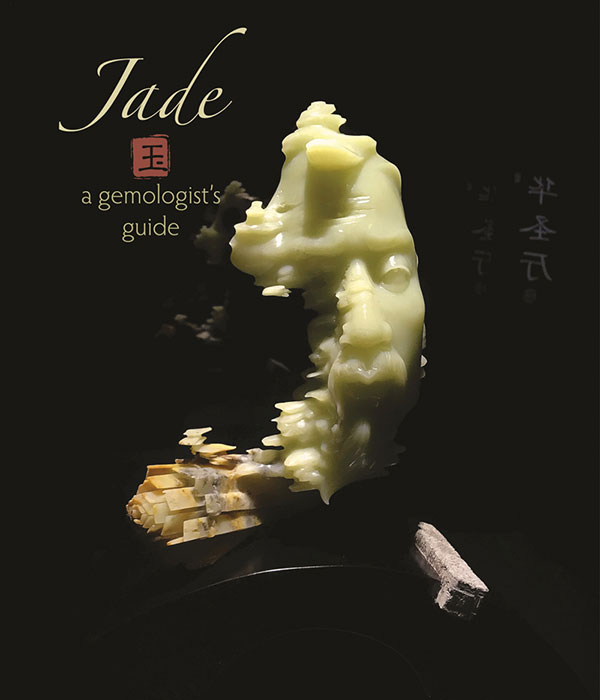
In fact, Schluessel is so entrenched in the world of jadeite that he recently contributed to a new book, Jade: A Gemologist’s Guide, written and published by gemologist Richard W. Hughes. Anyone headed to Tucson next week can get more information about the book, which Schluessel described as “the authoritative work for decades to come,” at the Pillar & Stone International booth (#1127) at the GJX show.
Cover of Jade: A Gemologist’s Guide by Richard W. Hughes
Below, Schluessel talks to JCK about the state of the colored stone market on the brink of the Tucson gem shows, why closing a mine is like stopping a massive train, and which gem he is banking on as “the next paraiba.” The interview has been lightly edited for length and clarity.
Tucson will be, from a visitors’ and buyers’ perspective, an American show. I don’t think many buyers from overseas will be there. And traffic will be much less. The reason why is because when you speak about traffic, you have many visitors like appraisers who are there to look for information. They are more like affiliated businesses, not buyers or sellers. Most of them will not be there; they can get information online, or do Zoom, and they don’t want to take risks.
In 2020, during the lockdown, it was a disaster, but things started to get better in August/September, followed by a good holiday season. Last year was our best U.S. market year ever.
Everything! At the end of 2020, you could sell a spinel, a ruby, a tourmaline, a sapphire, whatever you had that was special. People called it the lockdown period. I called it “the empty-drawer period.” Everybody was home for three months and emptying their drawers. I started to have a lot of appraisals for people who had this and that. And we looked through our own drawers and started to offer things.
In 2021, clients were a little bit more selective; it was not just a rush to buy. But we had less competition than before COVID. I know clients that booked an expensive cruise vacation and it was canceled, and they ended up buying gemstones.
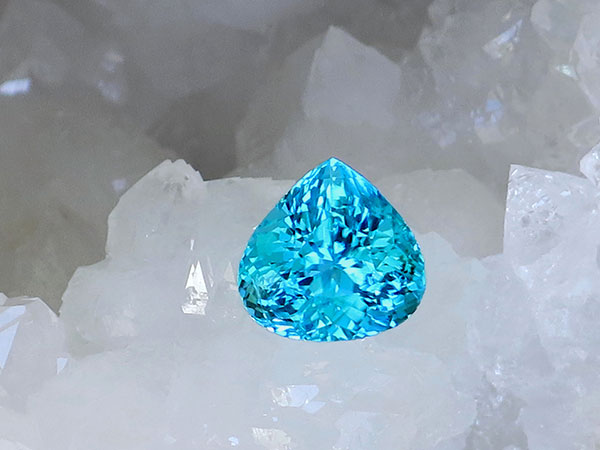
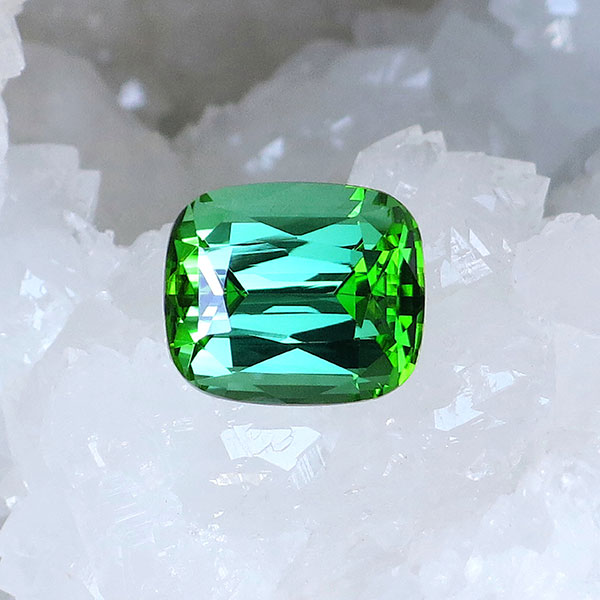
In color, it was anything that was blue or blue-green that was absolutely No. 1. What people want now is brightness. People want stones where they see the brilliance, the brightness—you have to be able to see the back facets, the pavilion facets.
A 12 ct. paraiba tourmaline from Mozambique (photo courtesy of Pillar & Stone International)
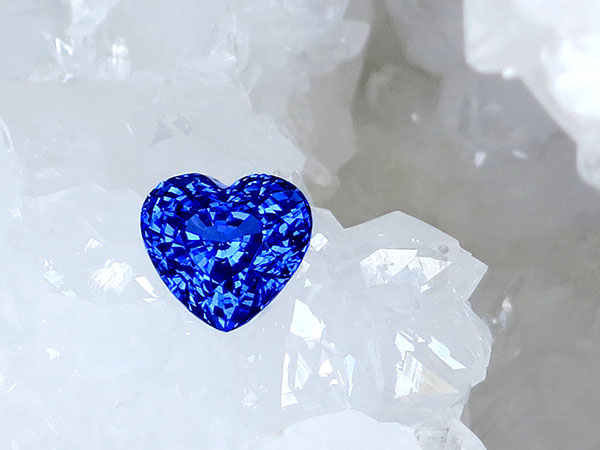
When you have a store, you’re going to sell tourmalines, aquamarines—anything in this blue-to-green color. Of course, paraiba tourmaline. Then you have pure green—which, of course, is emerald. Spinel was good last year; it could be pinkish red, even a nice gray, but not dark. What always sells, no matter how things are, is blue sapphire—in Europe and the U.S.
An 8 ct. no-heat blue sapphire (photo courtesy of Pillar & Stone International)
Colored stone mines, not counting big ones like Gemfields, are very small. Most are the size of a garage with a couple cars. To close them, they just leave the mine. They stay at home instead of going to work. But once you don’t go to work, the mines are very quickly destroyed. You have the rainy season, the water. A huge diamond or ruby mine, they put it on maintenance for months, but in colored stone mining, where you have all this artisanal mining, the mine is very often destroyed and you have to start completely new.
Sapphire from Sri Lanka and from Africa—Madagascar, Tanzania—was affected badly last year, but stones are slowly coming out now. Sri Lanka in 2020 and the first part of 2021, it was tough to get nice merchandise (not these rare stones that stay on the market for 10 years, because they’re 50 carats, but a nice 3 carat oval cushion, it’s difficult).