Editor’s Note
**Editor’s Note:** This article examines the limited impact of the G7 gold import ban on Russia, highlighting the ongoing debate over its effectiveness in curbing the Kremlin’s war funding.
Britta Biron
The USA, Canada, the UK, and Japan have banned the import of gold from Russia. This, along with the fact that the remaining G7 nations have not followed suit, has sparked debate. However, the embargo does not diminish Putin’s war chest, nor does it significantly impact the global trade of the precious metal.
Since the invasion of Ukraine by Russian troops, the democratic world has been asking how to cut off the aggressor’s funding for its war machine. Six sanction packages have been adopted so far. These include, among other measures, freezing the foreign accounts of the Kremlin chief and his sympathizers, seizing their foreign assets such as yachts and villas, revoking overflight and landing permits for Russian airlines, closing ports to the Russian merchant fleet, banning transactions with the Russian central bank, and imposing an import stop on gemstones from Russian mines.
Recently, the USA, Canada, the UK, and Japan also prohibited the import of gold from Russia. This is a step that the other three G7 partners—Germany, France, and Italy—have not yet taken. According to Chancellor Olaf Scholz in an interview with ARD, this decision cannot be made by the G7 but must be decided within the EU. Unanimously, mind you, and as negotiations on many other topics have shown, this is a rather tough affair. Therefore, a swift EU ban on Russian gold is hardly to be expected in the foreseeable future.
Given that the economic sanctions already in force—as the course of the fighting has shown—have apparently not substantially diminished Putin’s war chest, the general question arises as to how effective a gold embargo is.
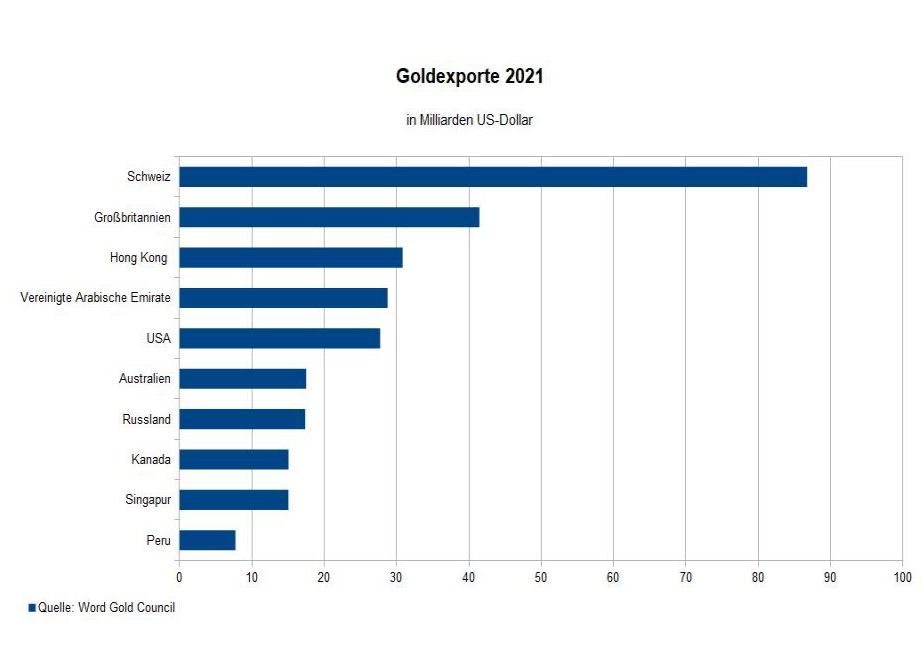
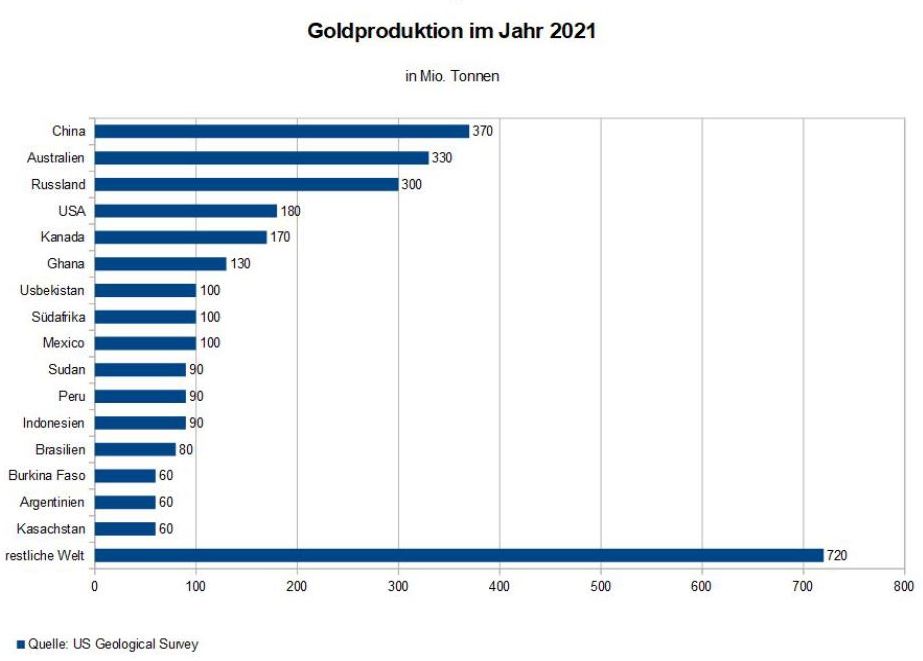
Although Russia ranks third in gold production after China and Australia, with its mines producing about 10% of the annual global output, it is not among the major exporters. It only ranks 7th in the world export ranking. According to an analysis by the World Gold Council, Russia’s revenue from gold exports last year was $14.7 billion, not “tens of billions of dollars” as US President Biden claimed via Twitter shortly before the G7 summit. Compared to oil, gas, and coal, which brought in $241 billion last year, the precious metal plays a minor role in the Russian state budget.
Another reason why an import stop by the USA, UK, Canada, and Japan achieves little is that these countries did not import significant quantities from Russia even before the Ukraine war. The main buyers are China and India. Furthermore, trading gold from Russian refineries has been banned on the London Bullion Market, the most important over-the-counter hub for gold, silver, and other commodities, since March 7. In this respect, the borders for Russian gold would have been closed anyway, making an additional embargo unnecessary.
However, the supply chains for the precious metal are highly complex and opaque, offering large loopholes due to inadequate control systems. Therefore, regardless of bans, Russian gold still enters trade and processing into bars, coins, jewelry, or watches. For instance, the Swiss Federal Office for Customs and Border Security (BAZG) reported at the end of June that around three tons of gold designated as originating from Russia, valued at 194 million CHF, were imported from the UK—where trade is actually prohibited—into Switzerland, the largest gold-processing nation, in May. This naturally sparked discussions, but according to the BAZG, it is only illegal if the bars were produced after March 7; for all others, as well as for other gold products like coins or jewelry, there are no import barriers.
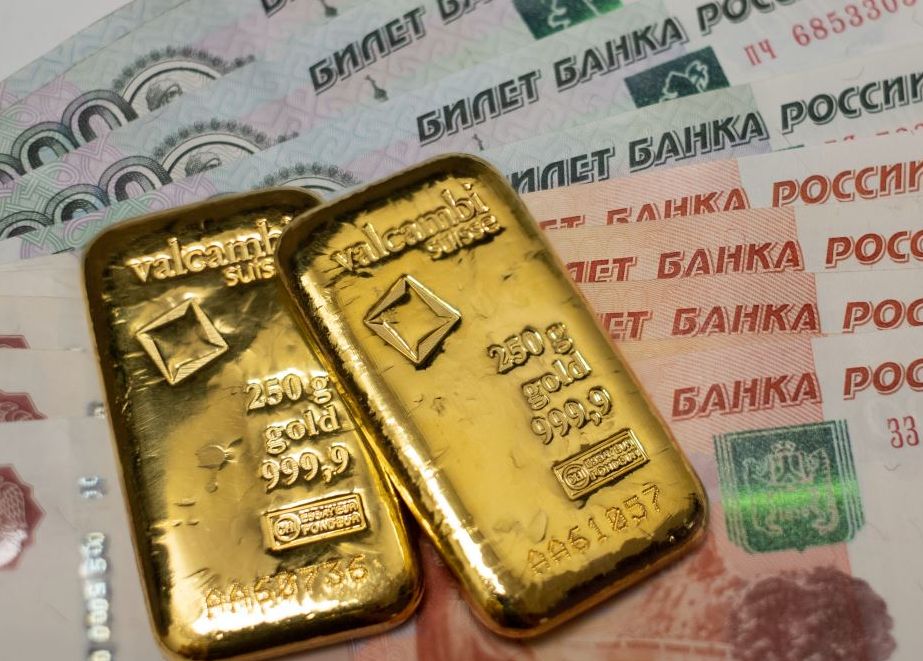
According to its own statements, the Swiss gold refinery Valcambi has processed no gold from Russia since March 6, 2022. However, this would be legal. © Shutterstock
And even bars produced since March 7 can still be legally imported into Switzerland and processed, as the Swiss gold refinery Valcambi noted in a statement on July 5. This is because so-called trade inspectors, who have authorization from the Central Office according to Art. 41 EMKG, can approve this, which applies to Swiss refineries. Despite the fact that the sanctions against Russia de facto have no impact on Valcambi’s activities—and presumably those of other Swiss gold refineries—the company has repeatedly stated that no Russian gold has been processed since March 6, 2022.
It is not yet known who owns the three tons of gold at Swiss customs. And this is unlikely to change for the time being. In March, the Federal Administrative Court in St. Gallen dismissed a lawsuit filed by the Society for Threatened Peoples (GfbV) in Switzerland in 2018 demanding the disclosure of gold sources. The Swiss federal gold refineries are allowed to continue concealing the origin of the precious metal they process. Despite this setback, the GfbV remains combative and is now taking the case to the Federal Supreme Court. The lawsuit was prompted by the ecologically and human-rights questionable gold mining in the Amazon region.