Editor’s Note
**Editor’s Note:** This piece explores how hip-hop jewelry evolved from bold self-expression into a powerful emblem of success and cultural identity.
Bling bling jewelry is like ‘Superman juice.’ It is Slick Rick and his double gold chains with large links, imperial red crown and precious stones. It is the diamond smile. It is the iconic image the book Ice Cold begins with. It is also the image of success, especially that of a rapper, bathed in gold, diamonds and all smiles.
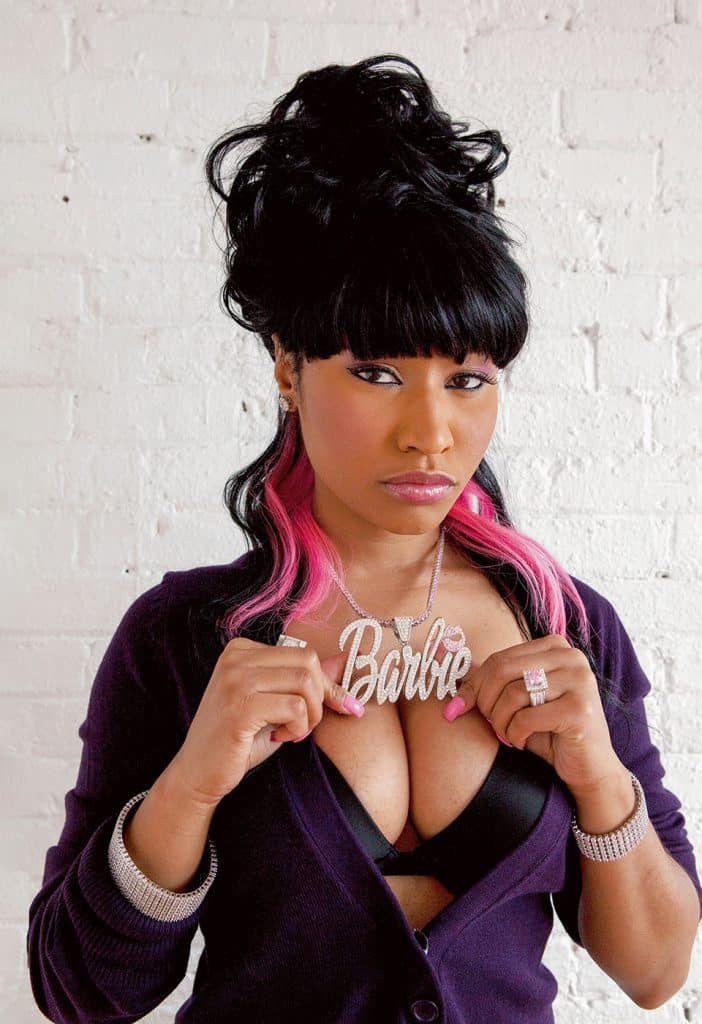
Rappers want to be trendsetters in that world. The flashy personalized jewelry, especially gold chains, demonstrates the artist’s social status, power and fortune. Vikki Tobak explains the evolution of ornaments. Slick Rick describes his rapper’s jewelry as a superhero suit and a gift from ancestors.
Vietnamese jeweler Johnny Dang, a specialist in eccentric jewelry for rappers, talks about his approach to dental grills. In Vietnam, gold grills have existed for several centuries. Instead of filling a bad tooth, the Vietnamese opt for a metal covering to protect their teeth. The value of the cover material defines their social status. Gold grills show the individual’s wealth to neighbors and acquaintances.
Slick Rick perfectly illustrates this idea. With his huge rings, massive chains, gold teeth, and several layers of jewelry, he looks just like Asantehene, ruler of the historic Asante empire (Ghana). In religious rituals, the monarch, himself covered in gold, sits on a golden stool.
Rappers go beyond their status as mere customers and become jewelry experts.
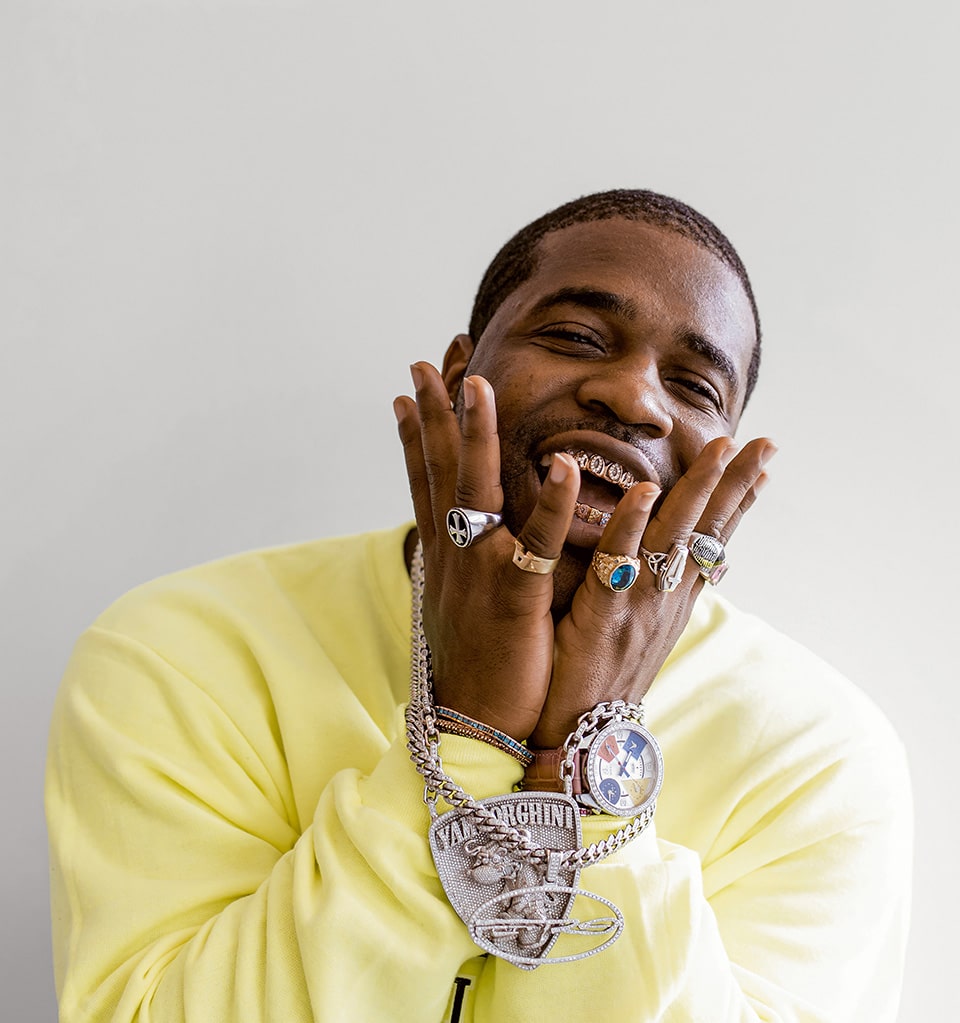
It has found its way into advertisements and cinema, seducing luxury jewelry stores. Major jewelry houses started collaborations that rappers had never even dared to imagine: A$AP Ferg became the image of Tiffany, Cartier sponsored Kanye West, etc.
But more than pageantry, it is a collection of riches the artist carries on him. Rappers don’t start out by buying cars or lofts; they buy gold. Their chains, weighing several million dollars, represent the first investment of an artist that ‘made it into the game.’ The gold makes their success visible to the community. The thicker the chain links and the brighter the diamonds, the brighter the future looks in the eyes of immigrant children living in ghettos. It symbolizes the accomplishment of the American dream.
Vikki Tobak, the author of this thick book published by Taschen, stated:
Gold chains, apart from making children dream, fuel competition. Nonetheless, the United States and the American dream develop as an illustration of capitalism: to own wealth and expose it to establish power and fortune—a strategy alternately adopted by rappers.
Since the 1980s, the poor neighborhoods of New York have been devastated by social chaos and the crack epidemic. They have been an ideal nest for violence and excessive wealth accumulation—that is, through drug trafficking. Those were the early success stories of poor African-American men. Their example, portrayed in stereotype-filled films like ‘The Red Nights of Harlem’ by Gordon Parks or ‘Super Fly’ by Gordon Parks Jr, became hip-hop’s first sources of inspiration. They created gangsta rap, a particularly violent rap with codes based on the nighttime world. That included settling accounts, prostitution, money dealings and, of course, drugs.
In the beginning, yellow gold was the standard and grew its power in the 1990s, artists and entrepreneurs including Jay-Z, Sean Combs (P. Diddy or Puff Daddy at the time), and the Cash Money collective out of New Orleans, began buying pieces made of platinum and diamonds, a pair of diamond and platinum crosses, a Cuban link and chain resembling a rolo or Saturn/rosary chain with diamond accents.
Thus, a hierarchy of authority and influence took shape among rappers. Some became untouchable, like 50 Cent, who does not hesitate to play on his reputation as the former trigger-happy dealer to gain respect. Even worse than that is chain snatching, which has become a hot trend and helps climb the power ladder. Extorting a gold chain, the symbol of the artist’s ascendancy, is the sign of ultimate humiliation. Like a coup d’etat, the power is reversed, and the street cred is no longer respected. Lowering the curtain is the end of a career.
Ice Cold. A Hip-Hop Jewelry History
Stories
— January 4, 2023
by Chahde Ayyoub