Editor’s Note
**Editor’s Note:** This article examines the growing trend of gold jewelry consumption in lower-tier Chinese cities, driven by young professionals like Wang and Chen Qianlu who view gold as both a personal reward and a secure investment.
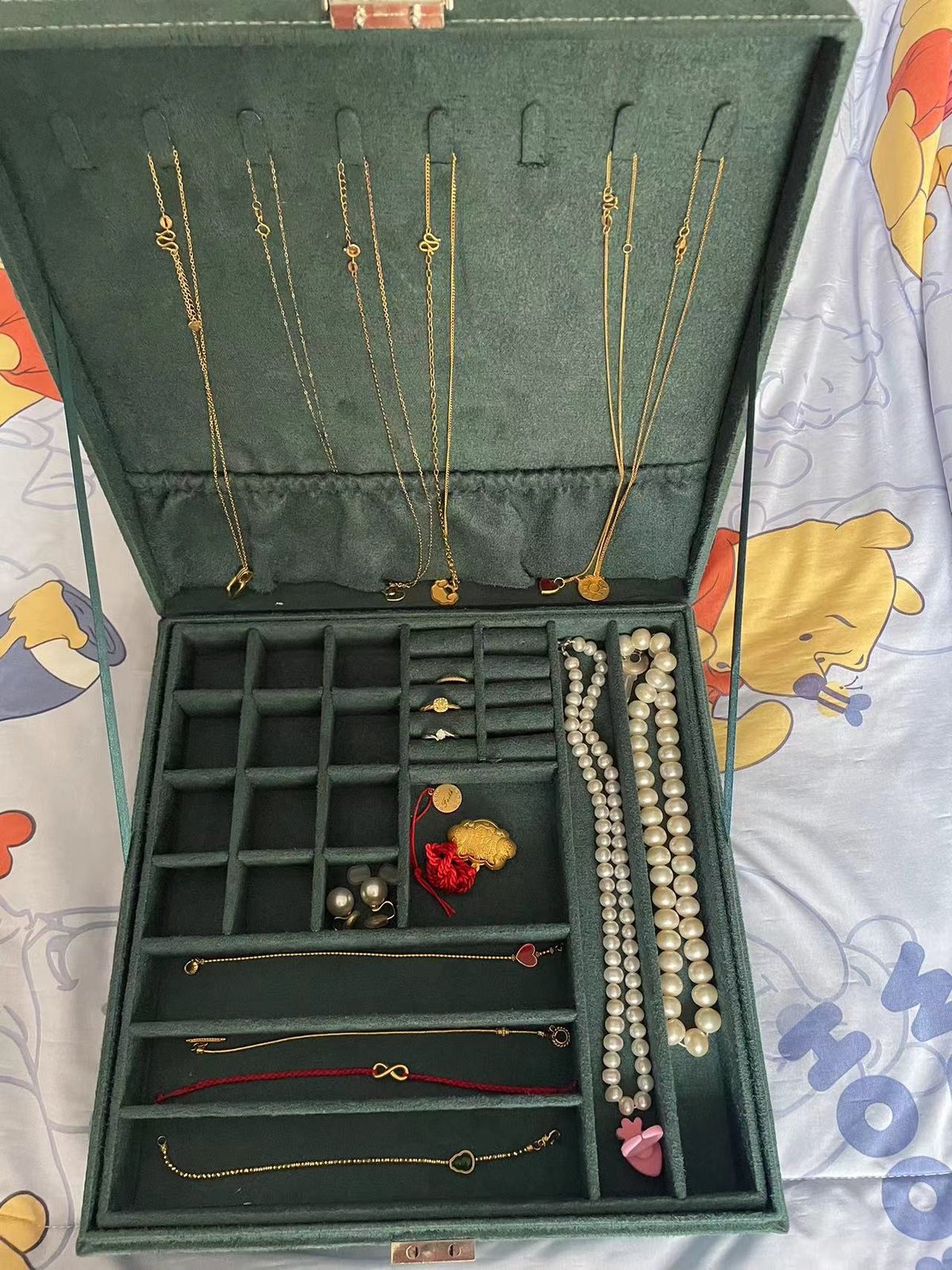
Ever since she passed the exams to become a civil servant, with each bonus Wang collects from work she rewards herself with gold jewelry. In fact, she spent nearly 3,000 yuan on a birthday present to herself this year: a gold pendant in the shape of a lily of the valley flower.
Recent newlywed Chen Qianlu is also partial to gold. Last year, she took to social media to show off a jewelry ensemble commonly known as the “gold trio set (三金)”—a collection of three pieces of jewelry traditionally offered by the husband’s family to the bride at Chinese weddings.
Wu Meng, a married high-school teacher in her hometown of Heze county, Shandong province, has also become enamored with gold jewelry in recent years, spending up to one-third of her living expenses on these products during her most enthusiastic shopping sprees. She is now trying to control her spending, seeing as the money comes from the family funds.
Like many other young women in lower-tier cities, Wang, Chen, and Wu regard gold jewelry as a marker of modest prosperity and stability.
The slump experienced by the gold jewelry market in 2022 as a result of Covid-19 is over—there are signs of a gradual rebound in gold prices, both in China and internationally. Nevertheless, Chinese gold brands are now competing for dominance in the so-called “sinking market” (下沉市场), referring to lower-tier cities and rural areas.
Hong Kong-based jewelry conglomerate Chow Tai Fook’s 2023 annual report showed it opened 709 new retail points in lower-tier cities, more than in first- or second-tier cities. Another Hong Kong-funded enterprise, Luk Fook Holdings, stated in their 2023 financial report that they plan to open 300 new stores this year, mainly in fourth- and fifth-tier cities.
Upon settling down in her new small-town life, Wang’s love of jewelry rekindled. Her work now is procedural and the tasks are straightforward. Even though the monthly salary is modest, a little over 3,000 yuan after taxes, life in small towns is rather cheap, even more so for civil servants living in dorms provided by their company or public rental housing.
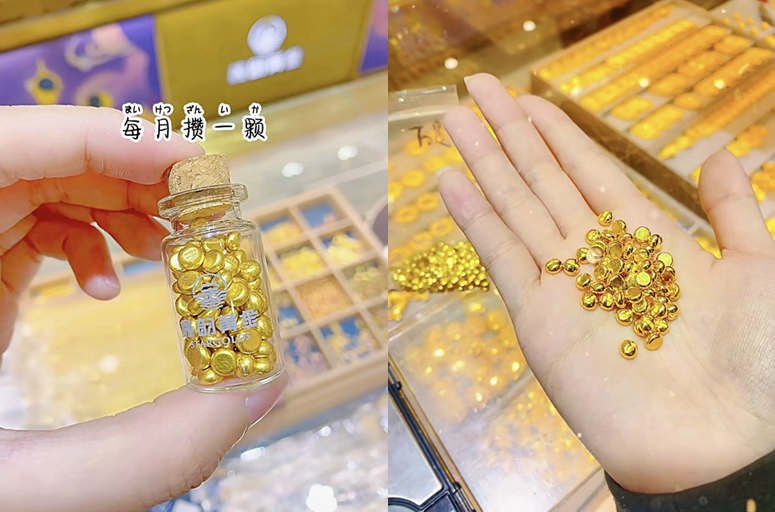
But Wang also gains a sense of financial security in the stability of gold. Even though gold bars and beans retain their value better than gold jewelry, as the latter comes at a premium due to design and processing costs, Wang still enjoys buying them.
Wang is far from being an isolated case among her peers. In recent years, the number of younger jewelry buyers has increased. The World Gold Council, an international industry association, issued its Market Trend Insight Report in 2022, stating that more than 80 percent of consumers buying gold jewelry for weddings or as gifts are young people aged 25 to 35.
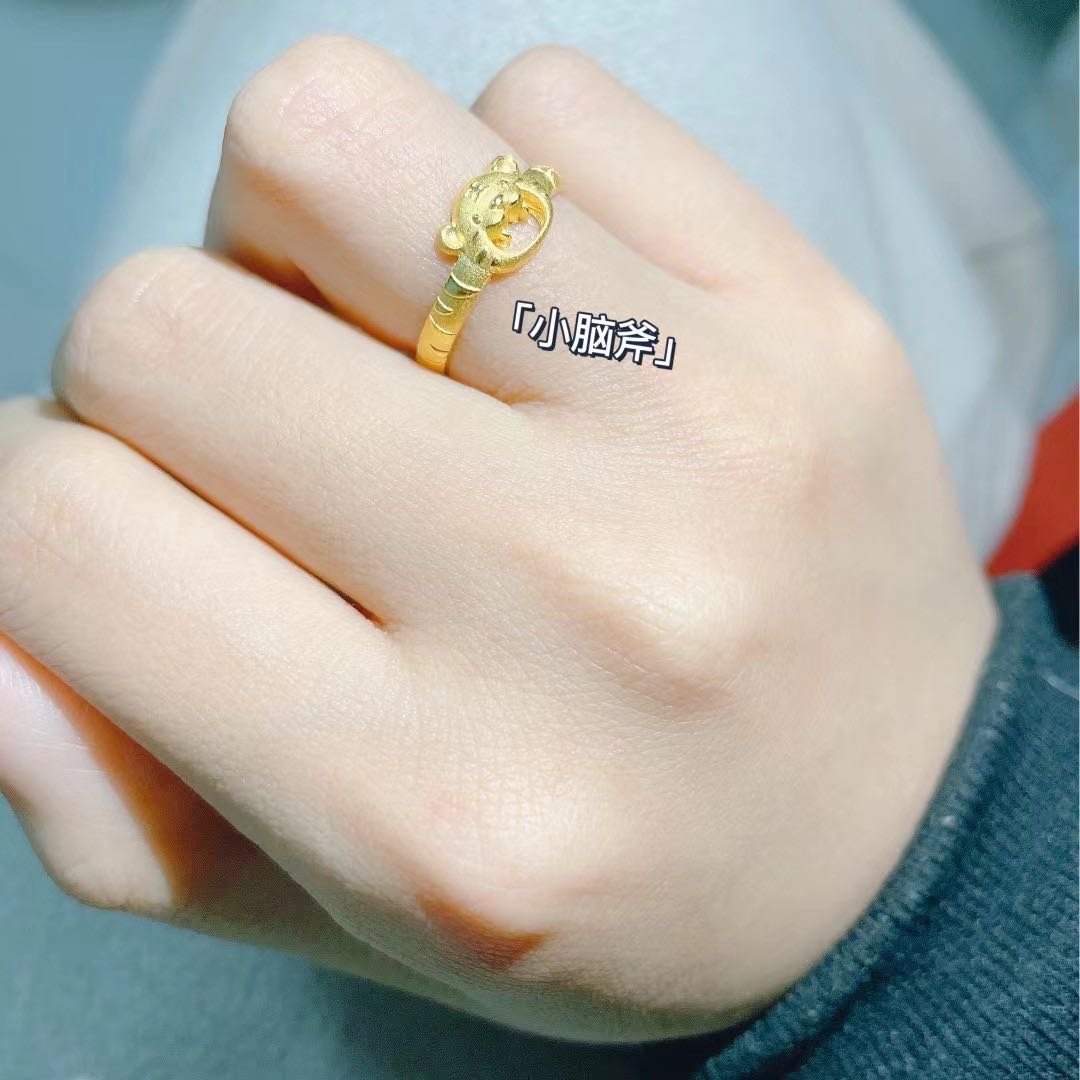
Chen recalls that gold jewelry, specifically chunky rings, used to be code for old-fashioned, tacky privilege exclusive to a certain type of social class. However, when she got married, she discovered a range of new delicate designs for young customers. She starts to truly appreciate their beauty once she tries the jewelry on—the necklace and the cute little tiger-shaped ring complement her slender neck and fingers.
Gold jewelry brands are also vying for their youngest clientele through online channels. The industry used to rely on offline retail as its main access point, where it netted over 90 percent of its sales. But e-commerce sales have continued to grow in recent years—from a mere 5.4 percent of the industry in 2017 to 9.9 percent in 2021, according to data from Guosen Securities.
Xiaohongshu, China’s Instagram-like social media platform, is a key battleground these brands fight over. According to business news outlet Consumption Frontier, there are over 1.74 million mentions of Chow Tai Fook on the platform. Jewelry on Wang’s wishlist is all from posts she saw on Xiaohongshu—from vintage Chinese round earrings carved with flowers to rose necklaces, lucky golden bead necklaces, and more. On Xiaohongshu, Wu even posted an unboxing video of the haul she’d scored from a livestream on Douyin, the Chinese version of TikTok.
Back in 2021, only three businesses from Shenzhen’s Shuibei, the most influential and largest jewelry-specialized trading market in China, sold gold beans online. Just one year later in 2022, almost all of them had their own versions of the product.
Chen’s mother knew better than to open the jewelry bag on the spot. Instead, she waited for the right social cue, brought by smiling relatives and friends asking to take a look at the pieces and heaping praise accordingly.
According to a survey by the World Gold Council, the wedding-related demand for gold jewelry amounted to 28.1 percent of the total market in 2020. With the demographic of this precious metal skewing increasingly younger, though, the demand for everyday gold jewelry is gradually exceeding that of weddings.
Gold is also gaining ground over diamonds in terms of its market penetration rate. Data from the World Jewellery Association shows diamonds’ penetration rate (that is, the percentage of all jewelry buyers that purchase diamonds) at 61 percent for first-tier cities in 2021, with the figure dropping to 48 percent for second-tier cities and as low as 37 percent for third- and fourth-tier cities.
After Chen got married, wearing gold evolved from being only a custom for weddings to part of her daily routine. She wears a gold ring every day. During a recent dinner date with her husband at the mall, they hit the counters of Chow Tai Fook purely on a whim. Chen’s perennially busy husband’s gifts of gold jewelry amount to a love language of sorts. They’re also a sign of his material contribution to their marriage as he may not concern himself with many other household matters.