Editor’s Note
**Editor’s Note:** This piece examines the decline of Tunisia’s coral jewelry artisans, whose centuries-old craft is threatened by resource scarcity and rising costs along the once-prosperous coral coast.
Published on: 04/01/2024 – 00:01
In Tunisia, the coral coast stretching 180 km from Bizerte to Tabarka no longer brings much profit to local artisans. Accustomed to collecting debris or branches unsuitable for export, local jewelry artisans, once prosperous, now face extinction due to coral scarcity and high prices. A portrait of the doyen of this craft in Tabarka.
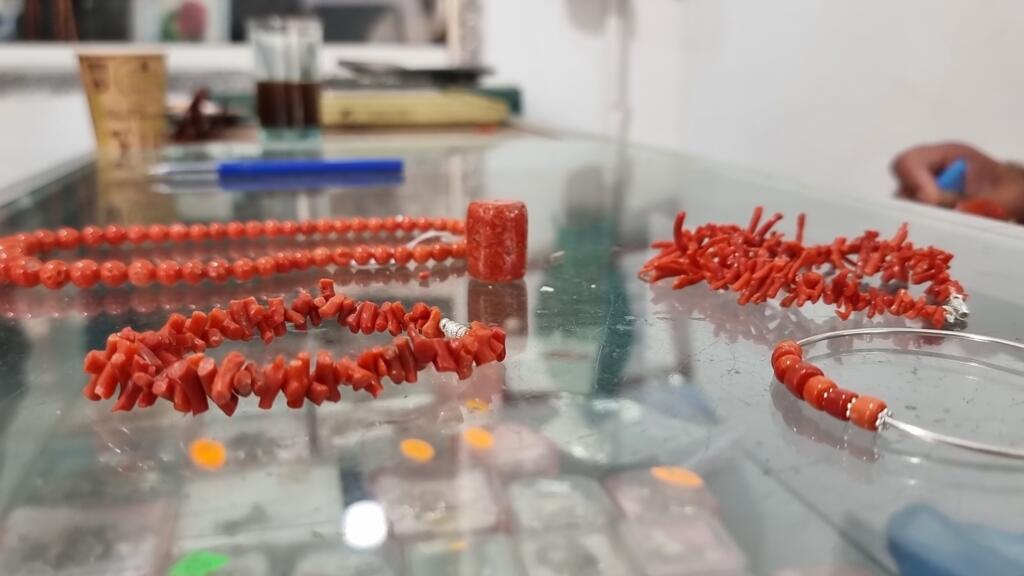
Jewelry crafted with Tabarka coral. © Lilia Blaise / RFI
From our correspondent in Tunis,
In his shop with a street frontage near the city center, Mokhtar Saoudi, 75, a coral jewelry artisan for four decades, waits for customers. He first fell in love with red gold at the age of 15.
Self-taught, Mokhtar later bought a grinding wheel and sandpaper, with which he began carving necklaces or bracelets.
Gradually, he lived only for this craft, which attracted many tourists to this town of 20,000 inhabitants, known for its landscapes between mountain and sea and the richness of its coral.
He then opened his workshop in the 2000s with five women he trained himself, but overexploited, coral became increasingly rare and expensive. It now requires diving to depths between 120 and 150 meters to find it in Tabarka. Over the past ten years, Mokhtar has seen his turnover drop significantly.
And the youth are not interested in taking over the trade. About twenty jewelers still live from coral in Tabarka. If Mokhtar still manages by buying confiscated smuggled coral at interesting prices at auctions, the craft itself risks disappearing.
By: Lilia Blaise
