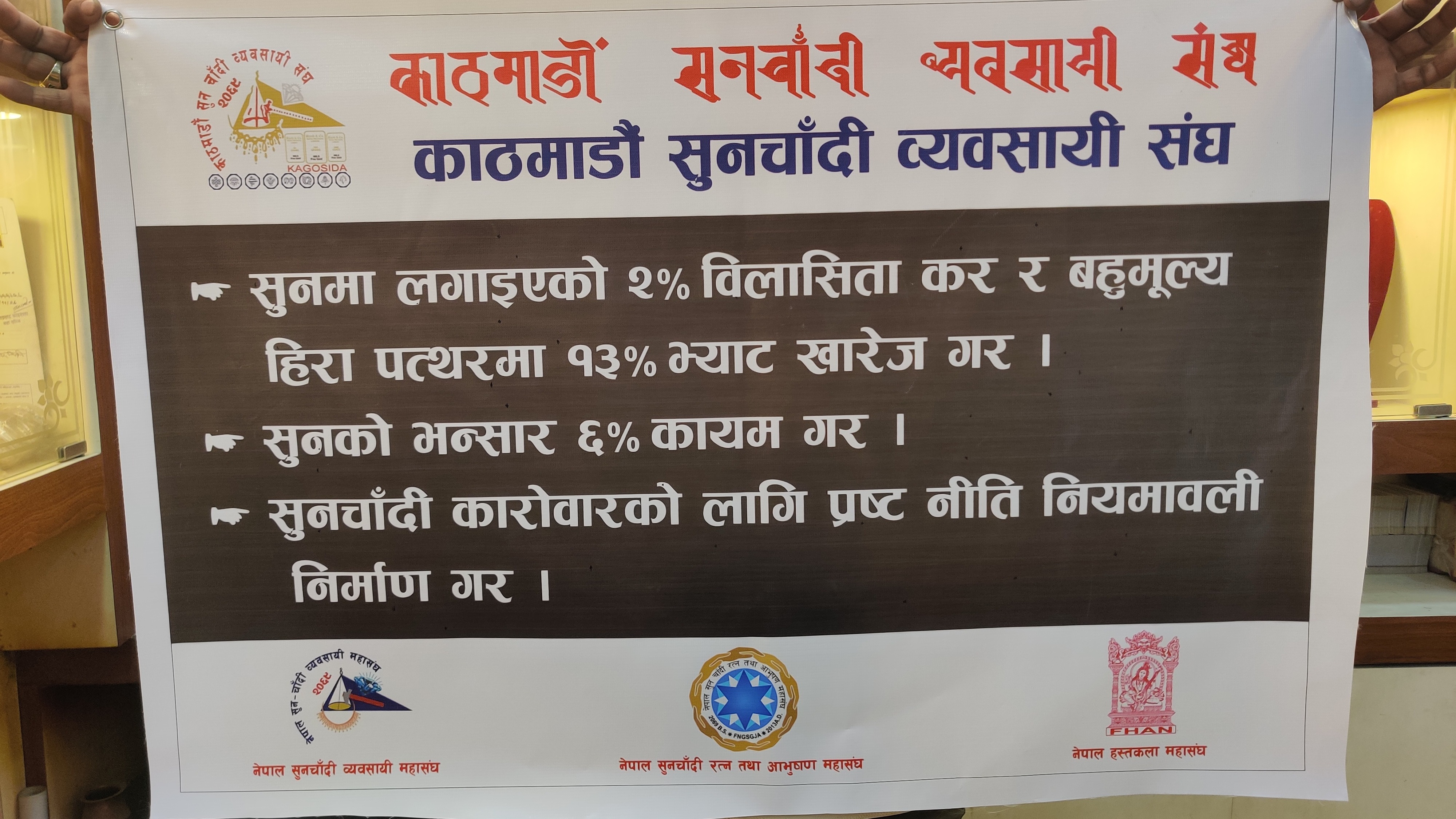
Nepal's new budget for fiscal year 2082/083 has introduced a 2% luxury tax on all gold and silver ornaments and a 13% VAT on jewelry with stones, adding to existing customs duties. The policy has triggered widespread protests and an indefinite shutdown by jewelry businesses, raising concerns for overseas buyers about supply disruptions and pricing volatility in the Nepalese market.
Policy details and tax burden
The government of Nepal has implemented a 2% luxury tax on all gold and silver jewelry purchases and a 13% VAT on jewelry containing stones, effective from the 2082/083 budget. This is in addition to the existing 10% customs duty on imported gold, which was reduced from 15-16% after protests last year. The combined tax burden makes Nepal's import duties significantly higher than India's 6% customs duty, creating a competitive disadvantage.
Industry response and protests
Business owners, artisans, and traders across Nepal staged a week-long general strike from Jestha 29 to Asar 4 (June 12-18, 2025) to oppose the policy. Despite promises from Prime Minister Oli, the government has refused to withdraw the measures. Stakeholders are now preparing for an indefinite shutdown starting Asar 13 (June 27, 2025), with a protest rally beginning at 11 AM from New Road Gate.
Impact on supply chain and consumers
The luxury tax is an indirect tax that ultimately falls on consumers, who are already facing record-high gold prices. This policy is expected to significantly reduce demand, potentially forcing many traditional, family-run jewelry businesses to close permanently. Additionally, new rules prohibit the reuse of old gold jewelry to make new pieces, forcing consumers to sell old gold at a 6-8% loss due to taxation.
Compliance and logistics signals
A later update from Bhadra 2082 (August-September 2025) indicates that the 2% luxury tax remains applicable for consumers buying gold, while the 13% VAT now applies only to stone transactions exceeding 50 lakhs (5 million NPR) per year. The 2% luxury tax on old gold has been removed, but buyers must provide bills for old gold transactions. Overseas buyers sourcing from Nepal should monitor these tax changes closely, as they may affect pricing and availability of finished jewelry.
China sourcing context
While Nepal is not a major jewelry manufacturing hub compared to China or India, the policy shift highlights the broader trend of rising regulatory costs in South Asian jewelry supply chains. Buyers sourcing from the region should compare Nepal's tax structure with India's 6% customs duty and consider alternative sourcing options if Nepalese suppliers face prolonged shutdowns or price increases.
Source: Read the original report | Published: June 27, 2025