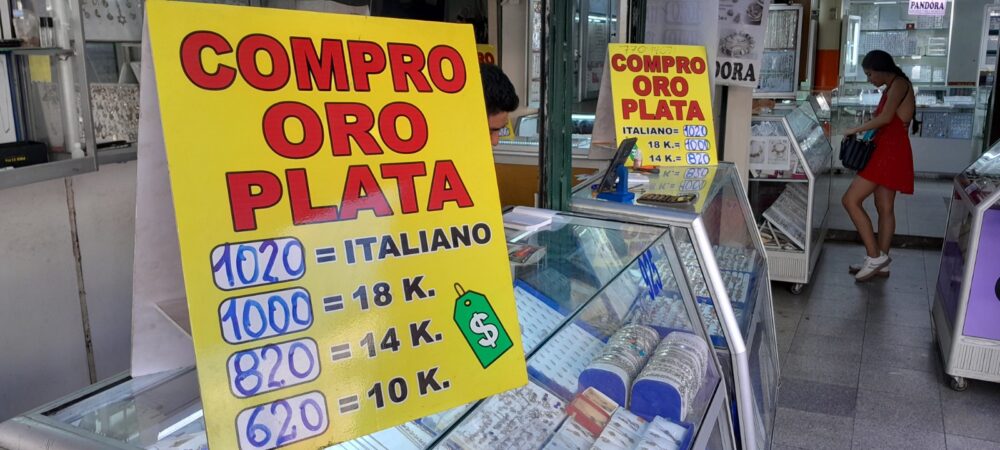
Editor’s Note
**Editor’s Note:** Gold prices have hit a historic high of Bs 1,600 per gram, driven by global safe-haven demand. However, Bolivia’s economic crisis has made the precious metal increasingly unaffordable for local buyers. Vendors now pin hopes on the year-end sales season.
The price of gold in jewelry has reached Bs 1,600 per gram, the highest in history. This price surge is driven by global demand for a safe haven and investment, but in Bolivia, due to the ongoing economic crisis, the cost has become prohibitive for gold enthusiasts.
Vendors at the Los Pozos gold jewelry market in the heart of Santa Cruz are eagerly awaiting the last quarter of 2025, when they typically see their highest sales of the year. This period coincides with high school graduation ceremonies, where the most cherished gift is often the ‘class ring.’
EL DEBER conducted a survey at this supply center and verified that the price of 14-karat gold in crafted jewelry ranges from Bs 1,400 per gram, while 18-karat gold reaches up to Bs 1,600. 22-karat gold can cost up to Bs 2,200 per gram.
Last September, the price of 18-karat gold in jewelry was around Bs 1,000 per gram, meaning it has increased by at least 60% in one year. Jewelers explained that prices are tied to the international market quotations for a troy ounce (31.10 grams). On Monday, the price of gold stood at $3,680 per troy ounce, the highest quotation in the last 10 years, fueled by the decline of the US dollar internationally, prompting individuals, banks, and governments to seek a store of value in the precious metal.
According to the merchant, the “high” seasons in Santa Cruz are May, for Mother’s Day, and starting in October, the student graduation season. However, sales have declined in recent years due to the economic crisis affecting the country.
“Until 2020, sales were good. Many people were leaving for other countries and taking chains with them. We used to average $3,000 a month in profit, but now the average is 30,000 bolivianos a month,” the merchant noted.
At Joyería San Francisco, Mrs. Martha recalled that even tourists used to visit the Los Pozos area to buy gold jewelry, but in recent years, airport authorities have implemented stricter controls and confiscations on gold.
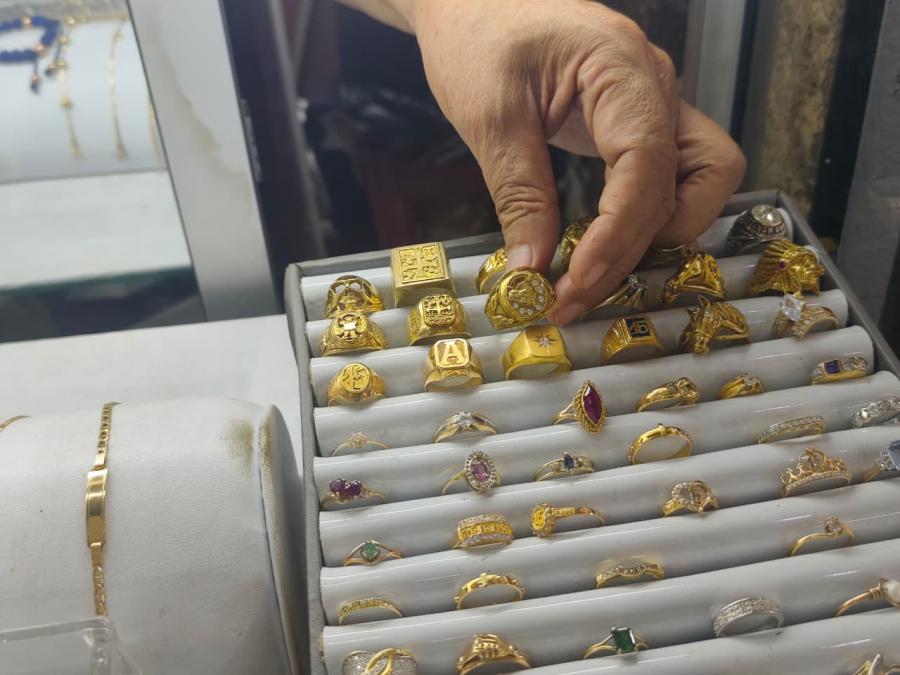
In a jewelry workshop, Victor Hugo mentioned that jewelry lovers are now buying silver and having it gold-plated. “Now they look for silver jewelry, which has risen to between 35 and 40 bolivianos per gram. 70% of sales now are silver and 30% gold,” he detailed. According to the artisan, in previous years he would prepare up to 30 class rings a week; currently, he receives between two and five orders from jewelry stores. “People who migrated used to take chains weighing up to half a kilo, but they had to wear them, otherwise they would be taken away. The business is still profitable, but it’s not like it used to be,” he expressed.
Gold has always been considered a family asset almost everywhere in the world, and when needs arose, it became a way to get good returns. Now, it is even a safe haven for investors.
Héctor Córdova, a mining expert from the Jubileo Foundation, explained that the main factor driving many people to buy gold as a safe haven is fear of what wars, the poor US economy, and the weakness of the dollar represent.
In the case of Bolivia, Córdova highlighted that there are also people investing in jewelry, but also in unprocessed gold, “which is cheaper and is a sensational form of savings because gold continues to rise, and if you bought when the troy ounce was at $1,800, it’s now worth double without any effort.”
In this regard, Córdova emphasized that the illegal gold market in Bolivia has grown disproportionately. Gold is not being registered in the country to pay royalties; instead, it is registered in countries like Peru and Brazil, where, despite higher tax rates, sellers receive better payments and in dollars. He explained that the royalty paid in Bolivia is 1.5%, and merchants who dare to sell on the domestic market demand higher payments to compensate for the imbalance.
The expert commented that this informality in the market causes traders to charge up to 60% on gold for royalties, and cooperatives are the most benefited because, in addition, those that declare having a marginal deposit enjoy a series of benefits, including tax breaks.
